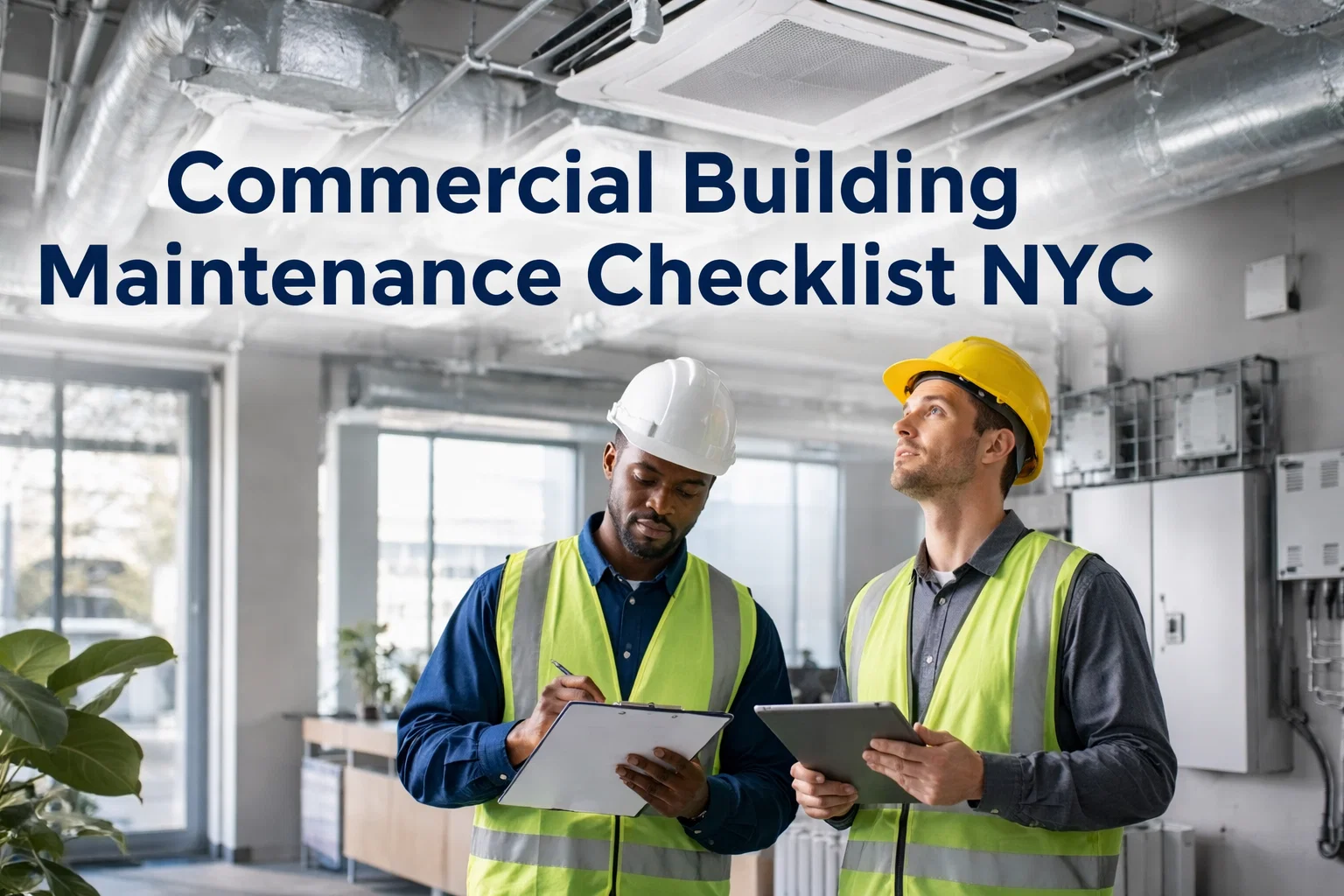
Maintaining a commercial building in New York City is not a routine task. It is an ongoing operational responsibility that directly affects asset value, tenant retention, and legal compliance. NYC is one of the most regulated and demanding environments for property owners. If your maintenance system is weak, your building will deteriorate faster than you expect.
A structured checklist is not optional. It is the foundation of efficient building management and long-term profitability.
The exterior of your building defines both safety and first impressions. In NYC, facade issues are not just cosmetic. They can result in violations and serious liability.
Start with facade inspections. Look for cracks, spalling concrete, loose masonry, and water stains. These are early indicators of structural problems that can escalate under seasonal stress. Roof inspections should be conducted multiple times a year. Check for membrane damage, standing water, clogged drains, and flashing issues. A compromised roof leads to interior damage and costly repairs.
Windows and doors must be sealed properly. Drafts and leaks reduce energy efficiency and allow moisture infiltration. Replace damaged seals immediately.
Sidewalks and entryways should never be ignored. Property owners in NYC are responsible for the condition of sidewalks. Cracks or uneven surfaces can lead to lawsuits. If your exterior fails, everything inside becomes vulnerable.
Mechanical systems are responsible for comfort and operational continuity. When they fail, tenant satisfaction drops instantly.
HVAC systems must be inspected quarterly. Filters should be replaced regularly to maintain air quality and efficiency. Dirty filters increase energy costs and reduce system lifespan. Inspect ductwork for leaks and blockages. Poor airflow creates uneven temperatures and discomfort for occupants.
Boilers, chillers, and cooling towers require routine servicing and compliance checks. NYC regulations demand proper documentation and timely inspections. Thermostats and automation systems should be calibrated seasonally. Smart systems only deliver value when they are properly configured. Elevators must also be maintained consistently. Breakdowns are unacceptable in commercial buildings and damage tenant trust. Ignoring mechanical systems does not save money. It accelerates system failure.
This is where most property owners lose control of their building. Basement issues are often ignored until they become critical.
Inspect foundation walls for cracks and seepage. Even minor cracks can allow water penetration under pressure. Check sump pumps and backup systems. These must function reliably during heavy rainfall or flooding conditions. Monitor humidity levels and look for signs of mold or mildew. Persistent dampness is a warning sign of deeper issues. Evaluate waterproofing systems regularly. Sealants and drainage solutions degrade over time and require maintenance.
If you notice water intrusion, immediate action is necessary. Professional solutions like basement leak repair service brooklyn nyc are essential to prevent structural damage and maintain a safe environment. Delaying basement repairs is one of the most expensive mistakes you can make.
Water damage is one of the most expensive and disruptive issues in commercial properties. Inspect all plumbing lines for leaks, corrosion, and pressure inconsistencies. Small issues escalate quickly in dense urban infrastructure. Check water pressure across the building. Fluctuations often signal hidden problems.
Restrooms and kitchen areas should be inspected daily in high-traffic buildings. Fixtures must remain functional at all times. Drainage systems should be cleaned regularly. Blockages lead to backups, contamination, and operational disruptions.
Hot water systems must be tested for consistency and efficiency. Temperature instability indicates system imbalance. Basements require extra attention due to their vulnerability to water intrusion. Moisture problems lead to mold growth and structural damage. If you neglect plumbing, you are allowing hidden damage to grow unchecked.
Electrical systems must operate without failure. The risks are too high to be considered negligence.
Inspect wiring for wear, overheating, or outdated components. Many NYC buildings still operate with aging infrastructure that requires upgrades.
Circuit breakers and panels should be tested regularly. Overloaded circuits are a major fire hazard. Emergency lighting and exit signs must be fully operational at all times. This is a compliance requirement, not a recommendation.
Backup generators should be tested under real load conditions. Power outages can disrupt business operations if systems are not prepared. Fire alarms and sprinkler systems must be inspected and documented in accordance with regulations. Any failure here can lead to severe consequences.
Electrical maintenance is not an area where you can afford shortcuts.
Cleanliness directly influences tenant perception and retention. A poorly maintained building drives occupants away. Common areas should be cleaned daily. Lobbies, corridors, and elevators represent your building’s standard. Restrooms require frequent sanitation, especially in high-occupancy properties. Hygiene is a basic expectation. Waste management systems must be efficient. Overflowing trash leads to pest issues and reputational damage. Air quality should be monitored consistently. Dust and pollutants reduce comfort and productivity.
Pest control should be preventive. Waiting for visible infestations means you are already too late.
Without a system, maintenance becomes reactive and inefficient. Document every inspection, repair, and upgrade. Records are essential for compliance and future planning.
Develop a preventive maintenance schedule. Tasks should be categorized into daily, weekly, monthly, and annual activities. Use digital tools or management systems to track maintenance progress. Missed tasks often result from poor organization.
Allocate budget specifically for maintenance. Emergency repairs are always more expensive than planned work. Train your maintenance team properly. A checklist is only as effective as the people executing it.
NYC regulations are strict and constantly enforced. Non-compliance leads to fines, violations, and operational risks. Facade inspections must follow local laws. Failure to comply can result in penalties and safety hazards. Elevator inspections are mandatory and must be conducted on schedule.
Boiler and pressure systems require regular certification and maintenance. Fire safety systems must meet inspection standards and documentation requirements. Staying compliant is not optional. It is part of responsible property ownership in NYC.
At some point, internal maintenance is not enough. Complex repairs, structural issues, and large-scale upgrades require external expertise.
A professional construction and restoration company brings specialized knowledge, proper equipment, and compliance awareness. They handle facade restoration, waterproofing, structural reinforcement, and post-damage recovery.
Choosing the right partner is critical. Look for proven experience in NYC regulations, proper licensing, and a track record of completed projects.
Outsourcing critical work is not a weakness. It is a strategic decision that protects your building from long-term damage and regulatory issues.
If you think maintenance is an expense, you are thinking like an amateur. Maintenance is what protects your building from rapid depreciation. It ensures tenant satisfaction, prevents legal issues, and maintains operational stability.
A weak checklist leads to missed issues. Missed issues turn into major failures. A strong checklist, executed consistently, turns your building into a reliable and profitable asset.
Either you control your building through systems and discipline, or you deal with the consequences of neglect. There is no middle ground.