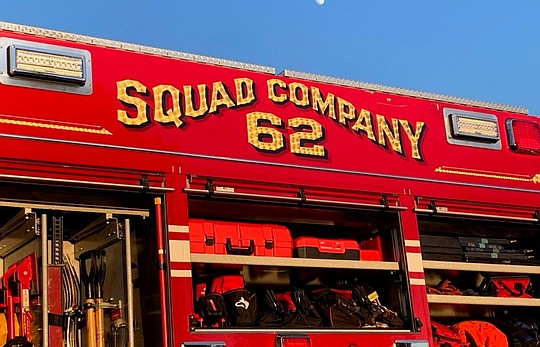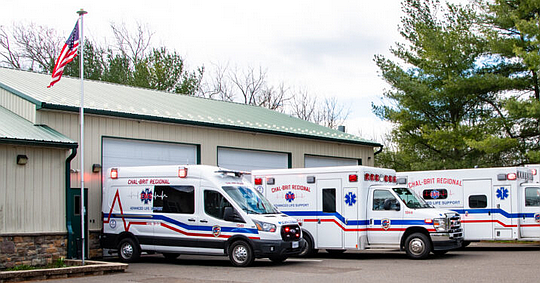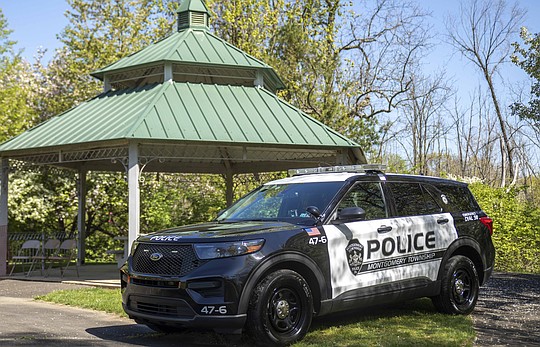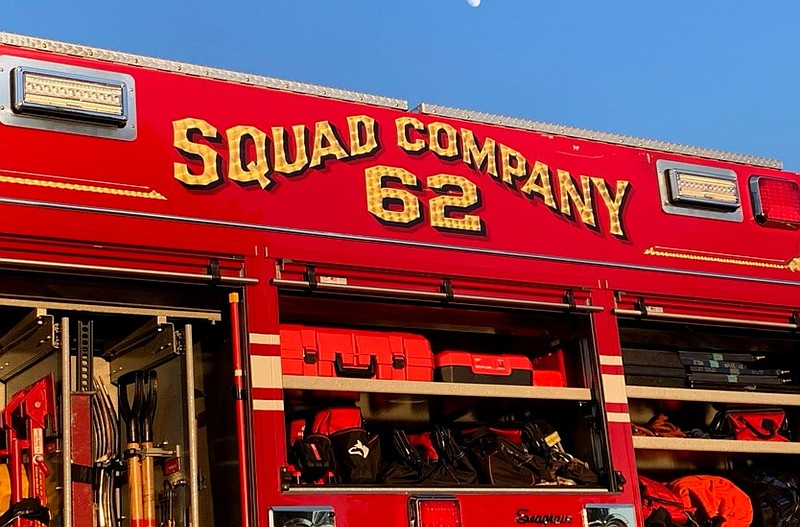
North Penn Vol. Fire Co. (Credit: North Penn Voi. Fire Co.)
‘It takes an army now’: North Penn Vol. Fire Co. Chief Dan Mathe reflects on staffing, service and the changing reality of regional firefighting in North Penn
The fire siren still echoes the same way it did decades ago, but what happens after that sound has changed dramatically.
For Dan Mathe, the newly elected fire chief of North Penn Volunteer Fire Company, the biggest shift in modern firefighting is simple: no department fights alone anymore.
“It takes an army of guys to go to a fire,” Mathe said.
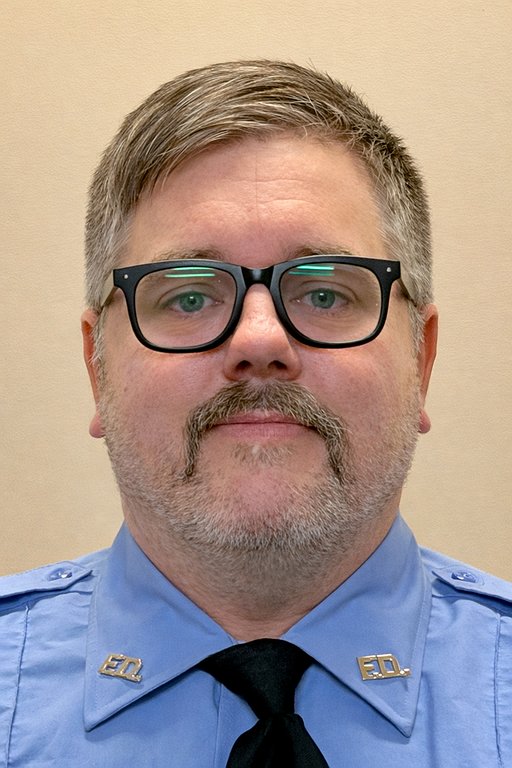 North Penn Vol. Fire Co. Chief Dan Mathe (Credit: North Penn Vol. Fire Co. 62)
Where once a single company could handle a house fire within its own borders, today’s calls routinely draw crews from across the North Penn region and beyond. A recent blaze in the area brought responders from multiple neighboring towns, something Mathe says is now standard, not exceptional.
That evolution, he explained, is driven by both necessity and opportunity. More calls, more complexity, and fewer volunteers mean departments rely heavily on each other, creating what is essentially a regional firefighting network.
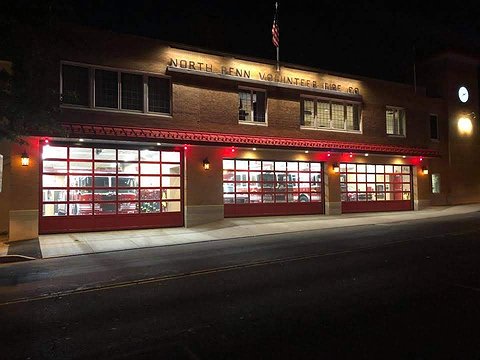 North Penn Vol. Fire Co. (Credit: North Penn Voi. Fire Co.)
From local companies to regional response
Mathe sees the future clearly: regionalization is not just likely, it is inevitable.
“I think there will absolutely be some sort of regionalized effort,” he said, pointing to rising costs, shrinking manpower, and overlapping equipment across departments.
Fire companies today often operate similar fleets — engines, ladder trucks, rescue units — but without enough volunteers to fully staff them. That mismatch is pushing departments toward shared resources, coordinated responses, and potentially consolidated operations.
Instead of every town owning everything, the future could look more specialized. One department may focus on ladder operations, another on water rescue, another on heavy rescue — all working together under a unified system.
The goal is efficiency, but also survival.
“You can’t flip pancakes and sell hoagies like we could back in the day to fundraise to go buy a fire truck,” Mathe said.
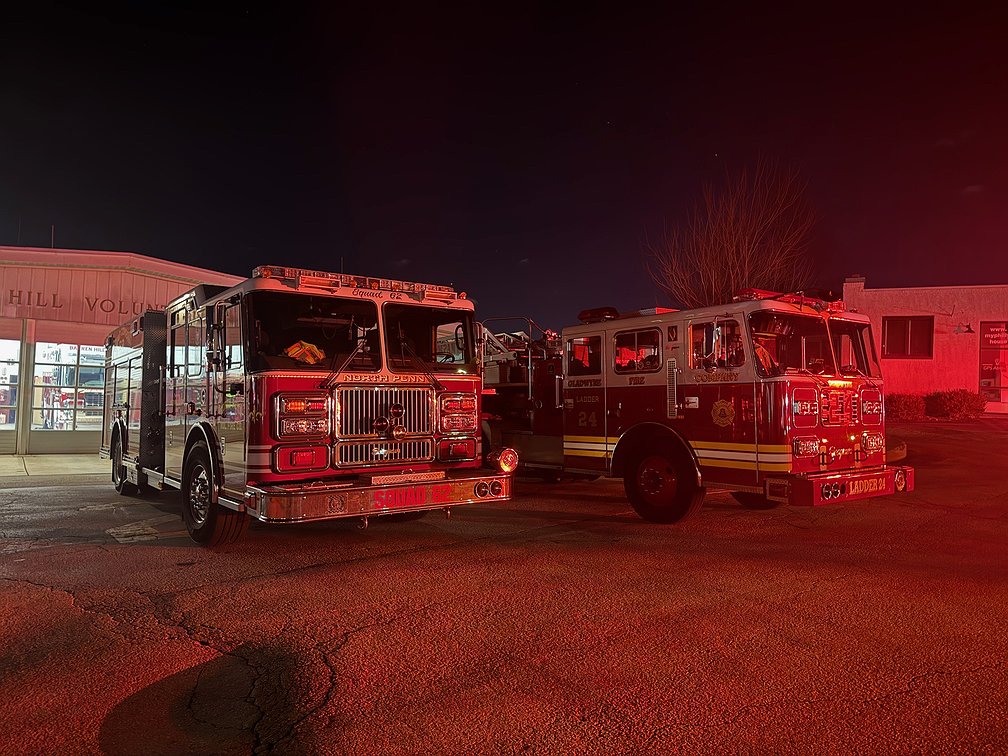 North Penn Vol. Fire Co. (Credit: North Penn Voi. Fire Co.)
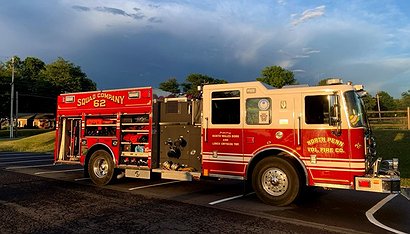 North Penn Vol. Fire Co. (Credit: North Penn Voi. Fire Co.)
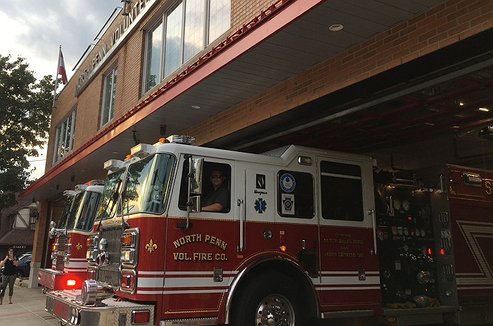 North Penn Vol. Fire Co. (Credit: North Penn Voi. Fire Co.)
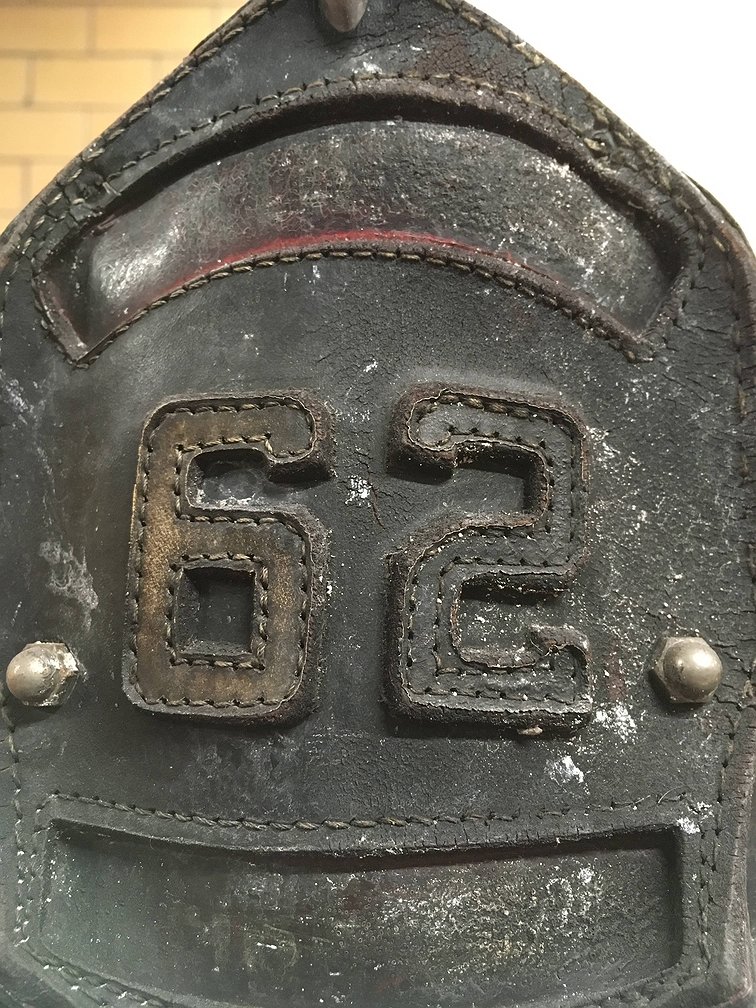 (Credit: North Penn Voi. Fire Co.)
Volunteer strain and the recruitment battle
Behind the scenes, the biggest challenge is not flames — it is people.
North Penn averages roughly one call per day, with about half occurring outside its primary coverage area. That pace, combined with training, maintenance, and administrative work, puts constant pressure on a volunteer base that is already stretched thin.
Recruiting new members is difficult. Keeping them is even harder.
“Once we get them in the doors, retaining them is even harder,” Mathe said.
The company has leaned into social media and unique assets like its tiller ladder truck to attract interest, but the reality remains: volunteering today competes with work, family, doomscrolling, post-COVID ennui, and a world that never slows down.
And while tax breaks and incentives exist, Mathe said they are not enough to bring in the next generation.
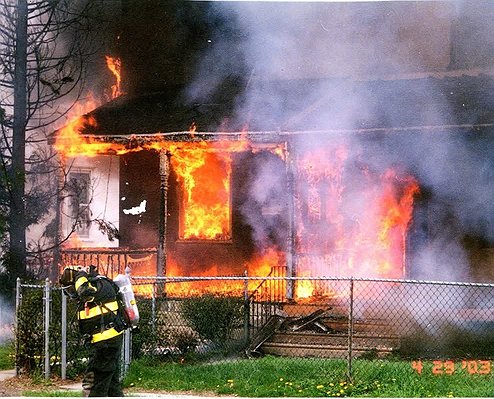 A fire in Baltimore, MD in 2003. (Credit: Dan Mathe)
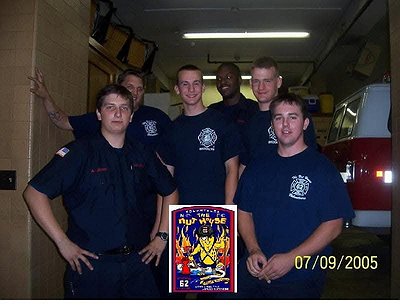 North Penn Vol. Fire Co. Chief Dan Mathe's early firefighting days in Baltimore in 2005. (Credit: North Penn Vol. Fire Co.)
More than fires: the unseen weight of the job
Beyond the flashing lights and adrenaline, Mathe, who spent 15 years battling blazes in the most economically-depressed parts of Baltimore, MD in the 2000s, emphasized the emotional toll that often goes unnoticed.
From CPR calls to fatal fires, volunteers can be exposed to traumatic scenes with little warning and no preparation.
“There’s no amount of training that’s going to prepare you for it,” he said.
Even experienced firefighters feel the cumulative weight of those calls, what Mathe described as “a death by a thousand paper cuts.”
That reality has reshaped how leadership approaches the job, with more focus on peer support, open conversations, and giving members space to step back when needed.
A culture shift from the ground up
Since taking over in December, Mathe, who runs an energy drink business, and a property management company with fellow firefighter Ian Horowitz, said his focus is building a stronger, more self-sufficient team — one where every firefighter is capable of handling the job without constant top-down direction.
“I want an army of guys that can go out and handle the fire,” he said.
That philosophy includes open critiques after major calls, encouraging input from both new recruits and veteran firefighters, and creating a culture where communication replaces internal friction.
It is also about redefining what it means to serve.
“There’s a place for everybody inside of a volunteer firehouse,” Mathe said, noting that not all roles involve rushing into burning buildings.
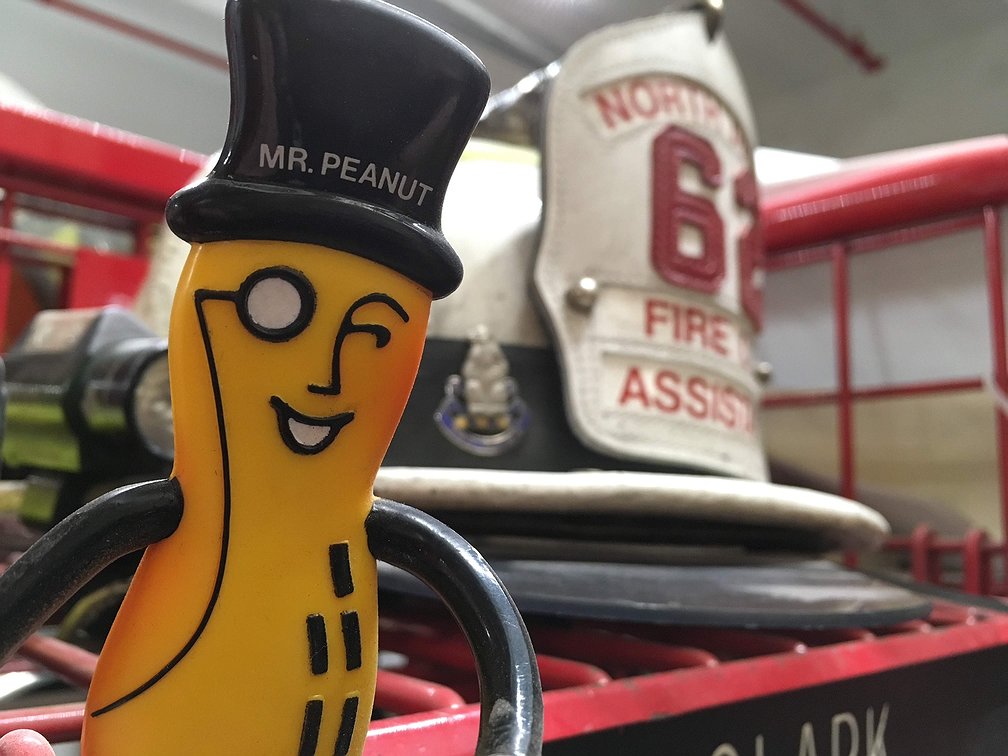 (Credit: North Penn Voi. Fire Co.)
Looking ahead
If current trends continue, Mathe believes the North Penn region will see deeper cooperation, shared resources, and possibly formal consolidation in the years ahead.
What will not change, he said, is the mission.
Fires will still come without warning. People will still need help. And when they do, volunteers will still answer — even if the system around them looks very different than it once did.
Firefighting in the North Penn region has evolved from a single-company response model into a highly interconnected system, where departments rely on one another more than ever before.
“Well, we’re surrounded by rescue engines,” Mathe said, noting that what was once a rare apparatus in the county is now standard across nearly every station. “Now there’s one on every corner. Every firehouse has one.”
That shift has changed how departments respond, with mutual aid and coordination playing a central role. Mathe said crews may begin operations immediately but are increasingly supported by neighboring companies bringing additional manpower and specialized equipment.
“We’ll still get there and start the rescue with our stuff, but then you have those guys backing up and bringing the equipment needed,” he said.
The growing complexity of the job is matched by rising costs and demands, from expensive gear to the realities of volunteer staffing.
“Portable radios are $7,000 apiece nowadays,” Mathe said, adding that much of the work remains unpaid. “Here we are on a Thursday in the middle of the work day… no one’s getting paid to be here.”
Behind the scenes, volunteers balance firefighting with careers and personal responsibilities, all while maintaining readiness.
“Some days we’ll have five calls, the next day we’ll have none,” Mathe said. “But there’s all this stuff going on behind the scenes that no one really realizes has to get done for us to show up at a fire.”
Even as departments work together, Mathe said a competitive edge still exists — one that ultimately strengthens the service.
“It is kind of like a sport,” he said. “You train and train and train… everyone wants to get there and put the fire out.”
At its core, however, he emphasized unity.
“We’re a family… everyone has the same goal in mind to be the best fireman and the best fire company that we can be.”