AI twin generators are changing how people create videos by making it possible to generate content without constantly recording yourself. These tools build a digital version of you that can speak, present, and deliver information in a natural way. By combining facial animation, voice synthesis, and lip-sync technology, AI twin generators allow users to produce videos faster while maintaining consistency.
The increasing demand for video content across platforms like YouTube, Instagram, and online learning has made these tools more relevant than ever. Instead of spending hours filming and editing, users now prefer automated solutions that still look realistic. Tools like Zoice are gaining popularity because they offer better visual quality, smoother speech alignment, and more control over how the avatar behaves.
In this article, we will break down the best AI twin generators in 2026, compare their capabilities, and help you decide which tool fits your needs.
Not all AI twin generators deliver the same results. Some tools are built for corporate presentations, while others are designed for creators who need flexible and engaging content. The tools listed below have been selected based on how natural their output looks, how easy they are to use, and how well they perform across different use cases.
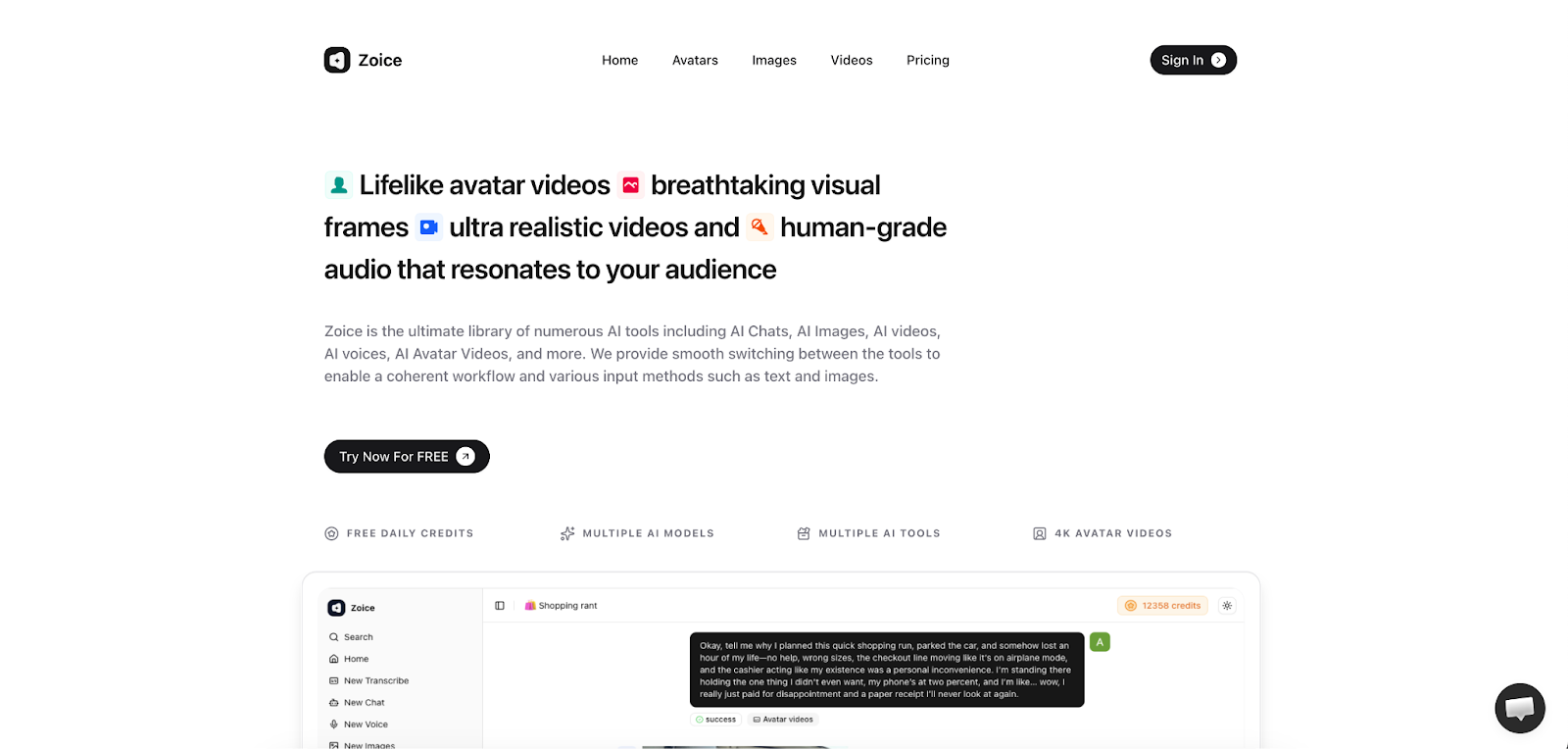
Zoice is built for users who want their AI-generated videos to feel closer to real human delivery. Instead of just animating a face, it focuses on making the avatar behave naturally, including how it speaks, pauses, and expresses emotions. This makes a noticeable difference when compared to basic avatar tools.
It is widely used across different types of content, including UGC videos, AI influencers, training materials, onboarding videos, and social media posts. What makes it more practical is that it doesn’t limit users to one type of content. You can use the same tool for both professional and creative purposes.
Another strong point is flexibility. Zoice allows users to adjust gestures, control expressions, and change backgrounds based on their content style. Combined with multilingual voice support, it becomes a useful tool for both local and global audiences.
Zoice performs better when it comes to making avatars look believable.
The way speech and facial movement align makes the output feel less robotic.
It also gives users more control compared to most tools.
You can influence gestures and presentation style instead of relying on presets.
Another advantage is its adaptability.
It works equally well for marketing, education, and social content without needing different tools.
Zoice is one of the few tools that combines simplicity with control. It does not overwhelm beginners but still gives enough flexibility for advanced users.
Synthesia is mainly used by companies that need structured and repeatable video content. It is commonly used for training modules, onboarding videos, and internal communication. The focus here is consistency rather than creativity.
One of its strengths is language support, which makes it easier for global teams to communicate using the same format. However, the avatars are more formal and less expressive, which can feel limiting for social or marketing content.
HeyGen is designed for users who want quick results without spending too much time learning the tool. It is especially popular among marketers who need to produce content frequently.
The platform is simple to use and works well for short-form videos. However, it relies more on templates, which means you get less control over how the final output looks.
D-ID is more focused on simplicity than depth. It allows users to animate images into short talking videos, which makes it useful for quick projects or basic content.
It is easy to use and delivers fast results, but it does not offer the same level of detail or realism as full AI twin generators.
Colossyan is built for structured environments like training and onboarding. It helps teams create consistent video content using AI presenters.
The tool is useful for organizations that need to produce educational or internal content at scale. However, it is not designed for dynamic or creative use cases.
Understanding pricing differences can help you choose a tool that fits your budget while still meeting your requirements. Below is a simplified comparison of the most popular options.
If the avatar does not look natural, the video will feel artificial. Choose tools that produce smooth facial movement and proper lip alignment.
A good AI twin should sound as natural as it looks. Voice cloning can improve personalization and make content more engaging.
Being able to control gestures, expressions, and backgrounds gives you more creative freedom.
Some tools charge extra for features like HD output or voice cloning, so always check what is included.
A tool should not slow you down. A simple interface helps you create videos faster and more efficiently.
AI twin generators are becoming a core part of modern content creation. They allow users to produce videos quickly without sacrificing consistency.
Among all available options, Zoice stands out for its better realism, greater control, and broader usability. Whether you are creating marketing videos, training content, or social media posts, Zoice provides a reliable and flexible solution.