Online users increasingly need tools that make access more flexible, more private, and more adaptable to regional tasks. In that context, a residential proxy is often seen as one of the most practical options for workflows that depend on natural looking traffic and stable location targeting. This article explains how residential proxies work, how they compare with other proxy categories, and why they are often chosen for research, account management, testing, and controlled browsing. It also covers pricing logic, practical recommendations, common mistakes, and the strengths and limits that matter before choosing a provider. Readers who want a structured understanding of proxy selection will find both technical clarity and usable advice here ✨
Residential proxies are often discussed as a premium category in the proxy market because they reflect ordinary home internet connections rather than server infrastructure. That difference changes how websites interpret traffic and how users can approach certain tasks. To understand their role properly, it helps to look at what makes them distinct in real use.
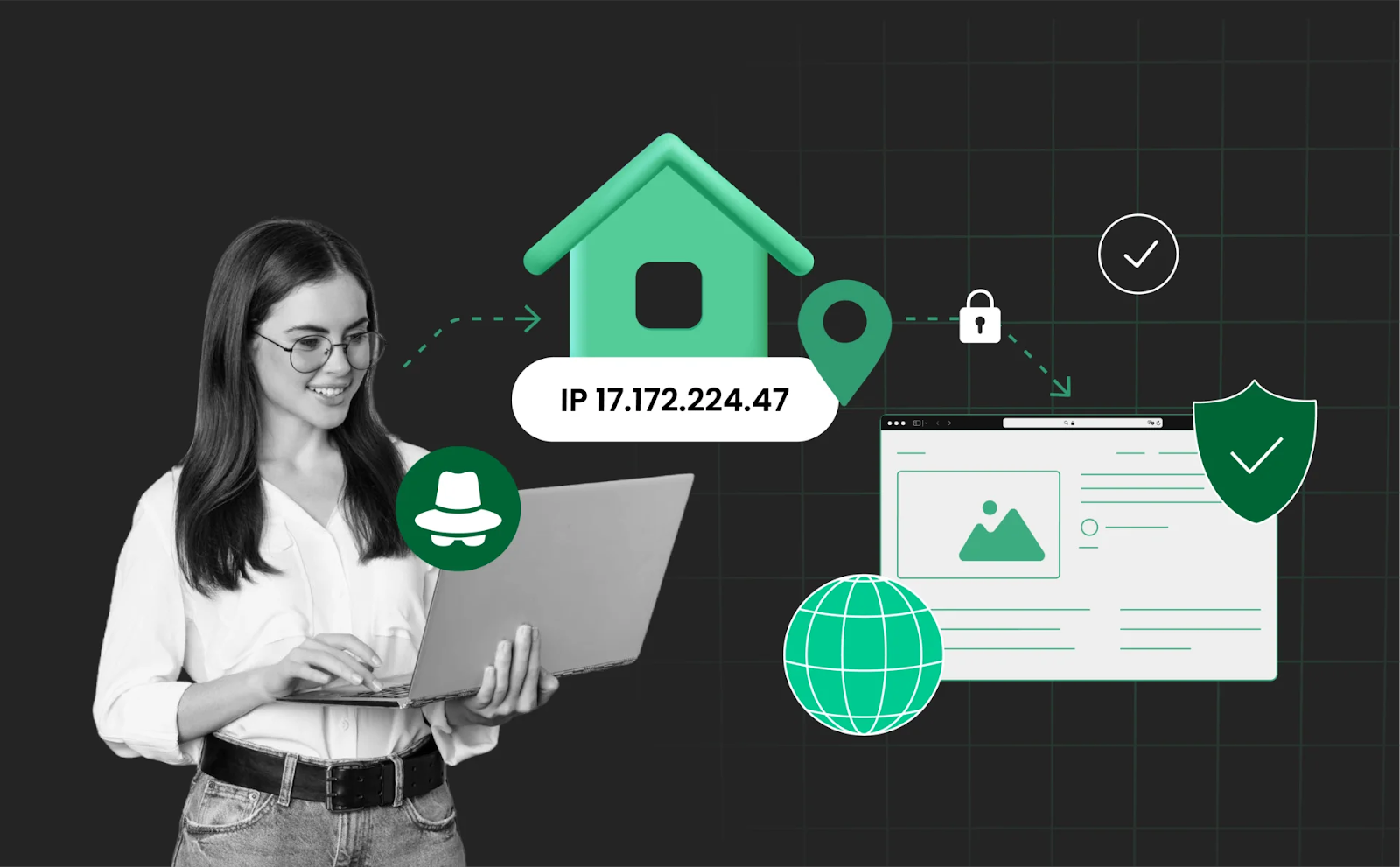
A residential proxy sits between the user and the destination website, routing requests through a residential IP instead of the original connection. This sounds simple on paper, but its value depends on how the provider manages inventory, filtering, and connection quality. In daily use, the experience is shaped by the type of platform behind the proxy, not just by the IP itself.
When a user connects through a residential proxy, the destination site sees the residential IP rather than the direct source connection. That changes the appearance of the request and can influence how the site interprets the traffic. The proxy does not change the purpose of the request, but it changes the route and the visible origin.
A provider becomes much more practical when it allows users to filter by country, city, provider, or protocol. Without filtering, even a large residential pool may be inefficient because users waste time scanning irrelevant options. Strong filtering turns the service into a targeted selection tool rather than a simple list of IPs.
A large proxy catalog can sound impressive, but quality is usually more important than sheer volume. Users care about whether an IP works for the required task, how clean its reputation is, and whether it matches the right location and protocol. A smaller but well managed residential pool can be more valuable than a huge catalog with inconsistent quality. ✨
Residential proxies become easier to evaluate when they are compared directly with mobile and datacenter options. Each proxy type has its own strengths, and none is perfect for every purpose. The real question is not which one is universally best, but which one matches the specific task most effectively.
Residential proxies are often selected for tasks where authenticity of connection matters more than scale alone. This section focuses on the most common practical uses and explains why the category has become important in daily online work. Looking at real applications helps separate meaningful use from vague assumptions.
A company may want to see how a page appears in different countries or cities, whether promotions display correctly, or whether search results change by region. A residential proxy can help create a more realistic view of that experience because the connection appears closer to an ordinary local user. This is especially useful in marketing, content review, and ecommerce monitoring.
Some account workflows require more careful handling of location and connection reputation. Residential proxies can be useful when users need a traffic profile that looks less artificial than server based IPs. That does not remove the need for compliant and responsible behavior, but it can support more stable access in platforms that are sensitive to connection origin.
Research teams often need to observe how products, ads, or service offers appear in different regions without relying only on public previews or cached results. Residential proxies help them see region specific information in a way that feels closer to a normal user session. For structured market observation, that can be more valuable than a purely technical connection route.
Residential proxy services are not all built the same way, and users benefit from understanding the main selection factors before buying. Some providers focus on geography, some on price, and others on protocol support or IP reputation visibility. A better result usually comes from combining these factors rather than choosing only on cost.
Some tasks only require country level access, while others need a city level signal or even a specific provider environment. Users should define how precise the location really needs to be before paying more for granular targeting. Overbuying precision can waste budget just as easily as underbuying it can weaken results.
Residential proxies are commonly offered with SOCKS5 and HTTPS access, and the right choice depends on the application. HTTPS often works well for browser oriented workflows, while SOCKS5 can offer broader compatibility across tools and software. Choosing the wrong protocol can create avoidable friction even when the IP itself is suitable.
The quality of a residential IP includes more than availability. Users should consider whether the provider checks blacklist status, how transparent the platform is about IP condition, and whether there is any support if an address fails quickly after purchase. A residential proxy with a poor reputation may cost less, but that saving is meaningless if the task does not work properly.
Users often get better results when proxy selection follows a structured method rather than intuition. Residential proxies are useful, but only when the chosen IP, protocol, and location align with the real goal. The recommendations below can help reduce common mistakes.
The first step is always to define the task clearly. Checking local search results, reviewing content, verifying offers, testing user flows, and managing account sessions are not identical use cases. A clear goal makes the right residential proxy easier to identify.
Country level targeting may be enough for some projects, while others benefit from city level filtering. Users should not assume that more precision is always better. Paying for extra specificity makes sense only when the task truly depends on it.
It is usually smarter to validate a few residential IPs before expanding into larger usage. Testing first helps confirm whether the provider’s filtering, IP quality, and protocol support actually match the workflow. This is a safer approach than committing to a larger purchase based on assumptions alone. ✅
Residential proxies have real strengths, but they also come with limitations that should be understood before purchase. A balanced view helps users decide when this category is the right investment and when another option may be more practical. The list below highlights the most relevant points.
The value of a residential proxy depends heavily on the provider behind it. Users should judge the service by its search tools, quality control, support, and pricing logic rather than by slogans alone. A provider that combines filtering, transparency, and flexible access will usually be more useful in real work.
Location, protocol, and provider based filtering help users move from a large catalog to a relevant shortlist. Without these controls, even good residential inventory becomes slower and harder to use. A strong platform should reduce decision time, not increase it.
Users benefit from providers that offer responsive support and some form of practical help if a proxy stops working early in the rental period. Short term access models make quick issue handling especially important. Good support protects both time and budget.
A trustworthy provider should explain what is allowed, what is restricted, and how user privacy is handled. Clear rules protect the service network and create a more stable environment for legitimate customers. That kind of clarity is often a sign of better long term reliability. ✨
Residential proxies are most useful when the task depends on realism, location control, and a more natural traffic appearance than server based infrastructure usually provides. They are not the cheapest category, but they often justify their role when the job depends on precision rather than brute scale. For users who need controlled regional access and a balanced trust profile, residential proxies remain one of the strongest options in the modern proxy market.