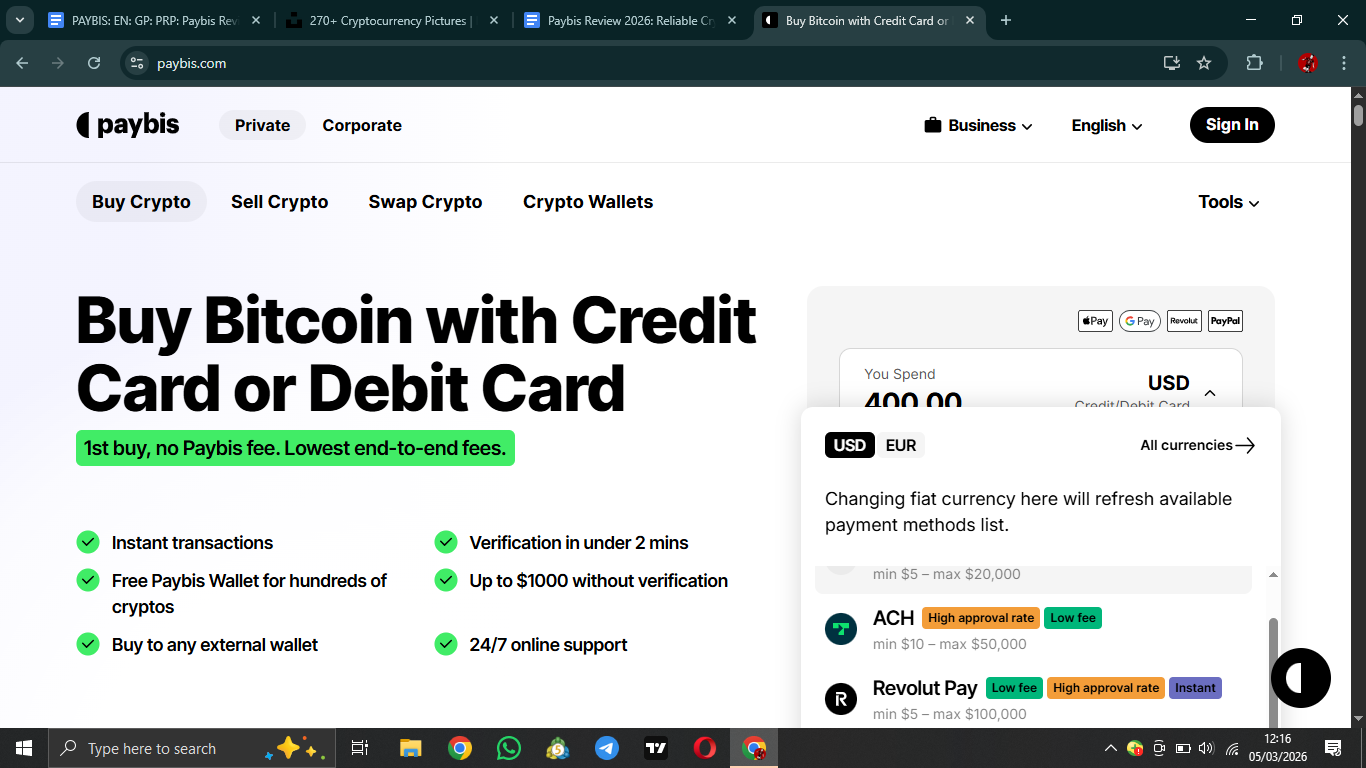
A crypto on/off ramp is a platform that allows you to exchange your crypto assets for fiat currency, such as the USD, and vice versa. Therefore, at its core, a crypto ramp acts as a bridge between the traditional banking system and the blockchain world. With crypto adoption at an all-time high, on- and off-ramp services for crypto have never been in higher demand.
Today, the best platforms offering these services not only guarantee high transaction speeds and cost transparency but also regulatory compliance and top security measures. Paybis has grown into one of the go-to crypto on/off ramps for both beginner and expert crypto enthusiasts in recent years. In this piece, we review Paybis, highlighting both its pros and cons and whether its infrastructure meets modern reliability standards.
Before we get into what makes a crypto on/off-ramp reliable, here is an overview table of Paybis as of 2026. The table highlights Paybis’ verified specifications and operational features.
If you are looking to take the first step into crypto assets, a good beginner-friendly entry point is to buy Solana with PayPal on Paybis. The crypto’s low transaction costs and growing liquidity, paired with PayPal’s familiarity, make it an ideal starting on-ramp combination.
Crypto assets have moved beyond speculative territory and into the mainstream, with adoption growing at about 34% annually. This growth means that reliability is a core feature for any crypto on/off-ramp platform looking to tap into this digital market. That said, reliability varies by who’s asking. For instance, a first-time crypto buyer will expect to buy and receive their assets into their wallet in minutes. In contrast, a business treasury will expect the on/off-ramp platform to be well-regulated and offer predictable settlement with verifiable audit trails.
https://unsplash.com/photos/a-person-holding-a-coin-in-front-of-a-computer-sM4r-swmcoY
As global regulations tighten the frameworks around crypto transactions, here are a few criteria that make a crypto ramp reliable for both individual and business traders today:
1. Stable payment infrastructure
A stable infrastructure ensures that end users can access the ramp 24/7 with low-to-no error rates. This means the platform must have consistent connectivity with traditional banking rails, card networks, and payment processes. When evaluating whether the platform has stable infrastructure, look at its payment rail support and its multi-year operating history. If it has partnerships across multiple jurisdictions, that’s another good sign that it has stable ramp functionality.
2. Regulatory compliance
With a tightening regulatory environment, regulatory compliance is another key criterion. New regulations affect settlement speeds and liquidity of digital assets. Transact on an unregulated platform, and you are an enforcement action away from frozen customer withdrawals. The most reliable platforms have active licenses in their jurisdictions of operation and have a straightforward KYC/AML framework.
3. Transparent pricing
Gone are the days when platforms would charge hidden fees on transactions. Reliable ramps are transparent about the service fee, exchange rate spread, and network fee from the outset. For instance, you want to swap ETH to SOL. A reliable platform will display a single pre-trade screen before you can complete a transaction.
4. Fraud prevention systems
With cyberhacks targeting on-ramps at an all-time high, you want a platform with robust fraud detection and anti-chargeback measures to protect you from losing your fiat and crypto assets. Some features to look out for on the platform include 2FA and device fingerprinting, as well as other real-time transaction risk-scoring techniques that help reduce chargebacks and account freezes.
5. Responsive customer support
Cryptomarkets are quite volatile and, as such, require 24/7 live support. Timely customer support can be the difference between you losing out on a trade or making a profit in the volatile crypto markets.
Here are Paybis pros:
Here are Paybis cons:
Paybis looks like a good fit for beginners and infrequent buyers looking for an easy-to-use crypto on-ramp. It is compliant, has a stable payment infrastructure, and supports most of the popular cryptocurrencies.
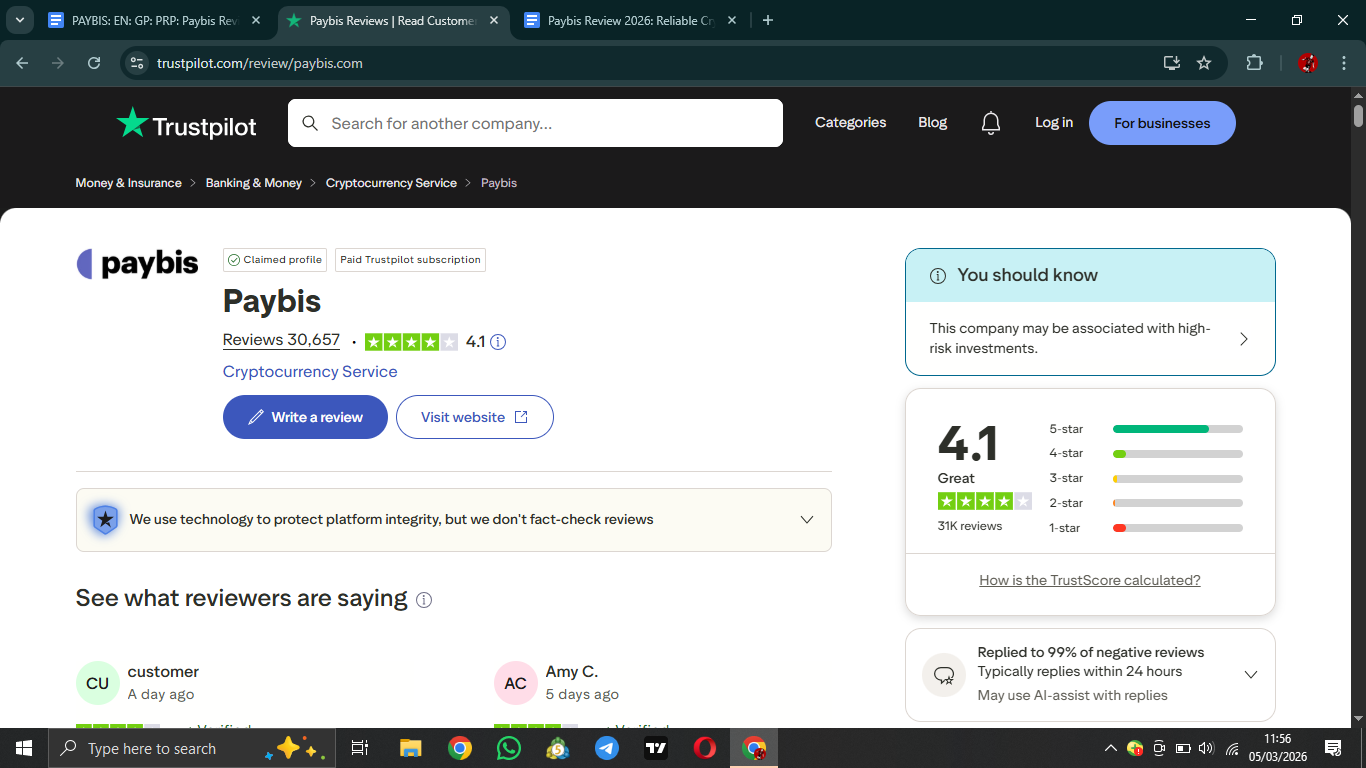
Paybis generally has positive reviews on Trustpilot. It has an overall rating of 4.1 out of 5 based on 31,000+ reviews, indicating that most of the platform’s users are broadly satisfied with its use cases. What’s more, Paybis customer support maintains a 99% response rate across all Trustpilot reviews.
User feedback follows a common theme, with most users praising Paybis for its ease of use and near-instant crypto transactions. Some of the recurring criticisms include verification delays and card fees.
With a 12-year operating history, no major outages, and diversified payment rails, including SWIFT, SEPA, Visa, and Mastercard, Paybis has a reliable payment infrastructure. The platform also offers a pre-trade confirmation screen before letting you confirm your transaction. However, there are concerns about the exchange rate spread, which is never stated in the confirmation screen.
What’s more, Paybis has regulatory licenses covering the US, Canada, and Poland, making it one of the most reliable ramps in the world. Besides, the 4.1/5 Trustpilot rating reflects that the platform is broadly reliable for users seeking instant fiat-to-crypto entry and for businesses building DeFi front-ends and wallet integrations.