In recent years, the stigma around mental health has started to fade, and more people feel comfortable talking about stress, anxiety and emotional struggles than they did before. Even so, talking about these topics has not necessarily made them easier to deal with.
For many people, stress and anxiety still build up gradually, showing up as overthinking, constant distraction, or the feeling that the mind never fully shuts off. The challenge is not just recognizing that something feels off, but figuring out what helps in those moments.
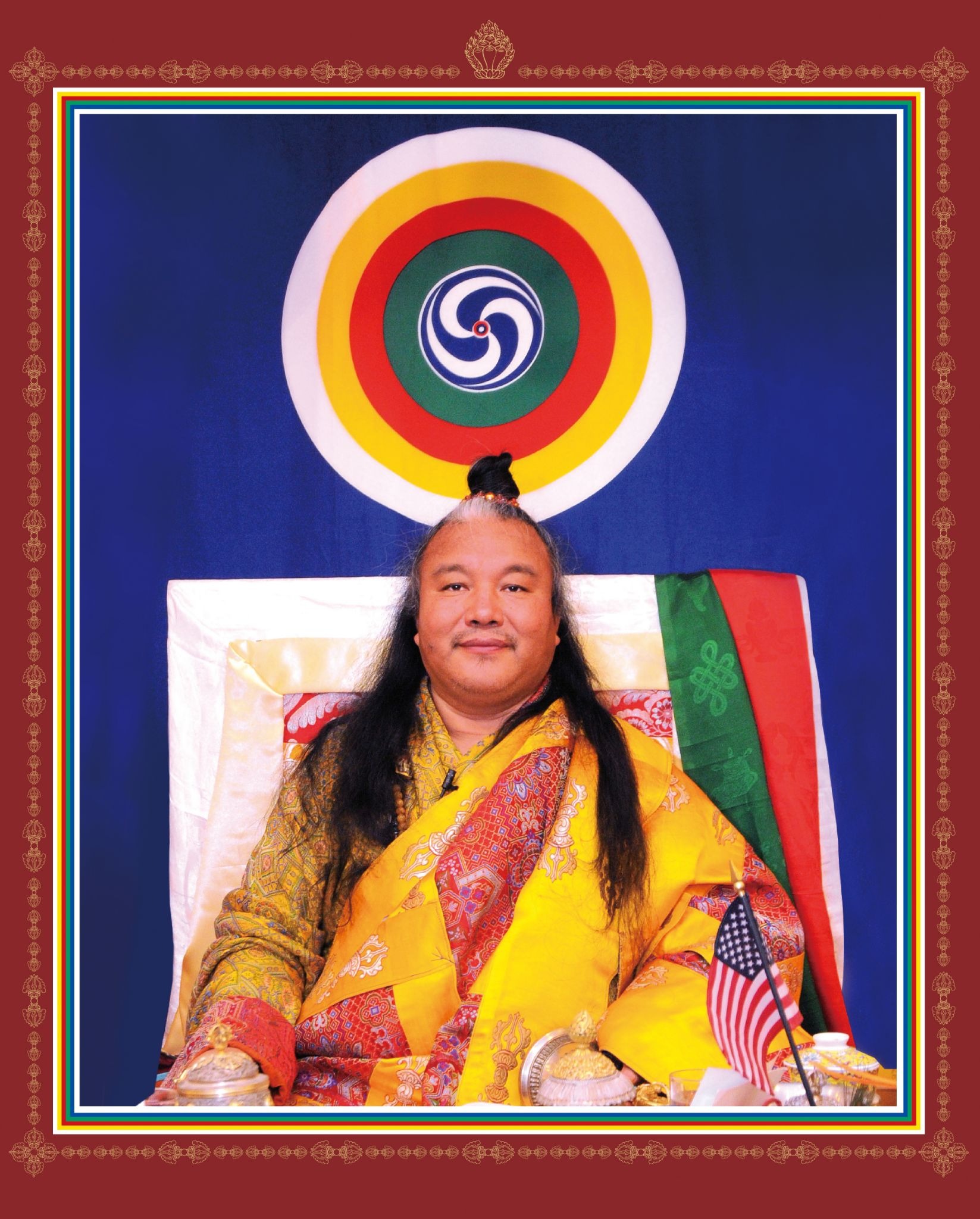
Khenpo Choga Rinpoche has spent decades working with people who feel stuck in those patterns. A Tibetan Buddhist teacher and the thirty-third holder of the Dzogchen lineage, he began training in Buddhist practice at the age of five.
Since then, he has taught in more than 100 countries, including over 3,800 locations across the United States.
Rinpoche applies traditional Dzogchen practices to everyday situations, helping people experiencing anxiety, trauma, addiction and long-term mental strain. For him, a teaching only matters if it leads to noticeable improvements in someone’s life.
“Our Dharma must be an antidote to the suffering of mind and body,” he said.
Through Dzogchen, Rinpoche encourages a different approach to healing, demonstrating the power in understanding the mind rather than reacting to or avoiding it.
Creating Space Between Thoughts and Actions
Rather than presenting Buddhist philosophy as something that must be fully mastered, Rinpoche focuses on what people can use in their daily lives. The teachings themselves are extensive and he has acknowledged that most people are not going to study every part of them in depth.
“It is very difficult to learn everything,” he noted. “My life's work is bringing the ancient wisdom tradition of authentic Buddhism to modern society.”
He focuses on the part of the teaching that deals directly with the mind and how people experience their thoughts in real time.
Dzogchen, which translates to “Great Perfection,” is based on the idea that the mind is naturally stable and clear, even as thoughts and emotions continue to come and go.
In his teaching, the goal is not to eliminate those thoughts, but to understand their nature. They can feel constant, especially when someone is stressed or anxious, but they are not permanent, and they do not define the mind unless they are immediately believed or acted on.
In everyday life, that distinction can feel impossible to notice. Messages, social media notifications and daily responsibilities create a near-constant stream of input. A person’s reactions to them can build up, leaving little breathing room and often leading to burnout.
A single thought can turn into frustration, and frustration can quickly escalate into conflict, often before there is time to step back and recognize what is occurring.
The focus of Dzogchen practice is to observe what is happening as it happens. Over time, that creates a small gap between a thought and a reaction. Within that gap, there is more clarity, and with it, more choice in how to respond.
Responding With Intention
For Khenpo Choga Rinpoche, understanding the nature of the mind is only the beginning. The next step is training it to better react to stress, conflict, and emotional pain in daily life.
In his teaching of Dzogchen, he uses a technique called mind training meditation, a set of practices designed to produce more positive patterns of thinking.
“I systematically and strategically teach to ensure that I decrease negative thinking while not disturbing anyone’s mind, culture, or religion,” he explained.
At the center of his teaching are three elements: mindfulness, compassion and wisdom-based awareness. Each one plays a different role in how a person handles emotional distress.
Mindfulness helps a person notice what is happening in the moment. That might mean recognizing the first sign of irritation in a conversation, the tightness that comes with stress or the start of repetitive thinking late at night. Instead of getting pulled further into it, mindfulness allows the person to pause.
From there, compassion shapes the response. Once someone becomes aware of a troubling thought or emotion, the way they respond matters just as much as the awareness itself.
Without compassion, awareness can turn into self-criticism or frustration. With it, the response becomes softer and more balanced. A person becomes less reactive, less likely to judge themselves or others, and more able to remain calm even when their emotions are strong.
Rinpoche teaches that thoughts and emotions often feel convincing, especially in moments of stress. But when a person looks more closely, they begin to see that these experiences are not fixed.
With wisdom-based awareness, they are less likely to follow every thought or react to every feeling. The sense of urgency starts to fade, and with it, the need to respond immediately.
Through consistent practice, even in small amounts, people can begin to change how they move through challenging situations, not by avoiding them, but by reacting differently.
Learning to Sit With Discomfort
Rinpoche’s approach is shaped not just by study, but also by experience. While studying Madhyamika philosophy, an older woman accidentally poured leftover food into his bowl of soup.
There was no alternative, so he kept eating, but his reaction to the situation was immediate. He felt uncomfortable and nauseous, and the experience was hard to ignore.
His teacher noticed and asked what was happening, then encouraged him to use what he had been studying.
“Can you use your Madhyamika logic with your food?” his teacher asked. “Never born from others, never born from self. Form is empty, empty is form.”
Instead of pushing the feeling down or stepping away, Rinpoche worked through it using the teachings he had been learning.
As his understanding deepened, his reaction began to change. The nausea did not disappear, but it became less intense and easier to manage.
“You see? Dharma is working,” his teacher said.
Nothing about the situation itself had changed. What did change was how it was being experienced. The goal of Buddhist teaching is not to remove discomfort, but to change one’s reaction to it.
The Making of a Young Buddhist Teacher
Born and raised in eastern Tibet in the 1960s, Rinpoche’s first exposure to Buddhist teaching came through his grandfather, who shared stories with him when he was four or five years old.
“When I heard these amazing stories, I was very joyful and happy,” he reflected.
Those stories stayed with him, and as time went on, he began repeating them to other children in his community, eventually telling around 1,000 stories to more than 80 peers.
At five years old, he entered Dzogchen Monastery, and within a few years, taught himself to read and write. By 11, he had completed a Manjushri practice in just two weeks, and by 12, had received further empowerments and instructions.
His training continued at Shechen Monastery, where he spent three years studying alongside the completion of 200,000 prostrations. He later studied under Khenchen Pema Tsewang Rinpoche and went on to attend Dzogchen Shri Singha University in 1981.
These years followed the Cultural Revolution, when Buddhist study in Tibet had been paused for 20 years. When it resumed, 17 well-known teachers trained more than 300 students.
“There was no traditional temple at that time,” he said. “Everything had been destroyed.”
Students lived in tents while studying, sometimes attending up to 12 classes in a single day.
At just 21 years of age, Rinpoche was appointed Khenpo and began teaching more than 500 monks. Later, he spent seven years in retreat in the Siltrom Mountain caves in the holy Dzogchen area of Tibet, practicing under challenging conditions with little food and only a few tattered clothes while reciting millions of mantras.
Through these experiences, he learned that a person’s inner state does not depend on external conditions, but on their ability to meet them with awareness and intention.
Applying Dzogchen to Modern Life
Before his teacher passed away in 2001, Khenpo Choga Rinpoche was asked to continue teaching outside of Tibet, where access to authentic Dzogchen teachings was limited. Since then, he has focused on making these teachings accessible to people from different backgrounds, cultures and belief systems.
Modern life presents a different set of challenges than traditional monastic life. Constant connectivity, information overload, and fast-paced environments can make it harder for people to slow down and understand what is happening in their own minds.
Rather than expecting people to adopt a traditional lifestyle, he adapts how the teachings are presented so they can be applied in everyday situations, whether someone is working, raising a family, or managing other responsibilities.
The Buddha Path is designed to be easy to understand, remember, and put into practice without requiring major changes to a person’s routine. By keeping his teachings simple, Rinpoche gives people a technique they can rely on no matter their circumstances.