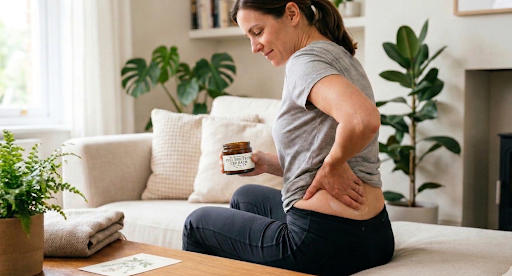
Chronic pain has a way of reshaping your entire day. A stiff knee changes how you walk, sore shoulders ruin your sleep, and aching hands make simple tasks feel exhausting. It's no surprise that so many people are looking beyond the medicine cabinet for something different. CBD creams have surged in popularity over the past few years, and the interest isn't just hype: millions of personal testimonials suggest these topicals can genuinely help. But with hundreds of products on the market, finding the right one takes more than a quick search. This guide to choosing the best CBD cream for pain relief breaks down what actually matters, from formulations and ingredients to where you should (and shouldn't) buy. Whether you're dealing with post-workout soreness, arthritis flare-ups, or tension that won't quit, the goal here is to help you make a smart, informed choice instead of an expensive guess.
CBD cream is a topical product infused with cannabidiol, a compound extracted from the hemp plant. Unlike supplements you swallow, a CBD pain cream is applied directly to the skin over the affected area. Cannabidiol interacts with endocannabinoid receptors in the skin and underlying tissues, which help regulate inflammation and pain signaling.
People reach for these creams because they offer a localized approach. Instead of sending a compound through your entire bloodstream, you're targeting a specific joint, muscle, or area of tension. Human trials are increasingly showing similar promise. The appeal is straightforward: put it where it hurts, and let it work there.
Most people associate CBD cream with pain, but its daily uses are broader than you might expect. Athletes use it after training sessions to reduce muscle soreness and speed recovery. Office workers apply it to their necks and wrists after long hours at a desk. People with conditions like osteoarthritis or fibromyalgia use it as part of their daily management routine.
A quality CBD body cream can also support general skin health. Many formulations include moisturizing agents like shea butter, coconut oil, or hyaluronic acid, which means you're hydrating your skin while delivering cannabidiol. Some users report that consistent daily application over two to three weeks yields the best results, so don't judge a product after a single use.
No. This is probably the most common concern, and the answer is definitive. CBD is not THC. While both compounds come from the cannabis plant, cannabidiol is non-psychoactive. Hemp-derived CBD products legally contain less than 0.3% THC, which is nowhere near enough to produce any intoxicating effect.
When you apply a cream topically, the CBD doesn't enter your bloodstream in significant amounts anyway. It stays in the local tissue. So even if a product contains trace amounts of THC, you won't feel "high." You also won't fail a drug test from topical CBD use under normal circumstances.
Traditional pain creams typically rely on menthol, capsaicin, lidocaine, or NSAIDs like diclofenac. These work through different mechanisms: menthol creates a cooling sensation that distracts from pain, capsaicin depletes substance P, and topical NSAIDs reduce inflammation locally.
CBD cream operates differently. It interacts with the endocannabinoid system, modulating pain signals and inflammatory responses through CB2 receptors in the skin. One advantage is that CBD creams tend to have fewer side effects. CBD creams rarely cause reactions beyond mild sensitivity in people with very reactive skin. The trade-off is that CBD's effects can be subtler and may take longer to notice compared to menthol or capsaicin.
Oral CBD products, such as tinctures, capsules, and gummies, work systemically. They enter your digestive tract, get processed by the liver, and then circulate through your body. This means they can address widespread issues like general anxiety or full-body inflammation, but they also take 30 to 90 minutes to kick in.
A topical CBD body cream bypasses all of that. You apply it, and the CBD absorbs into the local tissue within minutes. Bioavailability at the application site is much higher because nothing is lost to digestion. The downside is that the effects stay local. If your pain is in one specific spot, topical is often the better choice. If your pain is diffuse, oral products might serve you better.
CBD cream for pain is most effective in specific scenarios. Joint pain from arthritis, localized muscle soreness, tension headaches, lower back stiffness, and repetitive strain injuries all respond well to topical application.
It's less ideal for deep visceral pain, migraines with complex neurological components, or pain that moves around unpredictably. If you can point to where it hurts and it's within a few inches of the skin surface, a topical cream is a strong candidate.
Full-spectrum CBD cream contains the complete range of cannabinoids, terpenes, and flavonoids found in hemp, including trace amounts of THC. The idea behind full-spectrum is the "entourage effect," where these compounds work synergistically to enhance each other's benefits.
Broad-spectrum CBD cream removes the THC entirely while keeping other beneficial compounds. CBD isolate creams contain pure cannabidiol and nothing else.
These two categories serve different purposes. A CBD body cream is typically formulated with lower CBD concentrations and richer moisturizing ingredients.
A targeted CBD pain cream usually packs higher concentrations and often includes complementary pain-relieving ingredients like menthol, arnica, camphor, or turmeric extract. The texture tends to be thinner to facilitate faster absorption. If you're buying specifically for pain management, look for products marketed as pain creams.
Potency matters, but more isn't always better. A cream with higher CBD content delivers more per application.
For mild, everyday soreness, 500-1000mg products usually do the job. For moderate to severe pain, doses of 1500mg or higher tend to be more effective. Start with a moderate strength and increase if needed.
The best CBD cream for pain shares a few non-negotiable qualities. First, it comes with a third-party Certificate of Analysis (COA) that verifies the CBD content and confirms the absence of harmful substances. If a company won't show you their COA, walk away.
Second, look at the source of the hemp. Third, check the extraction method. CO2 extraction is the gold standard because it produces clean, potent extracts.
CBD doesn't have to work alone. The best formulations pair cannabidiol with complementary ingredients:
Menthol provides immediate cooling relief
Arnica montana is a botanical anti-inflammatory
Camphor creates a warming sensation
Turmeric extract offers additional anti-inflammatory properties
MSM supports joint health
Check the ingredient label carefully. Avoid products with artificial fragrances or parabens.
A cream sitting on your skin isn't doing much. You want a product that absorbs within one to three minutes without leaving a heavy, greasy residue.
Pay attention to the base ingredients. Some products use liposomal delivery systems to improve absorption. If a product feels like it's just sitting on your skin after five minutes, it's probably not formulated well enough.
You have three main options: buying directly from manufacturers, from specialty CBD retailers, or from general wellness stores. Buying directly from the brand's website is usually the best move because you get better transparency.
The CBD market is still poorly regulated, which means low-quality products are everywhere.
Red flags include: no COA available, vague labeling, unrealistically low prices, and health claims that sound too good to be true.
Before purchasing, run through this checklist:
COA from an independent lab
Clear labeling showing total CBD in milligrams
A complete ingredient list
Transparent company information
Reviews from verified purchasers
Price per milligram of CBD is the most useful comparison metric.
CBD cream is a topical formulation containing cannabidiol suspended in a cream base. To use it, clean the target area, then apply a dime-sized amount and massage it into the skin.
Most people apply it two to three times daily. Allow time before covering the area so the cream can fully absorb.
Honestly, no. Individual responses to CBD vary based on factors such as skin thickness, the severity and type of pain, and the quality of the product used. Some people feel noticeable relief quickly, while others need consistent use.
If you've tried a quality product consistently without improvement, it may not be the right solution for your specific type of pain.
Yes. There are no known risks associated with daily topical CBD use. Because the CBD stays localized, daily application is considered safe for long-term use.
The only caveat is to monitor your skin for any signs of irritation. If you notice redness or itching, discontinue use.
Choosing the right CBD cream comes down to matching the product to your specific needs. Know what type of pain you're dealing with, pick an appropriate potency, verify the product's quality through third-party testing, and give it an honest trial period of at least two weeks. Don't chase the cheapest option or the flashiest marketing. The best CBD pain cream is the one that's properly formulated, transparently labeled, and actually works for your body. Start with a moderate-strength product, pay attention to how your skin and pain levels respond, and adjust from there. Your experience will always be a better guide than anyone else's review.