Hydraulic cylinder problems usually do not show up all at once. A machine starts acting a little off. Pressure slips. A rod shows wear. Seals stop holding the way they should. Sometimes the first clue is just a minor leak that seems inconsequential until the cylinder begins affecting how the whole piece of equipment runs.
That is usually the point where a basic repair stops being enough. Companies like Fair Hill Precision handle cylinder repair work by looking beyond the obvious failure. The job is not just replacing one worn part and sending the unit back out. It is figuring out what failed, what else has been affected, and what it will take to put the cylinder back into dependable working shape.
Hydraulic cylinders live with constant stress. Heat, pressure, dirt, weight, vibration, repetition. Over time, all of that starts to leave a mark. Even a cylinder that has held up well for years can begin to wear down once those conditions keep piling up.
A leaking seal is a good example. It might look like a small, isolated issue, but often it is pointing to something else. The rod may be scored. The barrel may have internal wear. The cylinder may be slightly out of alignment. In other cases, the real problem starts with fluid contamination, which can quietly wear down internal surfaces long before anyone notices a performance problem.
That is why a professional overhaul starts with a simple assumption: what you can see is probably not the whole story.
Before anything can be fixed properly, the cylinder has to come apart. That sounds straightforward, but this part matters more than people sometimes realize. A careful teardown gives the shop its first real look at how the unit has been wearing in service.
Once the rod, piston, gland, barrel, and seals are separated and cleaned, the wear patterns start to speak for themselves. You can see where surfaces have rubbed harder than they should have. You can spot corrosion, scoring, looseness, or the kind of uneven damage that suggests side loading or alignment trouble.
That kind of detail is easy to miss in a rushed repair. It is harder to ignore when every part is laid out, cleaned up, and inspected with a clear eye. At that point, the overhaul stops being a guess and starts becoming a diagnosis.
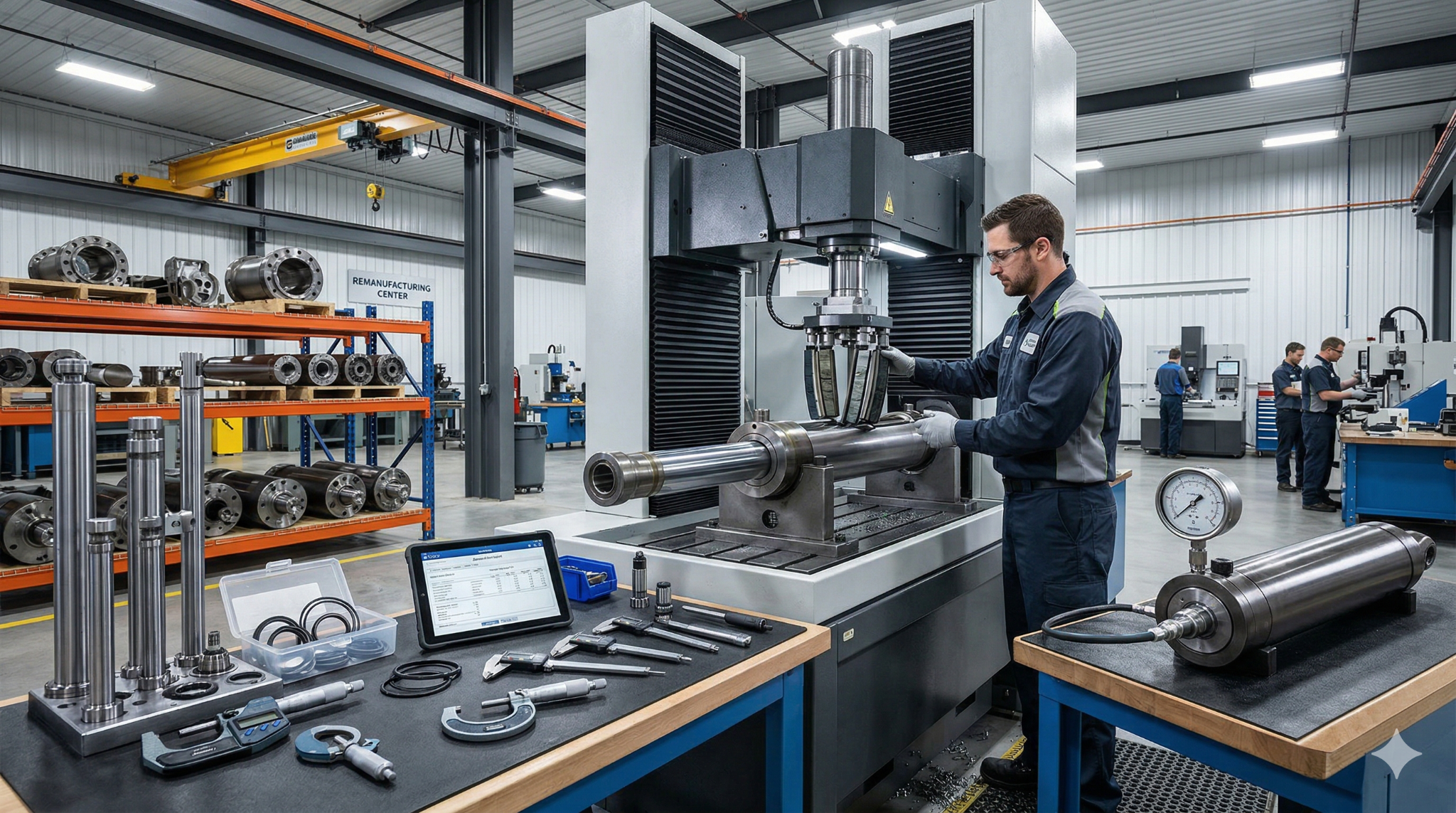
After disassembly comes the part that decides what is salvageable and what is not. Everything has to be measured. Not roughly. Not by eye. Measured properly.
This is where the rod gets a hard look. If it is bent, worn, or damaged beyond tolerance, putting fresh seals around it is usually just buying time. The same goes for the barrel. Pitting, scoring, or distortion inside the cylinder can shorten seal life and create performance issues even after the rebuild is finished.
This stage can change the whole direction of the job. A cylinder that looked like a simple repair on the outside may turn out to have wear across several components. Once those measurements are in hand, the shop can decide what can be reused, what needs to be machined, and what has to be replaced outright.
This is the stage most people picture when they think about an overhaul. Parts get repaired. Seals get replaced. Damaged components get swapped out. But the quality of this stage depends entirely on the work that came before it.
Sometimes the repair is fairly direct. Other times it calls for machining, refinishing, or building a replacement part that is not sitting on a shelf somewhere. That becomes especially important with older equipment or specialized setups where an exact replacement is hard to find.
That is also where precision starts to matter in a very practical way. A cylinder can come back looking clean and complete, yet still fail early if the internal fit is off or a damaged surface was left in place. The goal here is not to make the assembly look repaired. It is to bring it back within spec so it can hold up when the machine goes back to real work.
Reassembly sounds simple until you are dealing with hydraulic components that have to seal, align, and move under pressure without giving anything away. By this point, the overhaul depends on clean parts, proper fit, and careful handling. One mistake during reassembly can undo a lot of good work.
Every component has to sit where it belongs and move the way it was meant to move. If tolerances are off or a sealing surface is damaged during the process, the problem may not show up immediately. It may show up later as pressure loss, drift, or another failure that sends the cylinder right back to the shop.
That is why testing matters. Before a rebuilt cylinder goes back into service, it has to be checked for leaks, pressure loss, and overall function. That final step is what tells you whether the overhaul actually solved the problem or only looked good on paper.
There are times when a fast repair makes sense. Equipment is down, work is waiting, and getting the machine moving again becomes the top priority. But quick repairs have limits.
Replacing one failed part can restore operation for a while, though it may leave the larger wear issue untouched. If the rod is damaged, the barrel is worn, or internal clearances have already moved out of range, the same problem often comes back. Maybe not immediately, but soon enough to turn one repair into two.
That is usually the difference between a patch and an overhaul. A patch deals with the visible failure. A real overhaul looks at the full condition of the cylinder and deals with the wear that led to the failure in the first place.
A new cylinder sounds like the easier answer. Sometimes it is. Sometimes it is not.
For older machines, custom equipment, or specialized hydraulic setups, replacement can create its own problems. The part may be expensive, delayed, or difficult to match exactly. Even when a replacement is available, it may not be the fastest route back to service.
That is where rebuilding starts to make more sense. Keeping the original unit and restoring it properly can save time, preserve fit, and solve wear issues at the same time. It also gives the shop room to repair related parts, correct tolerances, and address problems a simple swap would leave behind.
For many businesses, that is the more practical way to look at it. The question is not just what can be replaced. It is what gets the equipment back to reliable service with the least disruption and the best long-term result. That is also why articles on how hydraulic cylinders get rebuilt tend to resonate with owners who are weighing repair decisions more carefully.
A professional cylinder overhaul is not one repair. It is a chain of decisions, and each one affects how the finished unit will perform. The teardown matters. The measurements matter. The machining matters. Reassembly matters. Testing matters.
When those parts of the process are handled well, the result is more than a cylinder that works again. It is a cylinder with a better chance of staying in service, holding pressure, and doing its job under the same conditions that wore it down in the first place.
In the end, durability comes from the quality of the overhaul