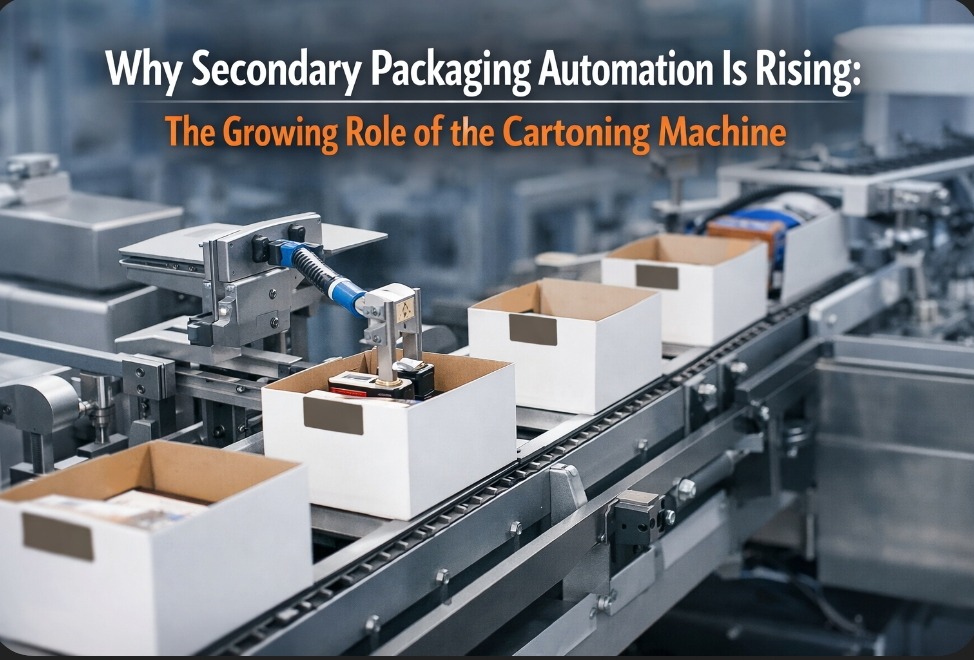
In today’s fast-paced manufacturing world, efficiency and precision are no longer optional—they are essential. One of the most significant transformations in modern production lines is the rapid adoption of secondary packaging automation. At the center of this shift is the cartoning machine, a powerful solution that is redefining how products are packed, protected, and delivered.
From food and pharmaceuticals to cosmetics and consumer goods, industries are increasingly turning to automated systems to stay competitive. But what exactly is driving this surge in automation? Let’s explore.
A cartoning machine is an automated packaging system designed to form cartons, insert products, and seal them efficiently. It plays a crucial role in secondary packaging—the stage where primary packaged products are grouped and prepared for distribution.
Cartoning machines can be broadly categorized into:
These machines ensure consistency, reduce manual labor, and improve overall packaging quality.
Modern production lines operate at incredibly high speeds. Manual packaging simply cannot keep up with growing demand. Automated cartoning machines enable businesses to package hundreds—or even thousands—of units per hour with minimal downtime.
This level of efficiency helps companies meet tight deadlines while maintaining consistent quality.
Across many industries, labor shortages and rising wages are pushing companies to automate repetitive tasks. A cartoning machine reduces reliance on manual labor, minimizing human error and lowering operational costs over time.
By investing in automation, businesses can allocate their workforce to more skilled and strategic roles.
In sectors like pharmaceuticals and food, hygiene is critical. Automated cartoning machines operate in controlled environments, reducing the risk of contamination.
Additionally, these machines ensure accurate product placement and secure sealing, protecting products during transit and storage.
Today’s consumers expect variety—different sizes, packaging styles, and branding. Advanced cartoning machines are designed with flexibility in mind, allowing manufacturers to switch between product formats quickly.
This adaptability is especially valuable for businesses managing multiple product lines.
With the rise of Industry 4.0, packaging systems are becoming smarter. Modern cartoning machines can integrate with digital monitoring systems, providing real-time data on performance, efficiency, and maintenance needs.
This connectivity helps manufacturers optimize operations and reduce downtime.
Cartoning machines streamline the process of forming, filling, and sealing cartons across various industries.
Companies looking to stay ahead are investing in reliable and innovative packaging systems. Platforms like Ruidapacking (ruidapacking.com) are helping manufacturers adopt cutting-edge cartoning machine technology tailored to their specific needs.
By leveraging advanced automation solutions, businesses can:
Sustainability is another major driver behind the rise of secondary packaging automation. Cartoning machines optimize material usage, reducing waste and supporting eco-friendly practices.
Many systems are also compatible with recyclable and biodegradable packaging materials, aligning with global sustainability goals.
The shift toward automated secondary packaging is not a temporary trend—it’s a long-term transformation. As technology continues to evolve, cartoning machines will become even more intelligent, efficient, and adaptable.
Businesses that embrace this change today will be better positioned to compete in tomorrow’s market.