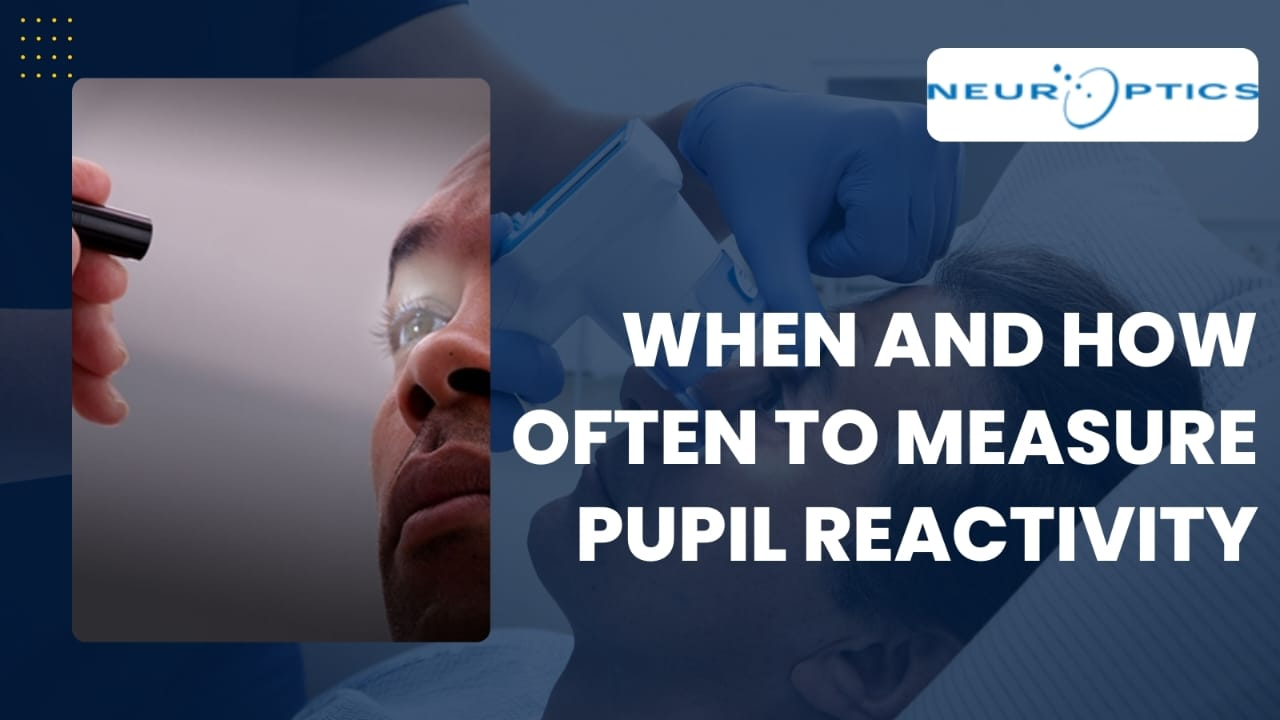
In emergency settings, a quick and accurate neurological assessment is very important. Among the most important indicators of brain injury is pupil reactivity. The way the pupil responds to light tells a lot about the brain function. Monitoring changes in the eyes can provide insights into patients' neurological issues. It can help to detect early signs of brain injury or stroke. But one important question that usually comes to mind is when and how often should pupil reactivity be measured? With advancements in technologies, such as automated devices from Neuroptics, the process of pupillary size measurement has become more precise, making it easier for clinicians to decide on timing and frequency.
Pupils are windows to the brain, and pupil reactivity can signal nerve damage, early signs of stroke or overall brain health. During a neuro exam, examination of pupils is very important as it provides immediate feedback.
Traditionally, medical staff performed manual tests with a penlight to assess size and responsiveness. This traditional method can differ depending on the examiner and can be subjective. Now with automated tools that calculate NPI easily and track the changes in pupil size, medical staff can rely on data-driven results for decision-making.
The timing of pupil assessment completely depends on the patient’s condition and environment:
● In case of emergencies, like head trauma, stroke, or sudden neurological issues, immediate pupil assessment is important. Even a subtle change in pry size can indicate urgent intervention.
● Post-surgical monitoring is also very important. After any neurological procedure, patients are at risk of swelling or bleeding. Regular pupil check helps medical staff detect complications.
● When patients with traumatic brain injury or those under ICU’s intensive monitoring are involved. Automated systems give accurate data for further treatment.
● For patients at risk of neurological conditions, pupil examination is a very important part of their routine checkup. These assessments allow medical doctors to establish a baseline and monitor any changes according to that.
While manual assessment remains a traditional and common method, modern devices have changed the dynamics of the process. Companies like Neuroptics have developed technology that provides:
● Proper pupillary size measurement and reactivity.
● Standardised scoring with the NPI.
● Digital tracking and comparison of records.
● Rapid results within seconds.
By replacing subjective observations with measurable data, these tools enhance accuracy and allow teams to communicate findings with consistency across shifts and providers.
Measuring your pupil reactivity at the right time serves several benefits:
Advancements in neurological tools are helping beyond the hospitals. With these advanced neurological tools, paramedics and first responders can perform rapid pupil tests and gather data. This data helps the emergency department to start the treatment at the earliest. This saves critical time during emergencies. By integrating compact devices, pre-hospital teams fill the gap between the field and the ER. This ultimately improves the patient outcome.
Understanding when and how to measure pupil reactivity is a very important thing in an emergency. Pupil assessment gives very critical results about your brain. This test is very important during brain injury or even regular monitoring in the ICU. Advancements in technology have transformed the assessment to find out pupillary size measurement into a more accurate and repeatable process. By tracking the proper percentage change in the size of the pupil, hospitals can deliver fast treatment.
At the last consistent and timely pupil measurement, it is not just about a routine checkup. It is actually a life-saving tool in modern medicine.