Picture this: you've finally carved out space for your dream home theater, only to discover that your bulky recliners have transformed your cozy movie sanctuary into a cramped obstacle course. Every trip to the snack bar becomes a navigation challenge, and forget about finding that perfect viewing angle when you're practically sitting on top of the screen. The core dilemma facing countless movie enthusiasts is striking the right balance between luxurious comfort and the harsh reality of spatial limitations. The good news? Smart space-efficient recliner designs can actually enhance your viewing experience rather than compromise it. Whether you're a dedicated cinephile working with a converted bedroom or a family maximizing a basement space, the key lies in understanding how modern theater seating solutions work within your constraints. Success comes down to three critical selection criteria: choosing recliners with space-saving mechanisms, optimizing your layout for both comfort and flow, and selecting features that add value without eating up precious square footage.
Small home theaters present unique challenges that can make or break your viewing experience. The most common mistake homeowners make is underestimating how much space recliners actually consume when fully extended. A standard recliner requires approximately 3-4 feet of clearance behind it, which can quickly overwhelm a compact room. Poor traffic flow becomes immediately apparent when family members must climb over seats to reach their spots, disrupting everyone's movie experience.
Viewing angles suffer dramatically in cramped spaces where seats are pushed too close to walls or positioned at awkward distances from the screen. The ideal viewing distance should be 1.5 to 2.5 times your screen's diagonal measurement, but tight quarters often force compromises that strain necks and eyes. Pre-measurement strategies become absolutely critical before any furniture purchase, as returns on bulky theater seating can be costly and complicated.
Start by measuring wall-to-wall dimensions, then subtract at least 18 inches on each side for functional walking space. Your recline clearance zone should account for the chair's full extension plus an additional 6 inches for safety. Standard walkway widths require a minimum of 36 inches for comfortable passage, though 42 inches works better for families with children or elderly members who need extra maneuvering room.
Wall-hugger reclining mechanisms represent the most significant advancement for small theater rooms, requiring only 3-6 inches of wall clearance compared to traditional recliners that need 3-4 feet. These innovative designs slide the seat forward as the back reclines, maintaining your position relative to the wall while delivering full comfort. Zero-clearance models take this concept further by eliminating rear clearance entirely, making them ideal for rooms where every inch counts.
Slim-profile armrest designs maximize seating width without sacrificing comfort, featuring tapered edges that create more elbow room between chairs. Modular configurations offer ultimate flexibility, allowing you to start with a loveseat and add individual chairs as your space or family grows. Look for theater chairs with removable armrests between sections to create seamless rows that feel more spacious than individual recliners.
Power recliners provide precise positioning control and require less physical effort, making them ideal for tight spaces where manual lever operation might be awkward. Swivel bases add functionality without consuming extra floor space, allowing viewers to easily turn toward conversation areas or side exits. Low-profile footrest deployment keeps the overall chair silhouette compact while still providing full leg support during extended viewing sessions.
Strategic row configurations can transform narrow rooms into comfortable viewing spaces without sacrificing accessibility. Single-row arrangements work best for rooms under 10 feet deep, positioning chairs along the longest wall to maximize screen distance while maintaining clear pathways. For slightly larger spaces, staggered seating creates depth perception and prevents heads from blocking views, with each subsequent chair offset by 12-18 inches.
Angled placement techniques can increase capacity by positioning chairs at 15-30 degree angles toward the screen's center, naturally improving sightlines while creating more efficient use of corner spaces. This diagonal approach often allows an additional seat compared to straight-line arrangements. Viewer-to-screen distance ratios become crucial in compact layouts, where the sweet spot typically falls between 8-12 feet for screens measuring 65-75 inches diagonally.
Single-row solutions maximize comfort in rooms measuring 8x12 feet or smaller, accommodating two to three recliners with proper spacing. L-shaped arrangements work brilliantly for square rooms, wrapping seating around corners to create intimate conversation zones during intermissions. Elevated platforms offer tiered viewing in rooms with 9-foot ceilings, raising back-row seats 6-8 inches to ensure unobstructed views while maintaining comfortable head clearance.
Ergonomic support becomes paramount during marathon movie sessions, where poor positioning can transform entertainment into endurance. Adjustable lumbar support and customizable headrests allow viewers to fine-tune their seating position for optimal spine alignment, preventing the neck strain and lower back discomfort that plague fixed-position chairs. These personalized adjustments prove especially valuable in small theaters where viewers can't simply move to different seats if their current position becomes uncomfortable.
Dual-motor systems offer independent control of backrest and footrest positioning, enabling precise customization that single-motor mechanisms can't match. This flexibility allows viewers to find their perfect angle for different activities, whether fully reclined for action movies or slightly upright for dialogue-heavy films. However, space constraints may limit your recline range, making it crucial to test chairs in positions similar to your actual room setup.
Memory foam cushioning provides superior pressure distribution without requiring the thick padding that consumes valuable space, maintaining comfort while keeping the chair's overall footprint compact. Quality adjustable mechanisms should operate smoothly and quietly, ensuring position changes don't disturb other viewers during critical movie moments.
Fabric selection significantly impacts both comfort and maintenance in compact theater environments where spills and heavy use are inevitable. Breathable microfiber fabrics excel in small rooms by preventing heat buildup during extended viewing sessions, while leather offers superior durability but can become uncomfortably warm without adequate ventilation. Performance fabrics with moisture-wicking properties help regulate temperature naturally, eliminating the need for additional cooling systems that consume space and energy.
Stain-resistant treatments prove essential for family theaters, with advanced nanotechnology coatings repelling liquids without compromising fabric breathability. These protective finishes extend furniture lifespan while reducing deep-cleaning requirements that might damage delicate reclining mechanisms. Cushion density requires careful balance between support and space efficiency, with high-resilience foam providing excellent comfort in thinner profiles compared to traditional spring systems.
Heat management becomes critical during marathon viewing sessions, where poor material choices can create uncomfortable microclimates. Perforated leather and mesh panel inserts promote airflow without sacrificing structural integrity, while gel-infused memory foam dissipates body heat more effectively than standard cushioning materials. Manufacturers like Weilianda have developed specialized foam blends that maintain their supportive properties while staying cooler than traditional materials, addressing a common concern in compact theater environments.
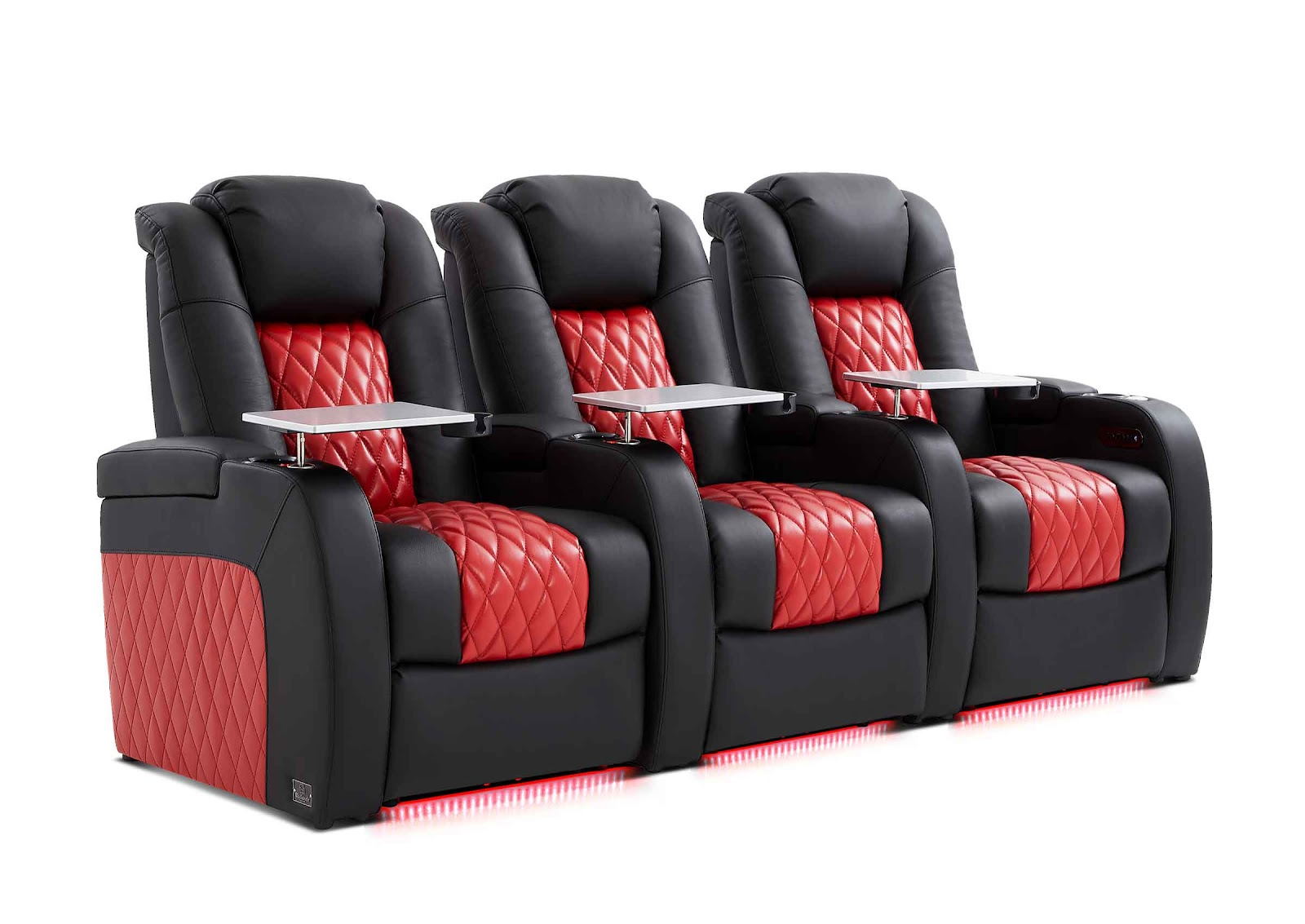
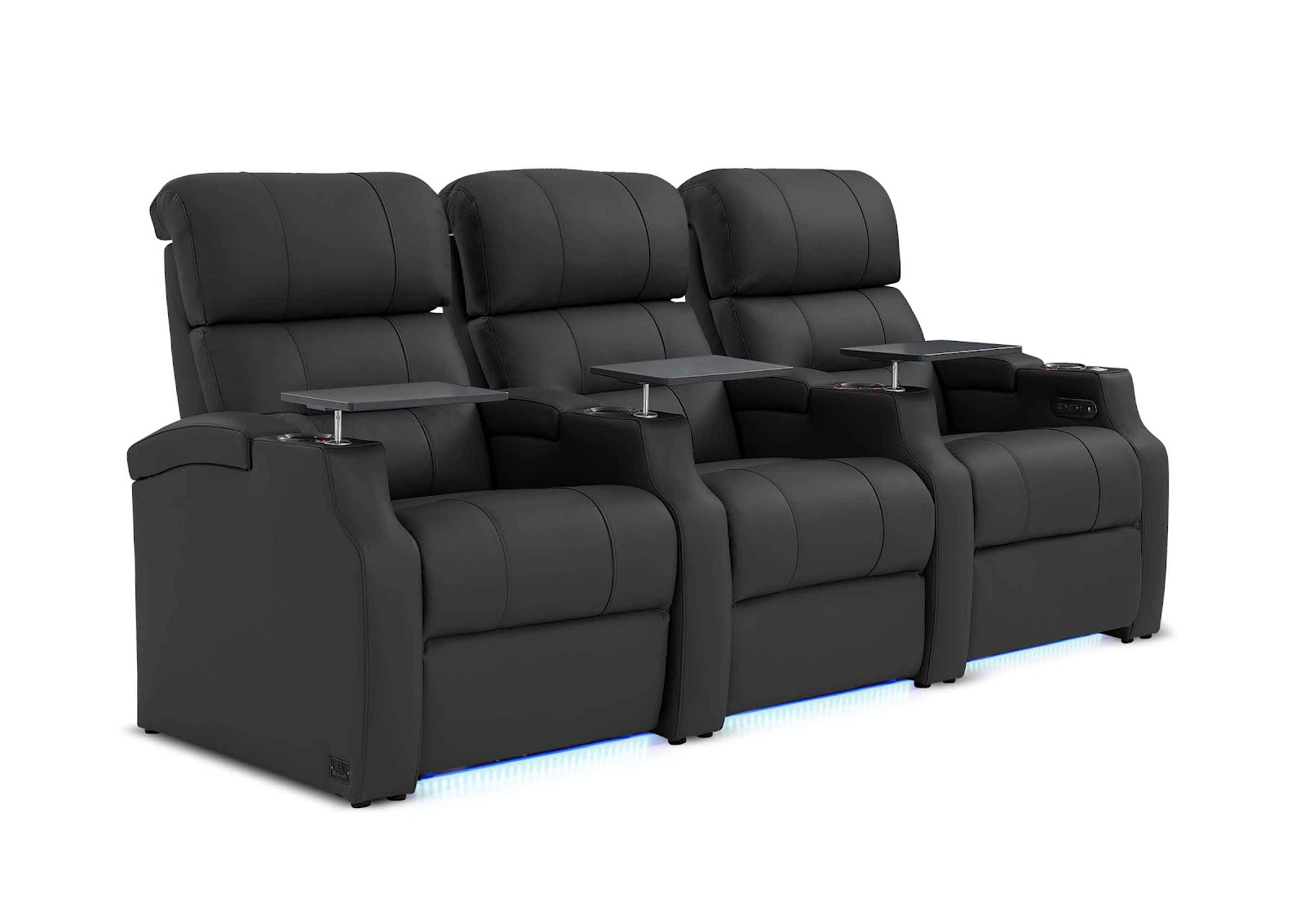
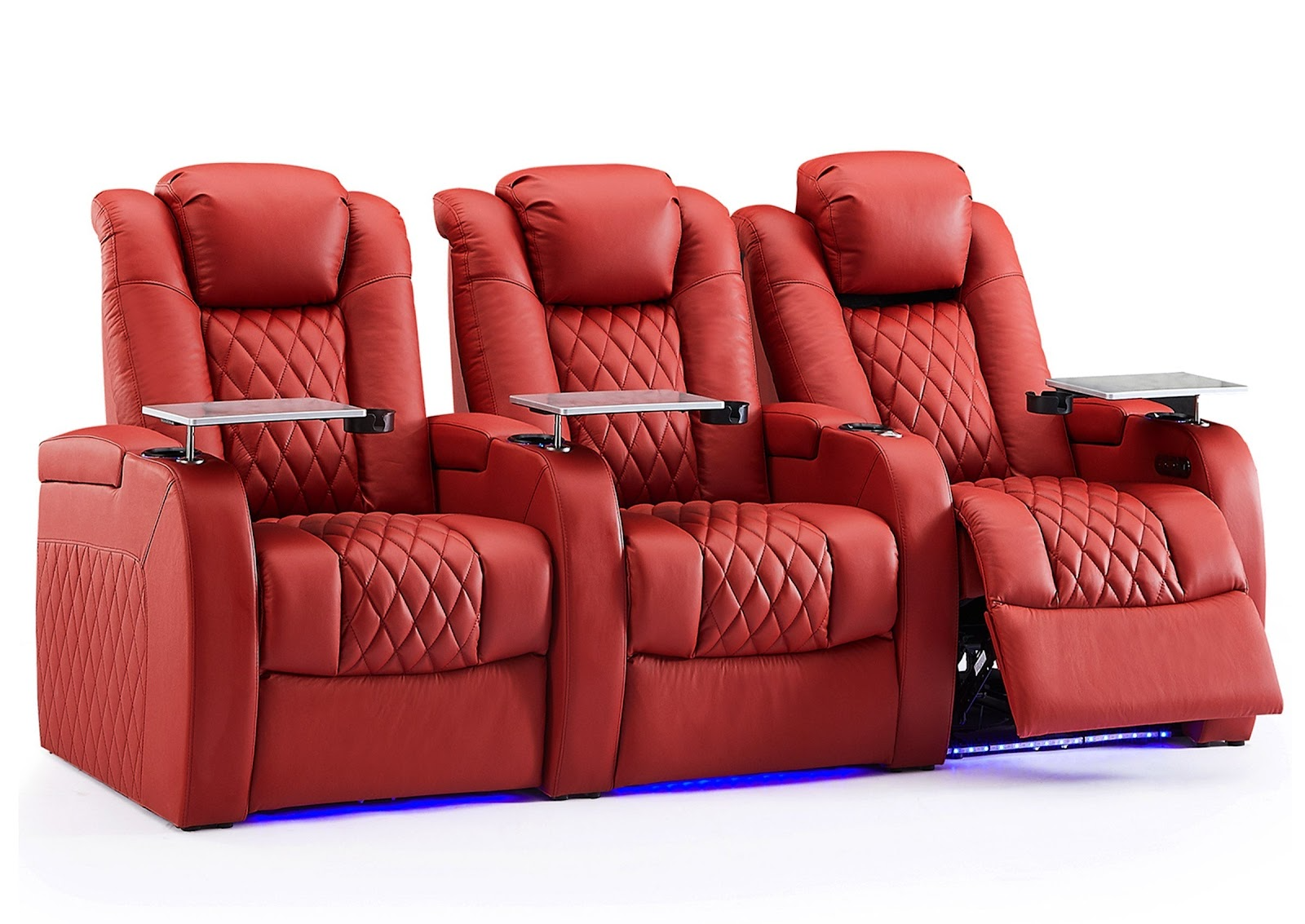
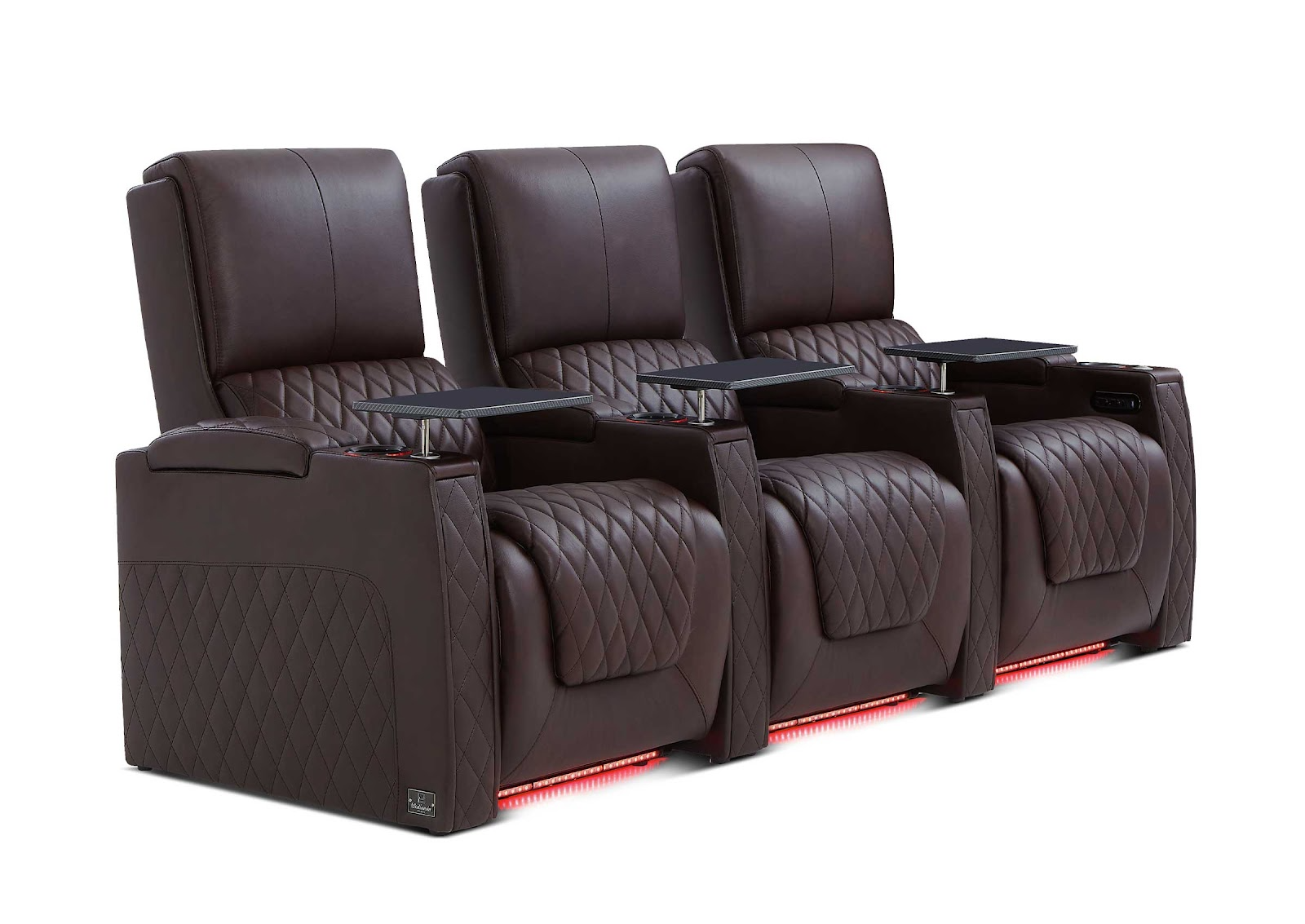
Built-in cup holders eliminate the need for separate side tables that consume precious floor space, with retractable designs that disappear when not in use. Armrest-mounted holders keep beverages secure during intense action sequences while maintaining clean sight lines throughout the room. Avoid bulky add-on accessories that protrude into walkways or create tripping hazards in already tight quarters.
Under-seat storage compartments provide discrete space for remotes, blankets, and movie collections without requiring additional furniture pieces. These hidden compartments slide out smoothly on quality mechanisms, offering surprising capacity while maintaining the chair's sleek profile. Integrated magazine pockets on seat backs keep reading materials organized without cluttering side surfaces.
USB charging ports positioned within armrests keep devices powered without trailing cables across walkways, essential for family members who multitask during movies. Strategic placement ensures easy access without interfering with reclining mechanisms or creating visual distractions. LED accent lighting integrated into chair bases provides gentle pathway illumination without requiring floor or wall-mounted fixtures, guiding movement during dark scenes while preserving the immersive atmosphere that makes small theaters feel intimate rather than cramped.
Transforming a small room into a premium home theater requires strategic thinking rather than compromise. The most successful compact theaters leverage wall-hugger mechanisms, optimize layouts through precise measurements, and select materials that balance durability with comfort. Your space-saving strategy should prioritize three core elements: recliners that minimize clearance requirements, layouts that maximize viewing angles while maintaining traffic flow, and integrated features that eliminate bulky accessories.
Before making any purchase, create your final checklist: measure wall-to-wall dimensions minus 18-inch clearances, verify reclining mechanisms work within your constraints, and select breathable materials suited for extended viewing. Remember that small theaters offer unique advantages—intimate viewing experiences, better sound acoustics, and cozy atmospheres that larger rooms can't match. Your compact space isn't a limitation to overcome but an opportunity to create a more focused, immersive entertainment environment. Start with accurate measurements, choose space-efficient recliners with the features that matter most to your family, and watch as your small room transforms into the premium theater experience you've always wanted.