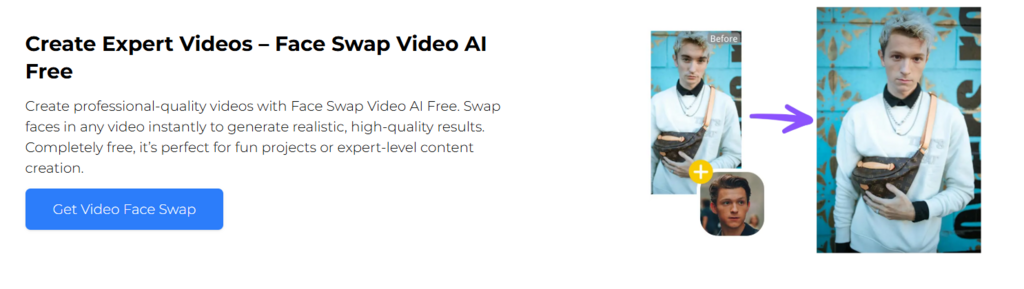
AI Video face swap has become one of the most exciting advancements in digital content creation. This technology allows creators to replace faces in videos with remarkable accuracy, opening up new possibilities for entertainment, marketing, and social media content. Whether you’re looking to add humor, create personalized media, or experiment with storytelling, the tools have made this process accessible to almost anyone. One powerful solution is AI face swap, which uses artificial intelligence and advanced algorithms to generate realistic results.
AI face swap relies on deep learning algorithms and neural networks to identify facial features and map them onto another face. The process starts with face detection, where the AI identifies eyes, nose, mouth, and other key points on the source video. Once these features are mapped, the software analyzes the target face and performs blending operations to ensure that skin tone, lighting, and expressions align naturally. This complex procedure is handled seamlessly by modern AI platforms, requiring minimal user input while delivering high-quality results.
Today, creators have access to a variety of tools that make video face swapping easier than ever. Platforms powered by AI stand out for their accuracy and convenience. Many tools allow users to upload videos and images directly, performing the swap in minutes while preserving the original video’s quality. Advanced features often include real-time preview, template options, and the ability to adjust facial expressions for more realistic outcomes. By focusing on intuitive interfaces, these platforms make complex AI technology approachable for both beginners and professional editors.
The uses of video face swap extend beyond simple entertainment. In marketing, brands can create engaging personalized ads by swapping celebrity or influencer faces onto promotional videos. In the film and television industry, it facilitates visual effects and stunt doubling, enabling actors to appear in multiple scenes without physically being present. Social media creators leverage face swap tools for humorous clips, memes, and interactive content that encourage viewer engagement. Even educational content benefits from this technology, allowing instructors to create immersive, face-personalized tutorials.
While video face swap is a remarkable technology, it is important to use it responsibly. Misuse can lead to deepfakes or misleading media, which can harm reputations or spread false information. Ethical practices include obtaining consent from all individuals whose faces appear in videos, avoiding content that could cause harm or embarrassment, and using watermarks or disclaimers when appropriate. By prioritizing transparency and consent, creators can enjoy the creative benefits of AI face swap without crossing ethical boundaries.
Creating your own face-swapped video is simpler than it might seem. First, choose a reliable AI-powered platform. Upload the source video and the target face image. The platform’s AI will automatically detect facial features and map the target face across the video frames. Most tools allow you to preview results in real time, make adjustments for alignment or lighting, and fine-tune expressions. Once satisfied, you can export the final video in high resolution, ready for sharing or professional use. Many creators prefer using AI video face swap for streamlined workflows and realistic results.
To ensure the best results, use high-resolution images and videos. Consistent lighting across source and target media reduces blending errors and enhances realism. Selecting a platform that allows manual adjustments can correct minor inaccuracies that AI might miss. Regularly updating the software ensures access to the latest features, improved AI models, and security patches. Combining these strategies with thoughtful planning will result in videos that look polished and professional.
Even with advanced AI tools, some challenges may arise. Misaligned faces, unnatural lighting, or artifacts can occasionally appear. To address these, verify that the uploaded media is clear and of sufficient quality. Adjust settings such as face alignment, smoothing, or expression matching to refine results. If issues persist, consider re-uploading the content after minor edits or experimenting with different AI models. By experimenting with settings and inputs, most common problems can be resolved efficiently.
Looking ahead, video face swap technology is expected to integrate more deeply with augmented reality (AR) and virtual reality (VR), enabling immersive, real-time experiences. Advanced facial motion capture and emotion mapping will allow even more precise swaps, making virtual avatars indistinguishable from real people. As technology improves, personalized content creation will become faster, more interactive, and more widely accessible, shaping the future of social media, entertainment, and digital marketing.
By leveraging AI-powered tools, you can produce realistic, high-quality videos that were once only possible with complex editing techniques. Whether for humor, storytelling, or professional use, these technologies make video content creation more accessible and engaging than ever. Explore the power of AI video face swap today through elevated your creative projects to the next level.