
One out of five people in the wealthy Westchester County, New York, recovers their unclaimed property in two years. In low-income communities in the Mississippi Delta, the ratio is one to fifty. This difference unveils an unacknowledged fact: America is not getting back its $70+ billion that it has lagged behind in terms of assets.
Unclaimed property programs were aimed at safeguarding consumers yet due to systematic obstacles, the affluent communities are enjoying most of the fruits of the initiatives with underprivileged individuals failing to access the funds that would transform their financial prospects. Recovery results reflect pre-existing inequities, whether in terms of digital divides and financial literacy, language barriers and mistrust of institutions.
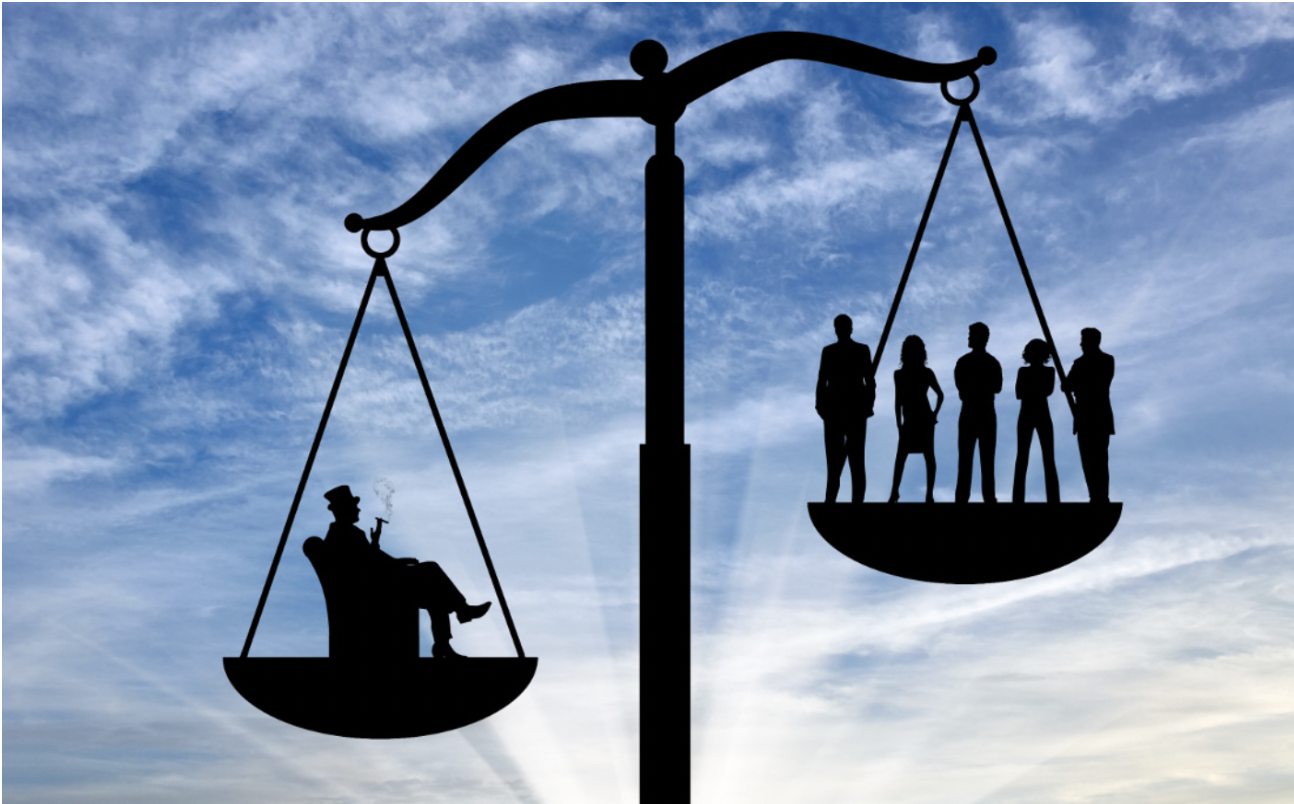
Figure. Wealth inequality: one wealthy individual outweighs an entire group on the scales of justice.
To create equity, policymakers and interest groups should recognize that the assets lost disproportionately affect the poorest people, thereby reinforcing the larger nexus of inequality.
For most Americans, finding unclaimed property begins online. However, there is a digital divide affecting millions. Lack of reliable broadband by rural households is very common and low-income families have outdated devices or prepaid data where fulfilling searches is hard.
Despite access, there are still digital barriers to literacy. The elderly, immigrants and poorly educated individuals might find it challenging to navigate websites in which there are several state searches, identity checks and uploading of documents. It is even more difficult without scanners or printers.
The language barrier further deteriorates the situation: the great majority of databases are in English only, and the majority are not mobile-friendly, which harms users who rely on smartphones. Customer service has also ceased to involve the use of phones and in-person customer care, which further excludes the people who are not as comfortable with the internet.
The outcome is dramatic: families in need of access to forgotten assets, families in need of financial support are least able to retrieve it. Unless digital access and fair design is achieved, billions of wasted funds will be lost.
Financial literacy is a very useful tool in the recovery of unclaimed property. More affluent families will be more aware of these programs, either via financial advisors and attorneys, or well-endowed outreach campaigns.
Awareness in the lower-income communities is low. Complex terms like “escheatment” confuse many, while limited education makes it harder to navigate requirements. Families that are not used to asset recovery can also fail to take action and disregard the funds that are due to them, thinking that it is a scam.
In the meantime, wealthy families enjoy the intergenerational knowledge transfer practices of record-keeping, estate planning and account monitoring heritage spanning decades. In contrast, disorganized documentation and limited financial education leave others disconnected from their rightful assets.
The outcome is predictable: communities with the least accumulated wealth are most likely to lose access to it. Expanding plain-language education and outreach is critical to breaking this cycle.
Language and culture form another barrier. Most government systems are English-only, with limited or poor-quality translations for complex financial terms. This means that a non-English speaker has a harder time making claims or realizing eligibility.
In the case of immigrant communities, fears of immigration status or mistrust of the government discourage participation. In cultures where financial decisions are family-based, rigid individual claim rules conflict with norms.
This is why culturally competent resources matter. As noted by advocates, “The complexity of navigating English-only government systems and culturally unfamiliar bureaucratic processes is why resources like Claim Notify have become valuable for diverse communities seeking culturally competent assistance with unclaimed property recovery.”
Without better translation, outreach through trusted leaders, and culturally sensitive communication, immigrant and minority populations risk being permanently excluded from billions in recoverable wealth.
Geography shapes access to unclaimed property. The countryside is usually unreachable to local government offices, lawyers, and financial institutions that can help the people navigate the process. The lack of transport complicates the fact that people who do not have cars or access to transit will find it difficult to get help.
In others, residents of the regions cannot get the official notifications due to unreliable postal delivery. Access to the notarization or account verification services required in recovery is also restricted in low-income neighborhoods through banking deserts.
Such building blocks are indicators of wider disinvestment in the region. Societies that are already facing shrinking economies and underdeveloped infrastructures have fewer resources to support the residents of these societies to recover wealth. Mobile outreach units should be built, digital infrastructure should be improved, and collaboration with nonprofits should fill these gaps.
Institutional inequities in addition to personal or individual challenges lead to disparate results. Communities that are historically marginal to the financial system due to redlining, discriminatory lending or wage inequality are less likely to keep a steady financial record.
Housing instability, incarceration and medical debt are barriers to the continuity of finances and, as a result, the notifications become undelivered and accounts are lost. The mistrust of financial institutions, which lies in the background of exploitation, prevents many of them from even participating in recovery programs.
Another obstacle is bureaucratic complexity: deadlines, confusing paperwork and limited legal representation cause a disproportionately high rate of failure of people without professional representation. Such systemic disadvantages to many imply that unclaimed property is never within reach again.
Unclaimed property, is not only a technical financial problem, but a social justice problem. The fact that it is in the possession of states in the tune of $70+ billion could be used to reduce wealth disparities but the system is designed to serve those who are least in need.
Fair interventions must be culturally competent outreach, technology access, plain language communication and grassroots advocacy. Such resources as ClaimNotify can be used to fill these gaps, to provide centralized assistance to historically left behind communities.
Finally, the long-term reform is required. Policymakers need to create unclaimed property programs to actively reduce inequality, rather than exacerbate it. Unclaimed property recovery can not only be used as a protection but also as an instrument of economic justice and equity by enabling the marginalized communities to reclaim wealth.











