Packaging one product in a box is easy. Packaging two, three, or more items in the same box is where things get tricky. One product may be bulky while the other is fragile or flexible. In such cases, measuring the size of the products and your box is very important. If you don't measure it properly, you may end up with wasted space, high cost, or the worst of all: broken items during poor shipping box handling. In this article, we'll go over how to measure and plan when you've got more than one product going into the same packaging box.
Always start by measuring your products. Each shipping box is measured by its height, width, and length, so take those measurements accordingly. Size the tallest and widest ends of each product. If an item has handles, rounded edges, or odd shapes, include those in your measurements.
If you're putting soft items like clothes, towels, plush toys, etc, measure those in the shape they'll actually take inside the box. You can fold or compress them while measuring. In this way, you'll get the measurements of the actual packed size rather than the loose or hanging size.
If you're putting items that are not uniform, like handmade or abstract goods, then measure a few samples of them. Out of all the samples, use the largest one as your base size so nothing gets squeezed too tightly later on.
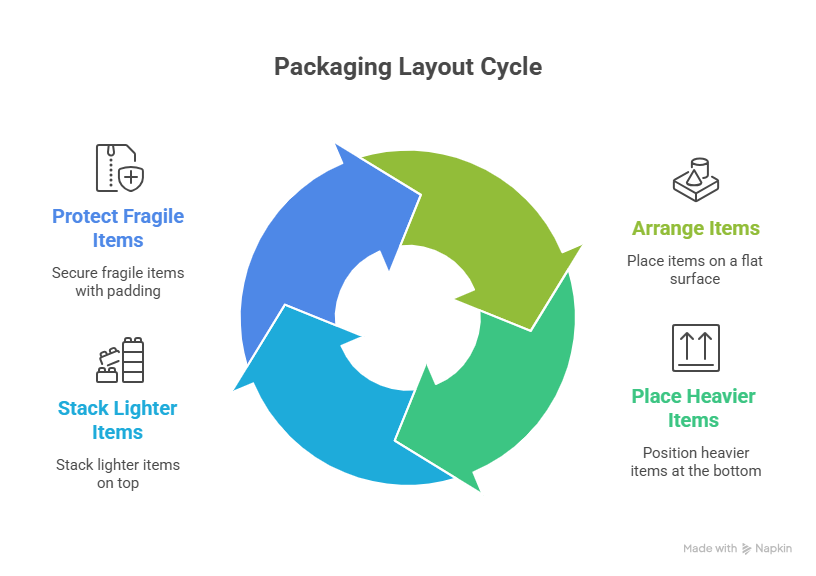
Once you're done sizing your products, plan what the box's layout is going to be. The way you arrange your products will make a big difference in the space they will take up inside the box.
Plan the layout by placing the objects on a flat surface. Heavier products will go at the bottom of the box so they won't crush the lighter ones. If any are fragile, put them at the top or next to sturdier products while leaving space for padding.
Try to put similar-shaped items next to each other. For example, if you're packaging books or trays, they'll line up together easily. You'll have to undertake creative placement with odd-shaped or circular items. Make sure you don't leave any awkward gaps between products since that would give the items space for movement.
Now that you've got the product placement down, you need to make sure they're able to reach their destination in one piece. This is where padding comes in. You can use multiple materials to secure the inside of your box. These include, but are not limited to:
The rule of thumb is to leave at least an inch or half between products for padding. Without added padding, products can rub against each other, causing surface damage. Make sure to wrap the fragile items individually first and then add them to the box. You can also use cardboard dividers for more protection. Measure the thickness of the dividers and add them to the interior dimensions of your box.
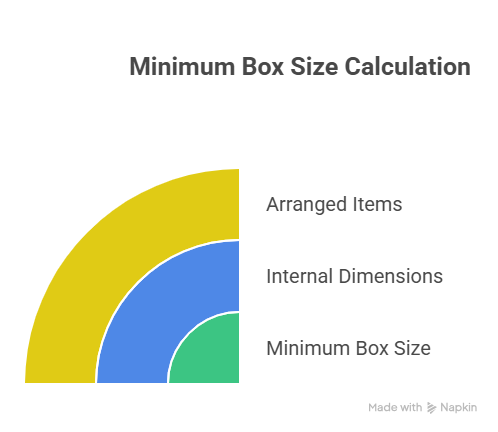
Your next step will be to calculate the interior dimensions of the box itself. There is a simple way to achieve this. Arrange the items and padding in a similar manner to how they will be packed. Then measure their height, length, and width and add up the volume of them all. This will be your minimum box size.
The first box size you calculate may not always be perfect. It's best to take measurements more than once and always test before you order custom printed boxes in bulk. To do this, find a similar-sized box and pack all the items and padding in as planned. Make sure you seal it and gently shake it. If you find the box's dimensions to be too tight, then size up to allow safe padding. If there is too much movement from the objects inside, try a smaller box or add separators.
When you pack multiple items in a box, there is going to be more overall weight and pressure inside the box. Standard single-wall boxes may not be able to do the job for such a scenario since they aren't strong enough. Using custom-designed double-wall or reinforced cardboard boxes is the way to go. Not only do they ensure that your package delivers safely, but they are made to size and do not break open midway.
Measuring for multiple products in one box takes a bit of planning, but it pays off. Start by measuring each item at its true size. Plan the layout, add padding space, calculate the bounding dimensions, and test with a trial pack. The result is boxes that fit well, protect your products, and ship for less.
Measuring and fitting multiple products in a standard box takes time and some legwork. A box built to your exact dimensions fits your items snugly, reduces wasted space, and cuts down on filler material. Reach out to BBP today to get your own high-quality custom boxes. Contact them today and design a custom box that fits your products perfectly!