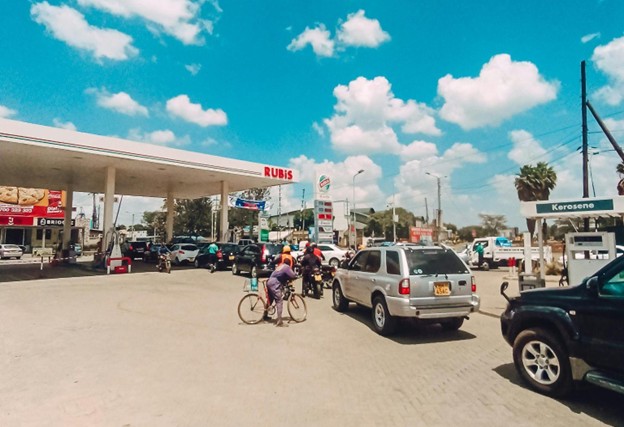
Gas stations are often seen as utilitarian stops, places to refuel, grab a snack, and get back on the road. Yet beneath that surface lies an overlooked truth: these stations are anchors of local economic life. Nicholas Kambitsis of Raceway Petroleum explains that gas stations and their attached convenience stores act as hubs of interaction, employment, and commerce. Their influence extends far beyond fuel sales, shaping the economic rhythms of the communities they serve.
At their core, gas stations generate two kinds of economic impact: direct employment and indirect local circulation. Each site requires teams of attendants, managers, and clerks, creating entry-level and managerial opportunities in neighborhoods where stable jobs are vital.
According to Nicholas Kambitsis, this layered employment ecosystem helps stabilize neighborhoods and provides footholds for economic mobility. In many areas, stations are among the most reliable employers, functioning as what Jane Jacobs once described as “everyday nodes” of urban vitality.
Urban theorist Jane Jacobs, in her seminal work ‘The Death and Life of Great American Cities’, argued that the vitality of a city depends not on grand projects but on the everyday interactions of small, local businesses. She showed how these enterprises fuel the informal economies of cities through repeated, organic connections. Gas stations mirror this principle. With dozens, sometimes hundreds, of daily visitors, they create micro-communities where commerce and conversation naturally overlap.
As Nicholas Kambitsis emphasizes, the strength of a gas station is not just in gallons sold but in the continuous, low-friction interactions that keep people and commerce moving, and understanding this is crucial.

Modern gas stations are evolving into hybrid spaces that reflect broader consumer needs. For Kambitsis, diversification is not just about boosting revenue; it’s about deepening a station’s relevance to its community.
By adding these services, operators create more reasons for people to stop, spend, and return—magnifying the station’s role in the local economy.
Gas stations also contribute in ways that are not easily quantified in sales data. Many owners, Nicholas Kambitsis included, recognize the importance of community support as part of long-term sustainability. Such support often takes the form of:
These contributions may not directly increase margins, but they build intangible value: loyalty, trust, and a station’s reputation as part of the neighborhood’s fabric.
Gas stations create what economists call multiplier effects. Money spent at the station circulates locally—through employee wages, supplier contracts, and customer spending. The results ripple outward:
Nick Kambitsis of Raceway Petroleum notes that these effects are particularly important in smaller towns and suburban corridors where a gas station may be among the busiest businesses in the area. By drawing steady flows of people, they support nearby restaurants, shops, and service providers.
While their role in local economies is well-established, gas stations face pressure from energy transitions, consumer expectations, and regulatory change. Nicholas Kambitsis highlights that success in the next decade will hinge on adaptability—balancing traditional fueling with forward-looking investments in technology and service.
By preparing now, operators can ensure that gas stations continue to serve as local anchors even as the transportation landscape evolves.
Gas stations may appear ordinary, but their contribution to local economies is anything but. As Nicholas Kambitsis underscores, they embody the Jacobs principle that small, consistent interactions form the backbone of vibrant communities.
Their impact extends far beyond fuel:
In the end, their value lies not just in what they sell, but in how they connect people, commerce, and community every single day.