Picture that your customer’s excitement reduces when their order arrives late or not incorrect. A strong fulfillment process ensures that every order hits the mark.
For an online business, fulfillment is not only about managing the shipment of products but also about customer satisfaction and loyalty to repeat sales. Every step from receiving the order to packaging, shipping, and handling has an impact on how the brand is serving.
A smooth and reliable fulfillment system gives your business a competitive advantage. It helps you reduce overspending on operations. Also eliminates the chances of errors and ensures that every order reaches the customer on time. When combined with professional eCommerce development services, you can transform your online store and maintain a seamless customer experience.
This blog covers everything you need to know about the eCommerce fulfillment, its process, and the resources to optimize business efficiency to maintain a strong presence in the market.
eCommerce fulfillment is the process that allows you to turn an online purchase into a smoothly delivered product. It includes everything from the placement of the order and continues until the packages safely reach the customer’s doorstep. When the process is managed effectively, it helps businesses to maintain trust and repeat sales.
Here’s how an effective fulfillment process impacts the overall business performance:
● Reduce the chances of delay in order processing and maintain accuracy.
● Lowers the operational cost while streamlining the warehouse management.
● Improve customer retention by maintaining consistency and timely delivery.
For growing your store online, order fulfillment acts as a bridge between the digital storefront and the customer’s services.
While both models maintain a focus more on the products that are delivered to the customers but the processes are different.
In eCommerce, fulfillment must handle multiple small shipments directly to customers instead of bulk deliveries to stores.
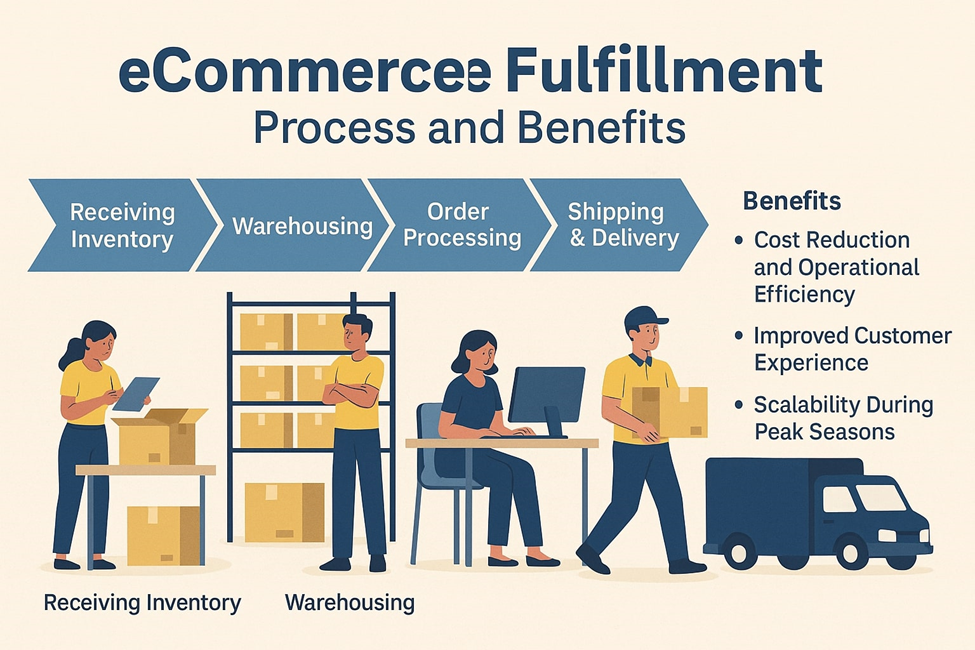
A well-structured fulfillment process helps in handling orders more effectively and also reduces the delivery time. Let’s look at how each stage of the process makes a better contribution to an effective system.
This is the first and most important stage of the fulfillment process. Products arriving at the fulfillment center need to be checked more carefully to maintain accuracy.
● Inspection and Verification
○ Confirms the quality and quantity upon arrival.
○ Match the received goods with the purchase orders.
○ Identify the damage or missing unit early.
● Stocking Procedures
○ Label and categorize the product to identify it quickly.
○ Place the item strategically based on the demand of users.
○ Update the system records in the system immediately.
With proper receiving and organizing, the processes make the system faster and more appropriate.
Once the items are available in your facility, the warehouse practices help in maintaining the order and accessibility. A well-managed warehouse minimizes the chances of errors and keeps the operation running smoothly.
● Storage Best Practices
○ Use a shelf system to effectively arrange products for easy navigation.
○ Allow to manage the product with its type or demand as per the order frequency.
○ Follow advanced methods to ensure smooth movement.
● Inventory Management System
○ Uses warehouse management software for real-time tracking.
○ Automate the reordering process and prevent outstocks.
○ Generate better performance and demand reporting for better planning.
By combining systematic storage with accurate tracking, businesses can maintain the flow of handling the growing inventory volumes.
After the order is placed, the fulfillment software verifies the payment system, checks the stock, and routes the order for picking.
● Automates the process of order validation and invoicing.
● Update the inventory level more instantly.
● Generate the shipping and packing instructions.
This fulfillment stage makes sure that every order is moved forward without facing the issues related to manual delays or leading to the chances of data mismatches.
It is important to maintain the accuracy and clear presentation to attract customers. With the right technique, you can minimize the chances of packaging errors and build a positive image.
● Techniques to Reduce Errors
○ Use a barcode system for scanning and RFID technology for precision.
○ Adopt batch or zone picking to maintain smooth delivery.
○ Verify the order details and other things before sealing.
● Packaging Standards
○ Choose the packaging material that is suited to the product type.
○ Include the branding image and eco-friendly elements.
○ Add a friendly note in the packaging to maintain the interest of customers.
Carefully handling the picking and packaging details for your business to reduce the chances of returns and improve the success rate of deliveries.
Shipping has a significant impact on the process fulfillment and allows you to meet the customer's expectations. You can include the standard delivery time and maintain the transparent delivery while leaving lasting impressions.
● Carrier Selection and Tracking
○ Partner with reliable carriers to make deliveries on time.
○ Share live tracking options and automated notifications.
○ Integrate the system with carrier APIs that allow for smoother coordination.
● Shipping Options and Costs
○ Offer the varied delivery choices to customers like standard, express or same-day.
○ Use the route optimization option to save time and fuel costs.
○ Negotiate rates with carriers to have cost-effective operations.
With the effective shipping option, you can not only improve the speed but also maintain the reliability while reducing the logistics expenses.
Returns are an important part of every eCommerce operation, and how a business handles them leads to maintaining effective customer trust.
● Handling Returns Efficiently
○ Inspect and sort the returned items properly.
○ Restock, repair, and replace the item based on its condition.
○ Automate the process of refund and exchange to speed up the resolution.
● Customer Communication
○ Give customer information about their return status.
○ Provide them with easy access to the return portal or chat assistance.
○ Use feedback from return data and improve the process.
A better return strategy allows customers to stay satisfied and increases the chances of repeated purchase.
Every eCommerce business has its own different approach and method to handle fulfillment and make a big difference in cost, speed, and customer satisfaction. Below are the common fulfillment models that you can choose from based on the size, resources, and goals.
In-house fulfillment gives you full control over the inventory, packaging, and shipping. It is preferred by the small brands or those who manage things by themselves.
Key Highlights
● Storage, picking, packaging, and shipping are effectively managed.
● Offer flexibility in packaging and maintaining customer communication.
● Requires investment in warehouse space, staff, and technology.
While it provides full control and in-house fulfillment can become time-consuming with the growing order volume.
Many eCommerce brands rely more on the logistics partner for fulfillment processes. These 3PL companies handle storage, shipping, and returns on behalf of the business.
Advantages and Considerations
● Saves time and reduces the chances of overhead costs on staff and storage.
● Offer scalability when the demand is high.
● Provide access to advanced logistics technology and carrier networks.
● Many support the monthly service fee and setup costs.
This model suits the needs of a growing business and maintains the focus on marketing and product development.
Dropshipping allows you to sell products with less investment at the beginning. With this, businesses give customer orders to the suppliers and ship them directly to the buyer.
Key Highlights
● There is no need for warehouse space or upfront inventory.
● Low startup costs with minimal risks.
● Has limited control over product quality and shipping timelines.
Dropshipping works well for new businesses that want to test different products but has limited brand consistency.
With the help of a hybrid fulfillment approach, you can combine two or more fulfillment methods, which allows flexibility across the product categories or regions.
Benefits of Hybrid Models
● Use in-house fulfillment for top-selling or customized products.
● Outsourced the standard products to the third-party partners.
● Maintain business continuity during the high-demand periods.
This setup allows you to maintain the balance of control, scalability, and efficiency.
Fulfillment by Amazon (FBA) is the fulfillment services that allow you to list your product in Amazon’s marketplace. It handles storage, packaging, and delivery of items to the fulfillment centers.
Advantages
● Give access to Amazon Prime’s fast delivery network.
● Increases the product availability and maintains trust among buyers.
● Support fulfillment, customer services, and returns effectively.
However, FBA comes with the storage fee and specific guidelines for product packaging and labeling.
Technology plays an important role in maintaining the smooth running of various operations across the fulfillment models.
Common Tools Used
● Warehouse Management System (WMS): Keep track of stock and automate the reordering.
● Order Management System (OMS): Coordinate for order flow across sales channels.
● Barcode and RFID Tracking: Improves accuracy with picking, packaging, and dispatch.
Integrate these systems to ensure visibility at every step of fulfillment models and reduce the operational costs.
Kitting is more about the management of multiple products into a single package while maintaining the custom packaging for branding purposes.
Why it Matters
● Improves the efficiency for a variety of products or subscription boxes.
● Reduces the chances of shipping errors and pre-packing sets.
● Strengthen brand identity through personalized packaging.
Kitting and thoughtful packaging allow you to turn the simple deliveries into a memorable experience while helping the brand to stand out in the competitive market.
An optimized eCommerce fulfillment process allows you to make a contribution towards maintaining effective business growth. This helps in improving the efficiency while reducing the cost and delivering consistency with a better customer experience.
Here are the key benefits that allow you to make the investment worth it:
By minimizing the storage cost and automating the repetitive tasks, you can optimize the shipping route. It allows you to save expenses on the operations while improving the speed and accuracy.
Fast delivery, accurate order fulfillment, and easy returns allow to build trust among the customers and increase satisfaction. This led to a higher retention rate of customers with more chances of repeated purchase.
With the efficient fulfillment system, you can manage the sudden demands without facing any delays or inventory issues. You can also be sure about the consistency in services throughout the year.
When the fulfillment process runs smoothly, the team can give more attention to the marketing practices and look forward to the innovation in products. This supports better customer engagement and reduces the difficulty in logistics.
When following the fulfillment processes with the advanced strategies, then you can easily combine efficiency with technology and maintain focus on customers.
You can consider these approaches:
● Accurate Inventory Forecasting: Make use of the past data of sales and trends to predict the demand and maintain the balance of the inventory.
● Automated Restocking Systems: Automate the process of restocking the product in the inventory to save time for stockouts and reduce manual errors.
● Sustainable Logistics Practices: Easy adoption of sustainable practices for packaging, eco-friendly carriers, and route optimization allows for minimizing the impact on the environment.
● Data-Driven Operational Decisions: Keep monitoring the fulfillment processes for performance and improve the decision-making.
● Integrated Customer Support: Offer with the order tracking option for simple returns and effectively maintain customer communication for better satisfaction.
When you implement these strategies, you can be sure of smoother operations, faster deliveries, and happier customers.
eCommerce fulfillment process is more than just managing the orders and their shipments. It has a direct impact on how customers connect with your brand. When products are delivered safely and on time, you can build trust and encourage customers to make repeated purchases.
Efficient fulfillment process means you can reduce the chances of errors and delays in the processes while maintaining the smooth running of the business and customers. Beyond improving customer satisfaction, it gives freedom to the team to focus more on the growth areas like marketing, product development, and customer engagement.
When partnered with a skilled Magento development company, you can take a step forward by integrating the advanced strategies of fulfillment and streamlining the operations. This allows for improved order accuracy and creates a better shopping experience while maintaining long-term growth and loyalty.