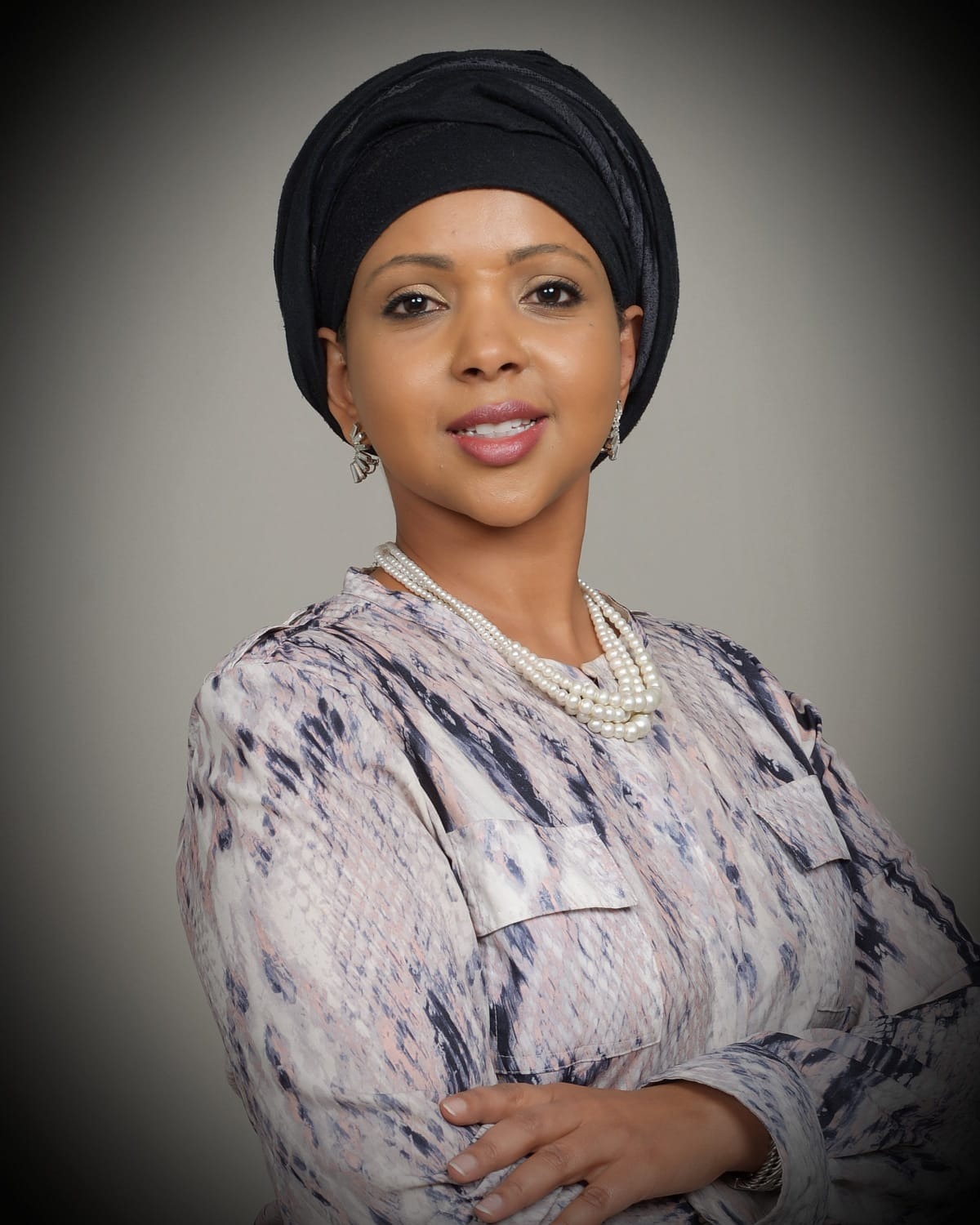
From war-torn Somalia and a perilous journey through Kenya, Khadija Ali resettled in the United States with her family in 1996, became their interpreter, and went on to build and lead two successful language companies that are changing the lives of other immigrants.
Ali’s early experiences with language barriers in healthcare inspired her to pursue a career dedicated to bridging linguistic and cultural divides. Her first venture grew to over 900 interpreters, covering more than 100 languages. In 2015, she founded Global Language Connections (GLC), which has since expanded to serve clients across various sectors, including healthcare, education, legal, and government.
When she founded her first company, she struggled to meet growing demand with limited resources. A banker even suggested selling the business because two women of color, she and her co-founder, might not succeed in leading it. Instead of giving up, Ali reimagined how to scale by recruiting and training interpreters directly from immigrant communities. That decision allowed the company to grow significantly and proved that thinking beyond traditional hiring models could dramatically expand access while empowering multilingual professionals who were often overlooked.
On Thinking Creatively
At Global Language Connections, Khadija Ali’s Minneapolis-based company, thinking creatively begins with listening. Every client, from healthcare providers to government agencies, has unique needs, according to Ali, so the company encourages its interpreters, translators, and consultants to bring forward ideas shaped by their cultural and linguistic expertise. She explains, “I believe innovation grows when people feel seen and trusted. That means creating an environment where my team can test approaches, ask questions, and share solutions rooted in their lived experiences. Because language access is about more than just words, it is about building systems that adapt to diverse communities in real time.”
Ali sees creativity as essential to balancing growth with mission. As a refugee who once sat in classrooms unable to understand or be understood, she knows all too well the stakes of language access. So when she makes decisions, she thinks about how a creative solution—like integrating telehealth technology or designing culturally tailored training, can both strengthen the business and remove barriers for immigrant families.
“Creativity allows me to see challenges not as roadblocks but as opportunities to bridge divides in new ways,” Ali explains.
Encouraging her team of interpreters, translators, and consultants to innovate and experiment with new approaches to client services keeps creative energy flowing and makes the company more flexible and able to meet unique needs. She tells her team that every client interaction is a chance to learn. “We do daily check-ins where we share what worked and what could be improved. By creating space for reflection, we uncover new ways to serve clients more effectively,” she explains.
Equally important is emphasizing that mistakes are part of growth—if an approach doesn’t land, Ali says, the team adjusts together. That culture of openness has led to innovative practices, like embedding cultural competency training alongside interpretation for employers struggling with workforce retention.
Building Partnerships to Scale a Business
Scaling to 200+ languages required a mindset shift. Instead of focusing only on supply, GLC built partnerships within immigrant and refugee communities to train interpreters who could grow with the company. One creative solution was to develop a pool of interpreters cross-trained in both medical and legal terminology. That flexibility meant they could be deployed quickly when urgent needs arose—whether for a hospital patient or an asylum case. It allowed GLC to expand access without sacrificing quality.
From the challenge of scaling to 200-plus languages to meeting the urgent needs of immigrant communities, Khajadi Ali’s Minneapolis Global Language Connections required a mindset shift. Instead of focusing only on supply, the company built partnerships within immigrant and refugee communities to train interpreters who could grow with them.
As Ali explains it, one creative solution was to develop a pool of interpreters cross-trained in both medical and legal terminology. That flexibility meant they could be deployed quickly when urgent needs arose—whether for a hospital patient or an asylum case. “It allowed us to expand access without sacrificing quality, she says.
Staying Inspired to Innovate and Think Creatively
In such a competitive and rapidly evolving industry, how does Ali stay inspired to think creatively while maintaining GLC’s distinct impact?
“I stay inspired by remembering why I started. My younger sister was once misdiagnosed because of a language barrier. That memory fuels my commitment to keep innovating so no one else faces that kind of preventable harm.”
She also surrounds herself with mentors, board colleagues, and young entrepreneurs who, she says, challenge her to see things differently. “Their perspectives remind me that creativity is not optional—it is necessary to maintain impact in an industry that touches lives so directly.”
Cultivating a culture of creativity and innovation at GLC—particularly when serving clients across sectors like healthcare, education, law, and government—begins with listening. Every client has unique needs, so interpreters, translators, and consultants are encouraged to bring forward ideas shaped by their cultural and linguistic expertise.
Ali firmly believes that innovation grows when people feel seen and trusted. For her, that means creating an environment where the team can test approaches, ask questions, and share solutions rooted in their lived experiences. Because language access, she says, is about more than just words—it is about building systems that adapt to diverse communities in real time.
Innovation, however, has to be grounded in reality. While AI translation tools are advancing, Ali points out that they cannot replace human nuance. GLC integrates technology where it helps— such as scheduling platforms—while relying on human interpreters for contexts requiring cultural empathy. This balance ensures clients in healthcare, education, and legal sectors get efficient service without losing the human connection that makes communication meaningful.
Beyond Translation; Beyond Business
One innovation currently being piloted at GLC is a cultural consulting initiative that extends beyond translation. The team is helping organizations train staff on cultural norms, body language, and communication styles to reduce misunderstandings. In one partnership, this training improved employee retention by 45 percent.
“This project excites me because it shows that language services are not just about words—they are about building truly inclusive workplaces and communities,” Ali says.
Beyond the world of business, Ali shares her practices for generating fresh ideas. They include prayer, reading, and reflection as part of what she calls her daily rhythm. “I start my mornings early with prayer and exercise, which clears space for new ideas.”
For Khadija Ali, Minnesota is home. She serves on boards like the Minneapolis Foundation and Global Minnesota, which keep her connected to diverse leaders, and those conversations often spark fresh approaches for GLC.
“And my refugee journey continues to be a well of ideas, because I know what exclusion feels like, I am always searching for new ways to design inclusion.”
Success is in the Stories
Ali has built a successful global business that is changing lives and will continue to make a difference for immigrants and businesses into the future.
She says that, for her, success is measured in stories as much as numbers. “Growth matters. We track revenue, client retention, and rankings, but the deeper measure is impact. Did a patient finally receive the correct diagnosis because an interpreter was present? Did an immigrant employee feel valued because cultural training improved workplace communication? When the answer is yes, I know we are succeeding.”