Metal facade has become one of the pillars of the modern building because it is versatile, strong, and very appealing. Based on this, architects are also embarking on new designs to enrich the beauty, function, and energy impacts of urban structures.
Contemporary trends are based upon environmentally friendly materials, exquisite designs, and creative finishes. Using technology, texture, and color, designers create impressive facades that combine futuristic creativity and classical architectural beauty.
The modern trends are founded on materials that are eco-friendly, elegant designs, and inventive finishes. Designers make spectacular exteriors out of technology, texture, and color that have elements of the futuristic and the classical architecture.
Recycling of aluminum, steel, or copper lowers the process of extracting the raw materials. It is an approach that contributes much to the waste decrease and offers certain sustainable solutions to modern metal facades and construction objects.
A solar reflective or insulated face cover is used to increase the energy efficiency of a building. The features decrease cooling and heating requirements, which essentially influence sustainability and reduce the long-term operational costs.
Long-lasting, strong metals save on resource consumption since they need fewer replacements. In the long term, this strategy reduces the environmental implications as well as preserving structural integrity and sustainability in building use.
Environmentally safe surfaces, such as metal covers, reduce the utilitarian use of harsh cleaning agents. This will reduce the adverse effect on the environment without worsening the appearance, life span, and working of the building in the years.
Green buildings result from the message-friendly metal facade materials. This will enable the designers to strike a balance between the environmental considerations, aesthetics, and functionality that helps in creating durability and future-proofing.
The use of lightweight metal is transforming the facade design as it is strong in nature, easy to handle, and install. It is on such materials that architects can construct complex forms without compromising the grade of structural stability and beauty.
Lightweight metal decreases the load-bearing capacity of the structural framework of a building. This enables the architects to experiment with new designs, use intricate shapes and inventive forms without having to compromise on stability or safety.
Mutual metal panels are handled in a simplified way, and this quickens the process of construction. Such efficiency reduces labor costs as well, which makes a project cost-effective without compromising quality and precise facade installations.
Immensely developed metals are extremely corrosive, weather-resistant, and mechanical. The rationale that leads to this is the fact that the life of metal facades guarantees structural integrity and the beauty of the metal facade until the time it is in use.
Lightweight but strong panels provide great flexibility to innovative architectural designs. They allow curved, folded, or highly detailed shaped fronts, which can retain structural integrity yet provide exterior design with impressive aesthetic appeal.
High-performance metal panels are light but powerful to allow planners to push the limits of design and still keep the structures safe. With their power, strength, and multipurposeness, they have become the preference of modern facade systems.
Among them is the introduction of metals into other material groups like glass, wood, and stone. Facades made of mixed materials will provide a visual texture, greater functionality, and encourage improvement of structural architecture design.
They create massive visual richness when mixed with metals, along with natural materials. This combination enhances sophistication in architecture and gives a feel of texture and contrast, and unique and inexhaustible beauty in the faces of buildings.
Performance is encouraged by the blend of different materials in a facade since it enhances insulation, light regulation, and ventilation. The technique will render buildings more energy efficient, comfortable, and more adaptive to climatic variables.
The other alternative is a metal version, which suggests a very original range of finishes, textures, and colors that can be combined. In so doing, they will make sure that there is individuality in the buildings and also that there is uniformity in the designs.
By means of the combination of materials in the facade of a building, the performance and its endurance are enhanced. This lowers maintenance requirements also, and the exterior would be factored in as low-maintenance, durable, and appearance.
Material combinations make architects integrate aesthetics and functionality. Serious choices of metals and other materials offer aesthetically compelling, functional, and durable exterior attributes that would adapt to different design dreams.
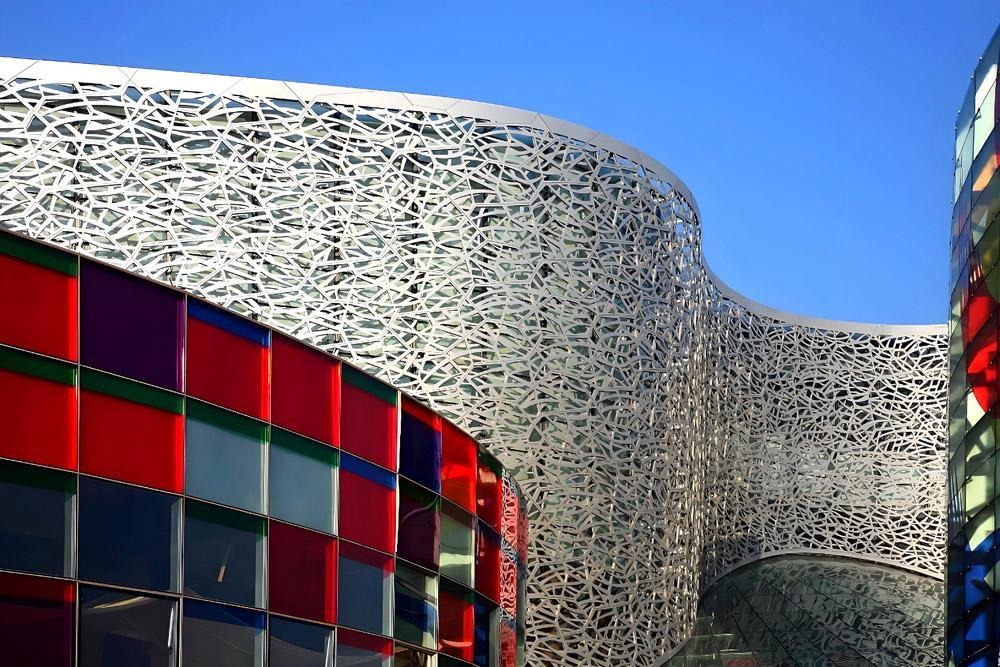
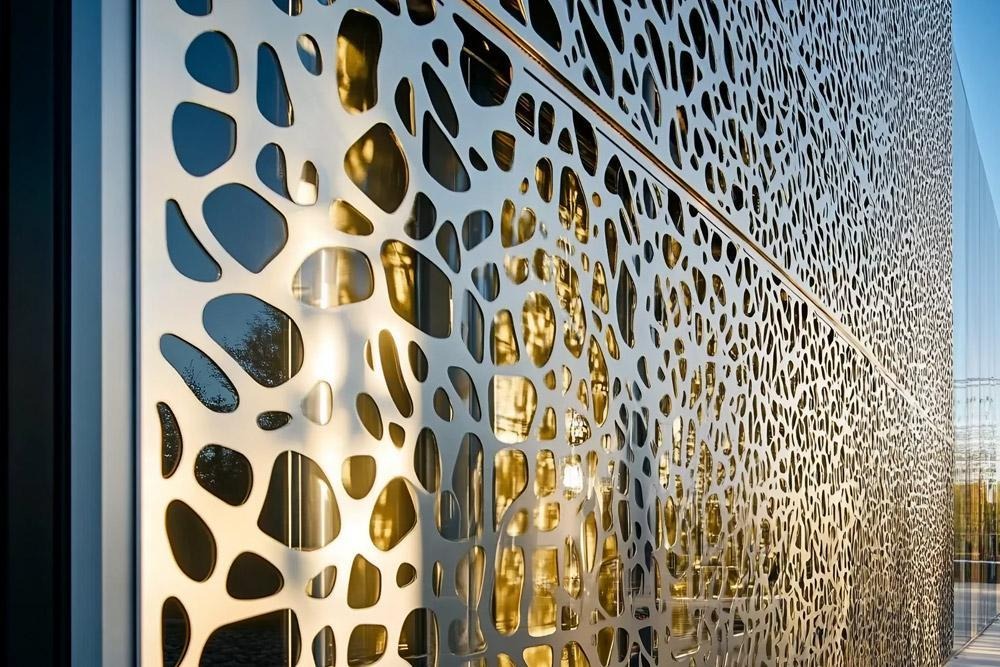
Facades are changing into perforated and laser-cut metal patterns. They integrate beauty, functionality, and creativity to enable architects to create aesthetically appealing surfaces with the controls of light penetration, ventilation, and privacy.
Subtle designs within a metal facade can be tailored to have branding or a theme, or an architectural design. This individuality also appears more aesthetically to the eye and gives the building exterior a taste of personality in terms of color.
The metal facade has its holes through which sunlight and airflow can be controlled. This architectural remedy is an effective method of saving energy and yet making the building comfortable and harnessing all the natural sunlight indoors.
Building exteriors are visually interesting in the sense that they are provided with texture and depth. Such special treatments of the surfaces create dynamic facades that can be of interest to the viewer and add to the overall impact of the design.
The techniques of laser cutting are very accurate, and they are better both in looks and in use. The metal facade systems done in the same way can guarantee long-term structural integrity and a highly appealing and durable exterior design.
Macades are laser-cut and perforated, thus combining creativity and functionality. This trend helps the buildings to be aesthetically noticeable and high performers in terms of environment, and thus, is popular in new metal cladding systems.
Prefabricated and modular metal facade panels are efficient, consistent, and flexible in designing the construction. They have been widely used among architects trying to ensure high-quality, visually harmonized exteriors at a reduced labour expense.
Ready-made panels drastically shorten the construction schedule of a site, having a lower labor demand. This provides a faster way of completing the project, but has a consistent quality and accuracy in the installation of the metal facade throughout.
The panels are manufactured in factories so that they will all pass as one in terms of finish and size. This kind of controlled process minimizes errors and offers high-quality and reliable, and visually binding results to modern metal facade systems.
Very extensive customization of panels whereby the architects would customize shape, color, and texture to meet specific design objectives. The reason is that it can enable the individual facade to possess the visual image and architectural personality.
Labor requirements are reduced, and do not need a large on-site crew and a lot of coordination for effective installation. It minimizes material wastage and material handling also and results in clean project implementation and general enhanced output.
Control produces output, ensuring accuracy in the use of materials that reduces waste in production. This is an effective activity because it minimises overall resource consumption; minimises environmental impact during the lifecycle of the building.
Prefabricated and modular panels are very efficient, of very high quality, and attractive. They enable architects to realize uniform and permanent, as well as a powerful array of designs of metal facades at lower costs and construction schedules.
Metal exteriors, which are colored and coated, are transforming the exteriors of buildings. The new finishes and coatings permit the architect to meet livelier finishes, better performance in terms of longevity, and greater resistance to weathering.
With metal facades, the range of colors on offer is very broad with the aid of anodizing, powder coating, and PVD coating. In such finishes, architects have a chance to create bright, strong, and personalized designs with the help of such finishes.
The panels are coated to prevent corrosion, UV destruction, and environmental erosion. These layers improve the life of the material besides maintaining the appearance, wear, and tear, and functionality of the material in various weather conditions.
Metal facades can have Smooth or textured finishes that improve architectural expression by adding depth, character, and visual appeal. These architectural decisions enable the buildings to attain unique, memorable, and movable external looks.
The aluminium facade is covered with surfaces that guarantee protection in the long term and rich color. These finishes have reduced the maintenance levels, thereby making the building appealing as well as durable across a number of years.
Aesthetics and performance are united through colorful and covered facades. Designers make metal facade surfaces attractive, durable, and low-maintenance through the appropriate choice of finishes, which are easy to find in modern architecture.
Weathering and patina effects provide the metal facades with a distinctive look. The effects of natural aging on materials like copper produce unique textures and tones following time, and so the surfaces become interesting to observe as well as to recall.
There are no metals that do not acquire peculiar green or brown surfaces during the course of time. It is the aging process that gives the characteristic patina that is valuable in bringing character and visual space to the architectural designs.
Of course, the metal facades are coated with protective layers on the faded finishes. This reduces the maintenance need, which ensures the facade is durable as well as ensures that the aesthetic value remains intact with limited maintenance over time.
The process of providing depth and texture to a facade panel is called patina. It is the natural aging that results in the eternal appearance of the buildings since it gives the material its personality and reveals the particular features of the material.
A weathered copper facade is naturally resistant to corrosion, eliminating both extra layers and the replacement of aging facades. This achieves longevity in its durability as well as keeping the changing aesthetically attractive surface across time.
Weathering effects and patina generate new aesthetically desirable metal facades. Using natural finishes, architects are able to attain long-lasting, low-maintenance, and long-lived styles of designs, which adds character as well as functionality.
Smart facade technologies combine sensors and reactive functionality with metal facades. These inventions maximize energy savings, coziness, and versatility that allow structures to communicate intelligently with the surrounding environments.
Adaptive facades are smart to changes in sunlight during the day so that the interior remains constantly comfortable. Allowing them to control natural light and temperature will considerably decrease energy use and improve the well-being of occupants.
They have automated ventilations that include the activation of air flow in the presence of people or alteration of weather. This smart system will be as simplistic as possible and minimise the rate of energy and operational costs wastage in the future.
The intelligent facades will constantly compare the energy use to determine how efficient the building is. Through data collected, they automatically modify the setting performance so as to enhance sustainability and minimize operational expenses.
The facades are dynamic and constantly reflect the changing conditions around which enhances the efficiency and comfort of the buildings. It is also highly receptive and hence is a visually appealing and more interactive, and modern structure.
Reliable design is considerably less consumptive of energy as it optimizes building functionality on the spot. Modern facade systems are also cost-efficient and economical in the sense that this strategic approach reduces long-term operation costs.
The smart facade technologies shall be creative and effective, and shall allow different buildings to respond to physical changes. These systems amplify functionality, comfort, and sustainability and produce dynamically visual and future metal facades.
Minimalism, smooth metal facades with dramatic and smooth lines, focuses on clean lines, smooth surfaces, and simplicity. A design like this makes the buildings look modern and luxurious, which is appealing to the eye and looks vintage at the same time.
A seamless and uniform look is produced by continuous panels on a metal facade. Their denial of the visual mess assists in the most of the baked up of the modernity of the building, relying on the starkness and straightforwardness of the design.
When using soft colors and textures, it is possible to make a metal facade sophisticated. These minor details make the design look classy without being too heavy, and at the same time, balance the whole design to seem refined and appealing to the eyes.
Minimalistic designs simplify the maintenance process by eliminating extravagant parts and simplify maintenance. They also lay stress on the architectural shape of the building, on the clean lines, elegant surfaces, and the timeless and modern look.
Smooth metal buildings are harmoniously integrated with the urban and natural surroundings. They just make the building look, with their simple structure, and straight lines well balanced, but contribute to the modern architecture of the building as well.
Minimalist metal facades emphasize minimalism and sophistication, but with a functional utility. Smooth and clean constructions give timelessness to the architectural beauty that gives a modern appearance that suits different kinds of buildings.
Metal facades are 3D and textured to provide depth, dimension, and aesthetic appeal. The use of surfaces by the architects produces an effect of interior and exterior that communicates with light, shadow, and perspectives to produce an amazing effect.
Metallic surfaces are raised with textures to provide extra tactile stimulation and appeal to the visual sense. The three-dimensional surfaces add character to architectural design, thus providing a dynamic and memorable exterior to the design.
Corrugated or folded metal enhances the structural integrity of the substance, in addition to aesthetics. It is the dual advantage that enables the architects to make the modern works of architecture sustainable, functional, and beautiful.
The effect is dynamic to the observer on a metal facade with 3D surfaces, because of the effect of the sun and the shadows that vary throughout the day. This combination provides architectural depth and flow, and continually changing interest.
The developers of metal cladding are able to produce bespoke and location-specific surfaces of metals to improve originality and aesthetics. Such unique designs make every building conspicuous and also capture the environment around it.
Facades are raised in views to become architectural ornaments through 3D and texturing of metal exteriors. These moving designs merge the beauty, productivity, and originality that create a permanent impression on viewers and environments.
Architectural design is changing with modern metal facade that combines aesthetics, functionality, and sustainability. Buildings that adopt new materials, finishes, and technologies have bold looks and are durable and energy-efficient.
Designers who abide by the trends can build iconic and memorable buildings. Considerate use of texture, color, and intelligent design can make architectural metal facades beautiful to the eye and smart enough to accommodate changing cityscapes.