
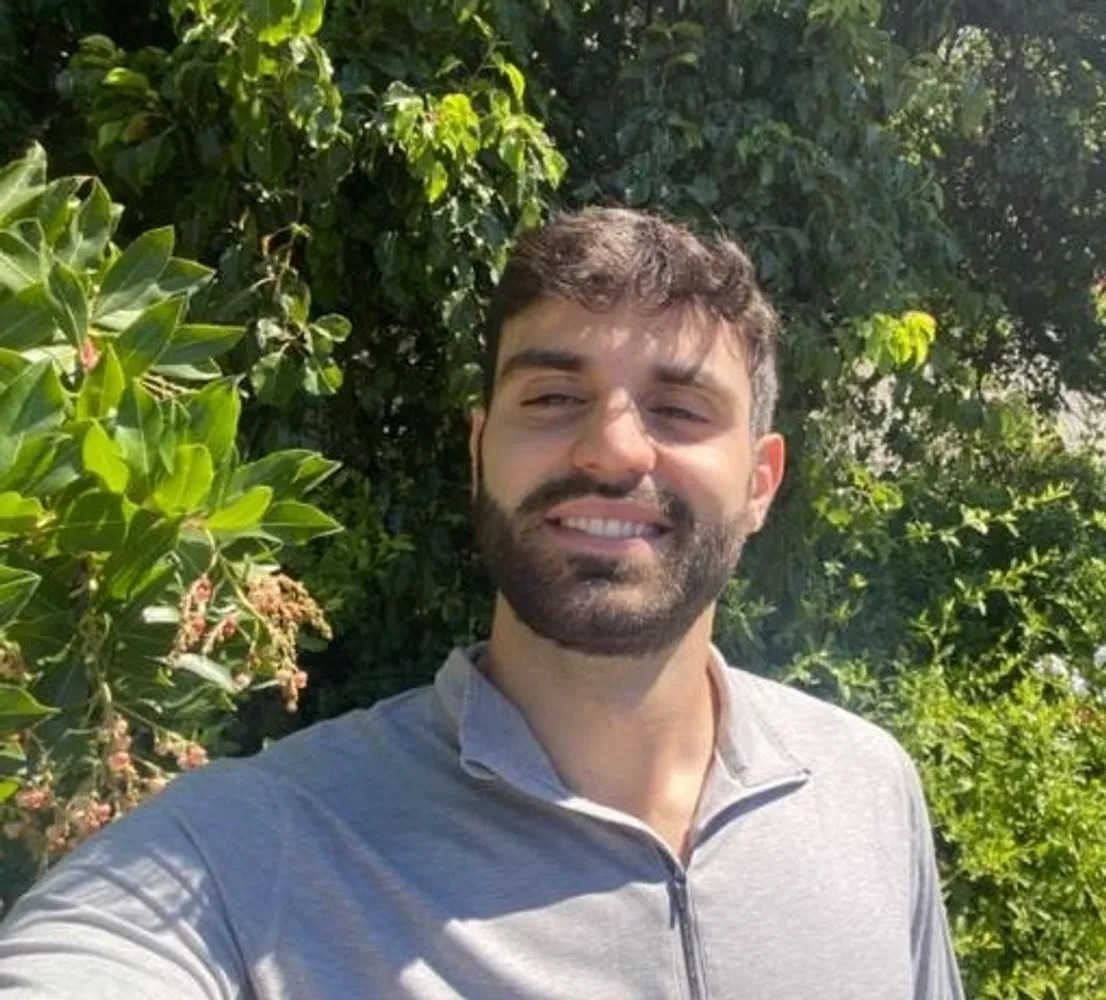
When entrepreneur and global traveler Shai Hamu begins to speak, you can tell he has spent a lifetime paying attention.
He has served overseas as a soldier, backpacked through Asia, worked as a financial analyst abroad, and now studies accounting in the United States while working as a garage door technician. His story could have been a collection of disconnected chapters, yet somehow it all fits together.
“I have always had a natural curiosity about people,” he said. “Everywhere I went, I saw how people’s choices made sense once you understood the conditions that shaped them. That is what anthropology taught me. Context changes everything.”
Hamu’s fascination with culture, behavior, and systems has made him an emerging voice in the growing intersection of social science and real-world problem-solving. He believes anthropology, which is the study of people and their societies, and social science, which examines human systems and relationships, can help people make better decisions both individually and collectively.
“Studying people teaches us everything,” he said. “It shows us how we adapt, how we build community, and how we survive change. The more I learn, the more I see that progress is not just about innovation. It is about understanding.”
When we sat down for a recent interview about his life and career, Hamu spoke with the calm curiosity of someone who has spent years observing the world and learning from it. His insights came not from theory but from experience. What emerged from our conversation were three key lessons he has carried with him; lessons he now hopes will make a lasting impact on others.
Shai Hamu’s worldview was shaped as much by travel as by textbooks. Born in Israel and raised in the United States, he grew up seeing two cultures up close. “Living between countries made me realize that there is no single definition of normal,” he said. “You start to notice how deeply history and environment influence people’s behavior. You learn to pay attention to what shaped them.”
That curiosity became the foundation of his approach to anthropology. During a six-month trip through Sri Lanka, Indonesia, and Malaysia, Hamu immersed himself in local communities, learning through observation when language barriers stood in the way. “I stayed in small homes and hostels,” he said. “I watched how people worked, celebrated, and cared for each other. You start to see that everything people do makes sense once you understand their world.”
Those experiences helped him see cultural differences not as divisions, but as insights into what people value most. “In anthropology, context is everything,” he said. “Behaviors, traditions, and social systems make sense when you understand the conditions that shaped them. You learn to replace judgment with curiosity.”
That curiosity has shaped how he lives, studies, and works. Even in his current job as a technician, Hamu said every customer interaction feels like fieldwork in understanding human nature. “You see people at their best and at their most frustrated,” he said. “Every situation teaches you something about communication and empathy.”
He often reminds others that anthropology is not just about studying remote tribes or ancient rituals. It is about understanding the everyday. “Social science helps us make sense of why people act the way they do,” he said. “When we understand people, we understand the systems they build — families, businesses, and communities.”
Hamu’s time serving overseas taught him to make decisions under pressure. Those moments, he said, were where leadership truly took shape. “When I have to make decisions in difficult situations, the first thing I do is slow down,” he said. “You cannot think clearly if you react emotionally. You have to focus on what you can control and gather as much information as possible before acting.”
He learned that calm and clarity are leadership skills as important as strategy or knowledge. “Even imperfect decisions are better than indecision when they are made with integrity,” he said. “What matters most is being aware of the people your decisions affect.”
That belief reflects the anthropological mindset that has shaped how he thinks about leadership. “Anthropology teaches you that every decision has context,” he said. “You learn to ask how your choices affect the community, not just the outcome.”
Hamu often describes empathy, open-mindedness, and integrity as the pillars of leadership. “Empathy lets you connect with people on a human level,” he said. “Open-mindedness helps you learn from perspectives different from your own. Integrity builds trust. You need all three to lead effectively.”
He has seen this firsthand in both his military service and his travels. In one story, he recalled meeting a traveler who struggled to join group conversations because English was not his first language. “I could tell he wanted to connect but did not know how,” Hamu said. “So I tried to include him by using gestures and humor. Over time, he opened up. That taught me that leadership is not about control. It is about creating space for others.”
That approach carries into his studies and future career goals. “Whether you are leading a team, managing a business, or helping clients, you have to start by listening,” he said. “People will tell you what they need if you are patient enough to hear them.”
Now studying accounting, Hamu approaches finance through a social science lens. To him, money is not only a measure of profit but a window into human priorities. “Accounting tells us how resources move,” he said. “Anthropology tells us why they move that way. Together they show us what a society values most.”
He believes that numbers reveal behavior, and behavior reveals culture. “You can study economics all day,” he said, “but until you understand how people relate to each other, you will miss the human side of the equation.”
That realization has led him to pursue coursework in sociology and cultural systems alongside his accounting classes. He sees finance as one part of a larger web of social forces that include education, health, and equity. “The more I study, the more I see that everything connects,” he said. “You cannot separate money from culture or policy from people.”
His time abroad deepened this understanding. While traveling in Southeast Asia, he saw how environment and belief systems shaped public health far more than technology or infrastructure. “In many places, health is not defined by hospitals or medicine,” he said. “It is defined by relationships and community. When people look out for each other, that is its own form of health.”
Those insights continue to shape his goals. Hamu envisions a career at the intersection of finance, social science, and education; one that helps small business owners and communities find empowerment through knowledge. “I want to help people see their finances not as stress but as confidence,” he said. “Money is not just math. It is psychology, culture, and story.”
He hopes that by blending his understanding of systems with compassion, he can help build more equitable opportunities for others. “When we understand how people live,” he said, “we can build systems that actually serve them.”
If there is one lesson Hamu hopes others will take from his journey, it is the importance of understanding before assuming. “Anthropology teaches you to see before you judge,” he said. “It shows you that every person’s behavior comes from somewhere. Once you know that, you become more patient, more curious, and more open.”
That awareness, he said, can change how we lead, how we learn, and how we live.
“Social science is really about empathy,” he said. “It helps us see the world from another person’s point of view. That is where understanding begins.”
He often encourages others to practice anthropology in their everyday lives, not through formal study, but through genuine connection.
“You do not need to travel across the world to study humanity,” he said. “You can start by talking to your neighbor, by listening to someone whose background is different from yours. Every conversation is a chance to learn.”
For Hamu, the study of people is a lifelong pursuit. Whether through numbers, stories, or systems, he said it all comes down to one truth.
“The more I travel and learn,” he said, “the more I see that empathy is the real currency of connection.”











