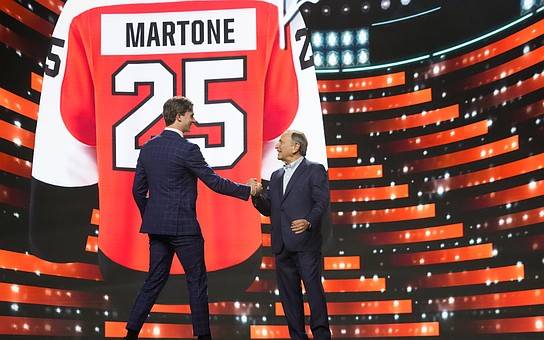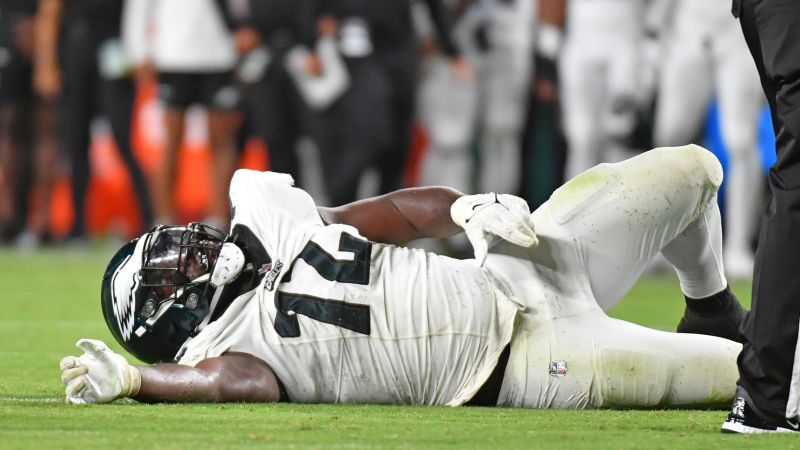
The Philadelphia Eagles’ unexpected decline in 2025 has reignited talk of the infamous “Madden curse.” With Saquon Barkley featured on the cover of Madden 26, many wonder whether superstition or tangible issues—injuries, contracts, regression, and coaching shifts—are dragging the reigning champions down. This article examines the numbers, names, and facts behind the narrative.
Astonishing numbers defined Barkley’s 2024. He rushed for 2,005 yards in the regular season, ranking eighth all-time, and led the league in touches with 378, totaling 2,283 scrimmage yards. He recorded 11 games of 100+ rushing yards, including a career-high 255 yards in Week 12 against the Rams. During the postseason, he added 499 rushing yards and 5 touchdowns, carrying the Eagles to a Super Bowl LIX victory over Kansas City (40-22).
But through the first five games of 2025, his output has collapsed. He has 83 carries for 267 yards, averaging only 3.2 yards per carry, his lowest since joining Philadelphia. His first-down rate fell from 23.8% to 14.4%, and at his current pace of 53.4 rushing yards per game, he is projected to be about 908 rushing yards. In the air, he has caught 17 passes for 128 yards with a 47-yard touchdown, which projects to 1,343 total scrimmage yards—roughly 1,000 fewer than last season.
This steep regression coincides with his appearance on the Madden 26 cover, fueling theories that the “Madden curse” has struck once again.
The Madden curse refers to the belief that players featured on the video game’s cover suffer injury or performance decline the following season. Many high-profile players have fallen victim to it over the years.
Christian McCaffrey (Madden 25) ran for 1,459 yards in 2023 but managed only four games in 2024 due to Achilles and knee injuries. Donovan McNabb, the first Eagle on the Madden cover in 2006, endured a 6-10 season, a hernia injury, and a fallout with Terrell Owens before leaving for Dallas. Peyton Hillis never regained his peak form after appearing on the 2012 cover, while Marshall Faulk, Shaun Alexander, Eddie George, and Adrian Peterson all experienced sharp declines following their Madden spotlight.
Barkley’s appearance marks only the second time an Eagles player has graced the Madden cover, and fans remember how McNabb’s year unfolded. Many fear that history is repeating itself.
Barkley’s incredible 2024 season earned him a 2-year, $41.2 million extension, making him the highest-paid running back in guaranteed money. That figure reflects the organization’s faith in him—but also amplifies scrutiny. When elite contracts meet early decline, public patience fades fast.
He recently admitted he might “just wake up one day and call it quits,” which unsettled fans. Coupled with his new deal, such comments sound ominous, especially given the franchise’s heavy cap exposure. If Barkley’s production continues to tumble, Philadelphia may find itself trapped in an expensive rebuild.
Heavy workloads precede many Madden-curse declines. Barkley’s 378 touches last year ranked among the highest in the NFL, putting him in the same risk bracket as Alexander, McCaffrey, and Peterson before their respective downturns. All those players were 27 or older when chosen for the Madden cover—Barkley fits that pattern.
The Eagles’ offensive line produced 2,011 rushing yards before contact in 2024, highlighting their dominance. But no line can offset accumulated wear and tear. Barkley’s durability in 2024 masked lingering knee and ankle mileage that now is catching up to him.
The 2025 season introduced a new offensive coordinator, Kevin Patullo, whose scheme differs from the one that unlocked Barkley’s 2024 breakout. The system relies more on short-yardage formations and screens, reducing Barkley’s open-field opportunities.
Adding A.J. Dillon on a one-year deal also shifted the backfield rotation. Defensive coordinators have exploited these tendencies, forcing the Eagles into predictable sets that limit Barkley’s explosiveness.
Barkley has missed 21 games over six seasons, including a major ACL tear in 2020. While he remained healthy through 2024, those past injuries may now affect his burst and change-of-direction speed. Even if no new injury occurs, physical regression from accumulated stress is unavoidable for running backs with his mileage.
That vulnerability feeds into superstition. When an athlete slows down after landing on the cover, fans instinctively label it a curse rather than the natural outcome of overuse.
The Madden curse has evolved into a pop-culture myth. After Barkley mentioned retirement, social media exploded with claims that “the curse got him.” Every fumble, missed block, or short gain reinforces that narrative.
Once the storyline gains momentum, it becomes self-fulfilling—players sense the tension; reporters highlight every dip, and confidence erodes. What begins as a superstition can morph into a psychological burden affecting performance and perception alike.
Some players have defied the Madden myth. Patrick Mahomes, Lamar Jackson, Tom Brady, and Josh Allen all maintained success after appearing on the cover. The difference may lie in sports science, analytics, and smarter workload management.
Barkley benefits from elite blocking, offensive depth, and contract stability—all tools to fight the trend. Still, the public eye magnifies every metric. Fantasy and daily-fantasy players using an NFL DFS optimizer have continued to overvalue him early this season, amplifying scrutiny each time his numbers disappoint.
Statistical law often explains what superstition cannot be. After an all-time-great year, regression is inevitable. Defensive coordinators adjust, small injuries accumulate, and variance normalizes output.
Expecting another 2,000-yard campaign was unrealistic; what’s unfolding is not magic or misfortune but mathematics. The Eagles’ offensive balance has shifted, and Barkley’s production is stabilizing closer to the league average.
Philadelphia’s financial structure revolves around Barkley’s deal, leaving little flexibility if he declines further. The organization added Dillon precisely for insurance—both as a rotational complement and as a future starting option should Barkley’s health or motivation wane.
If Barkley retires sooner than expected, the Eagles will face significant dead-cap consequences. That reality underscores how risky large running-back contracts remain, even for top performers.
The 2025 Eagles’ slump stems from a perfect storm: a regressing superstar, an expensive contract, offensive adjustments, and mounting psychological pressure. Barkley’s dip disrupts their entire identity, forcing Jalen Hurts into tougher passing situations and limiting play-action success.
Fans may attribute everything to the Madden curse, but the more grounded explanation points to tangible football dynamics—wear, scheme, and execution.
To reverse course, the Eagles must reduce Barkley’s workload, diversify the playbook, and restore rhythm in the passing game. Spreading touches among backs and keeping Barkley fresh could rejuvenate his explosiveness.
Avoiding panic about superstition is equally crucial. If the team stays healthy and adjusts strategically, performance—not mythology—will define their season. Whether or not the “curse” is real, Philadelphia’s fate depends on adaptability, discipline, and smart management rather than luck.