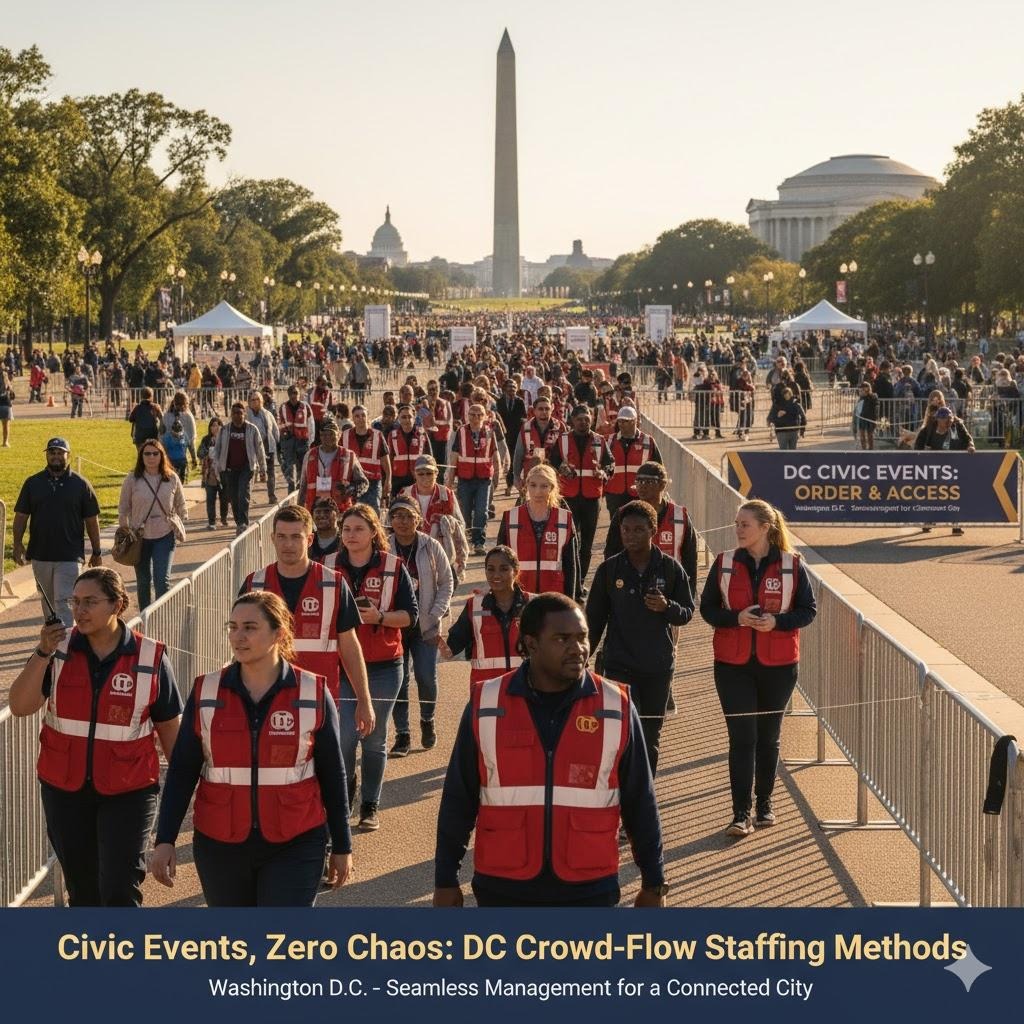
Washington, DC is home to the nation’s most intricate civic events: permit rallies on the National Mall and memorial marches down Constitution Avenue, neighborhood block parties with thousands of body-squeezing foot traffic.
All of that demands sophisticated coordination in crowd flow, access compliance and real-time communication — the infrastructure most attendees never lay eyes on. The difference between a smoothly functioning civic event and an epic transportation bottleneck is not luck. It's staffing structure.
DC's event landscape sits at the intersection of three operational realities that most cities don't simultaneously manage:
Routes are non-negotiable. Staging areas must consider monument distance, secure zones and pedestrian load 'triggers' issued by the National Park Service.
Wheeled access, accessible parking relay and sufficient accessible restroom capacity are not nice-to-haves; they are operational necessities that affect attendance and legal viability.
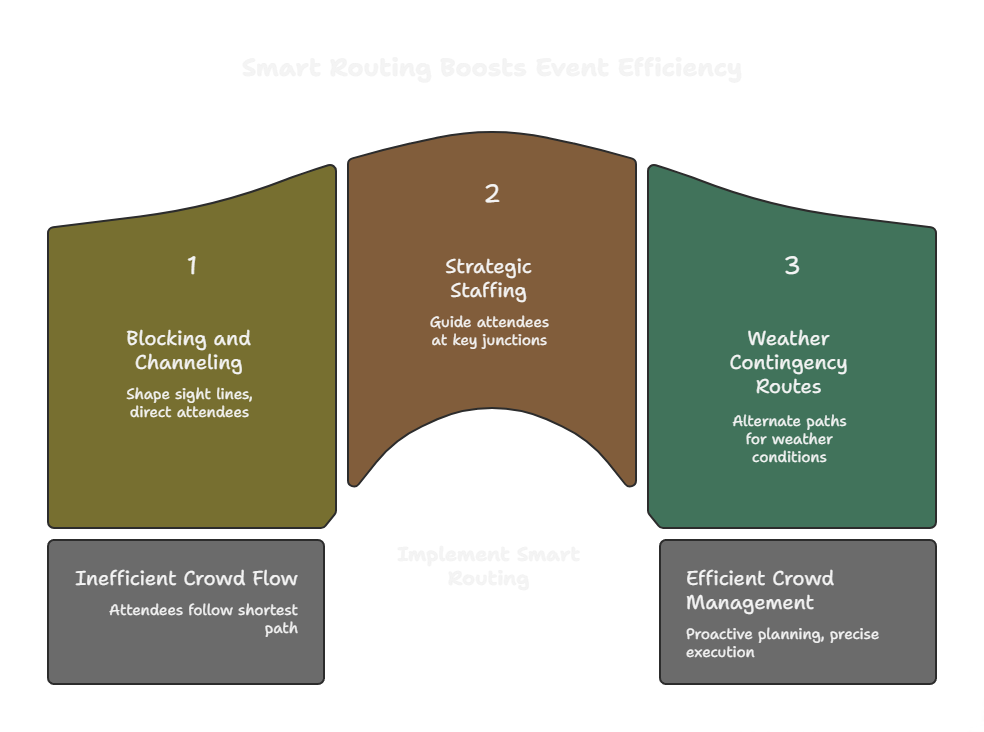
Begin with the premise that attendees will take the shortest visible path, not the officially designated route. In DC, this means:
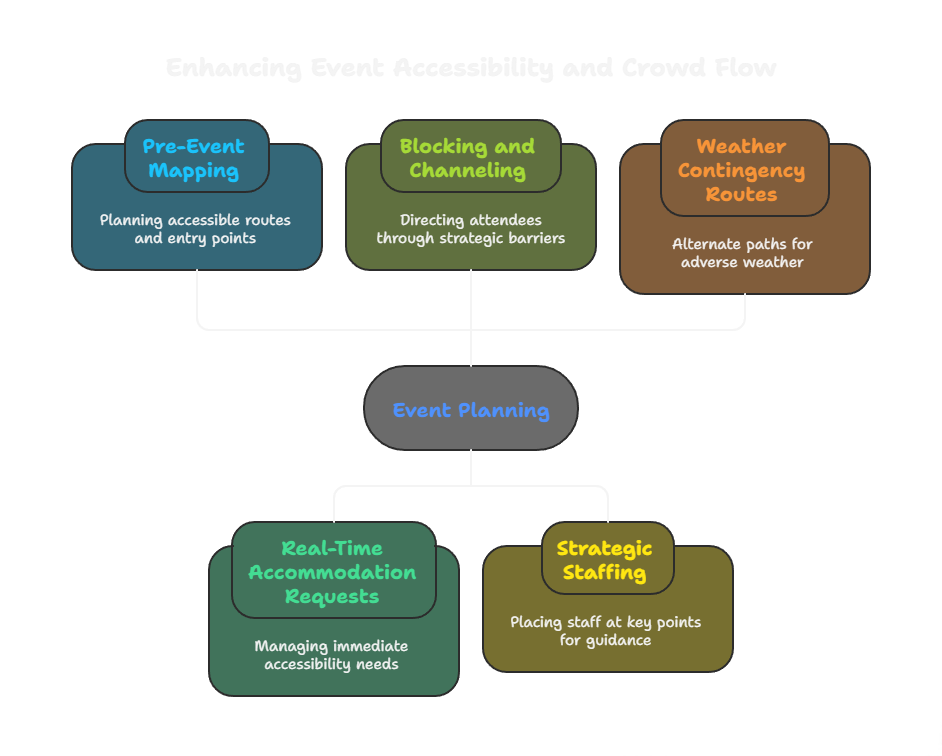
Physical barricades (stanchions, rope, well-positioned automobiles) shape sight lines that help steer flow organically. A temporary fence at 14th and Constitution doesn’t cut off foot traffic; it reroutes people to predesignated entry points that are prescreened. Staff will be placed at decision points, not to block but to be seen and approached, which cuts down on confusion.
The math is simple: every minute of attendee uncertainty costs 15-20% operational efficiency. A staffer with a clear vest and a radio at a junction costs less than the bottleneck created by unclear signage.
DC summers bring sudden heat; spring brings rain. Civic events scheduled outdoors need secondary coverage areas (awnings, nearby structures) staffed by rotating crews. Winter events require salt, lighting, and fall-prevention monitoring. One staffer per 100 attendees dedicated to weather response (water stations, seating areas, first aid) prevents crowd stalling and heat-related incidents.
ADA compliance isn't a checkbox. It's operational architecture.
Before any barricade goes up, map accessible routes. DC’s Metro stations, curb cuts and accessible parking flow into your event perimeter. Staffers should be stationed at accessible points of entry 30 minutes prior to doors opening — not as bouncers but as greeters who can help direct people using mobility devices or accompanied by service animals to seating, restrooms and water stations.
One dedicated staffer (usually with a radio and clipboard, stationed at the accessibility check-in) handles:
This single role—often overlooked—is the difference between attendees feeling included versus feeling accommodated as an exception.
Most DC civic events have 60-70% volunteer staffing. The model that works:
Clear tier structure. Tier 1 (volunteers) focus on greeting, wayfinding and general information. They have on bright vests, they carry laminated question and answer sheets; they’re trained to hand off issues (“I’m going to connect you with my team lead.”) Tier 2 (paid crew leads) manage volunteers, handle incidents, and own specific zones. Tier 3 (operations manager + comms lead) oversee real-time adjustments and incident response.
Unified communications protocol. All volunteers and professionals share a common radio channel, the same jargon and incident report format. A volunteer who sees a medical need should be able to radio “Zone B, medical attention needed, entrance around 12th Street” and get an acknowledgment within 10 seconds. This requires a single comms discipline, not parallel systems.
Pre-event training (2 hours minimum). Volunteers need to know: your specific role, how to use the radio, three key facts about accessibility, and where to direct people asking common questions. Paid crew need scenario-based training: weather escalation, crowd surge response, and how to calmly redirect confusion.
48 hours before:
4 hours before:
Live event (rolling):
Shutdown (30 minutes after conclusion):
City well-staffed civic events, which enhance DC’s image as a successful home for large, complex and inclusive festivals. For visitors who can see good signage, easy entry and responsive staff, they leave with greater confidence that civic participation is possible for them. Organizations that execute flawlessly build relationships with volunteers who return, media confidence in coverage, and municipal credibility for future permits.
The Washington, DC event staffing landscape is uniquely demanding—and that's exactly why applying structured, accessible, and volunteer-integrated staffing methods creates competitive advantage.
For event organizers and civic leaders planning large gatherings in DC, working with a national event staffing network that understands both ADA requirements and permit geography removes the operational guesswork and lets you focus on the mission.