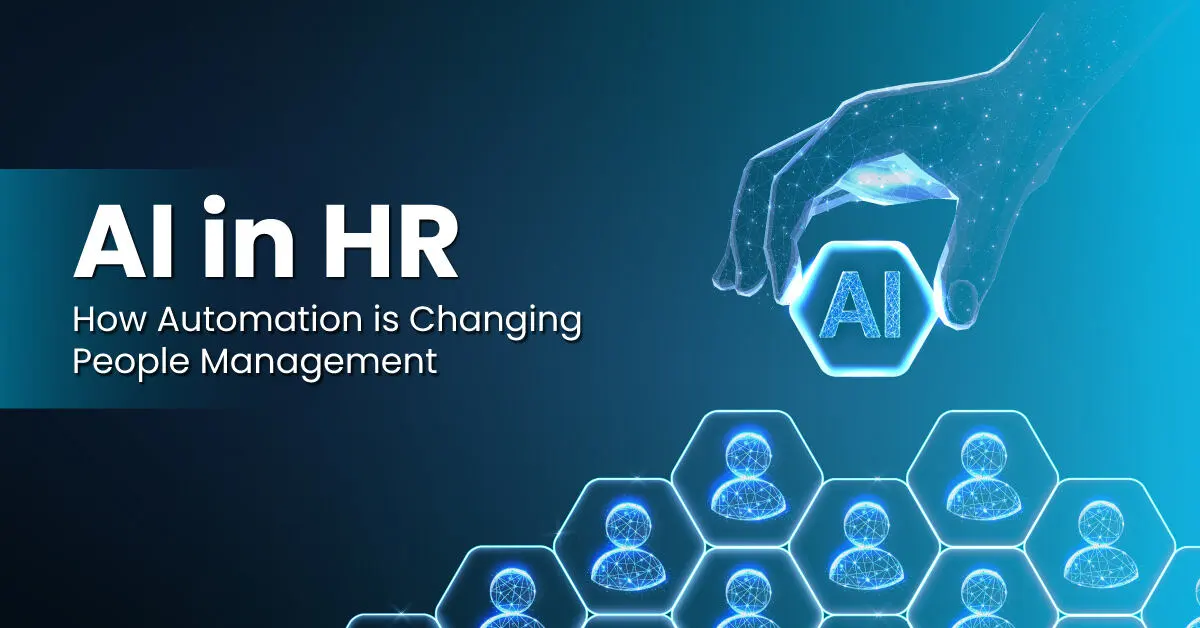
The world of Human Resources (HR) is undergoing a profound transformation driven by artificial intelligence (AI). Once viewed primarily as a people-focused function, HR is now becoming a data-driven strategic enabler that helps organizations attract, engage, and retain top talent with precision and speed. The integration of AI in human resources is not just a technology shift, it’s a redefinition of how companies understand and manage their most valuable asset: people.
In recent years, the adoption of AI in HR has accelerated across industries as organizations seek to enhance efficiency, improve decision-making, and personalize the employee experience. Whether optimizing recruitment, automating routine administrative tasks, or predicting employee attrition, AI and human resources now work in tandem to unlock value at every stage of the talent lifecycle.
Artificial intelligence is enabling HR professionals to move from reactive to proactive decision-making. Through intelligent automation and predictive analytics, HR teams can anticipate workforce trends, identify skill gaps, and deliver interventions before challenges arise. This shift empowers leaders to focus more on strategy and culture rather than manual, time-consuming processes.
The power of AI for human resources lies in its versatility. From talent acquisition to learning and performance management, AI offers tangible advantages that directly impact business outcomes:
Collectively, these use cases demonstrate that AI and HR are no longer separate disciplines. Instead, they represent a cohesive ecosystem that helps organizations achieve both operational excellence and strategic agility.
The early applications of AI in human resources focused mainly on automating repetitive administrative work. However, today’s frontier involves using intelligent systems to shape workforce strategy. Predictive models can estimate future hiring needs, identify leadership potential, and even forecast organizational health.
For example, a financial services firm using advanced AI development services can integrate HR data with performance and productivity metrics to identify which teams drive the highest innovation rates. Similarly, predictive attrition models can alert managers to potential turnover risk, prompting interventions that retain critical talent.
These insights not only reduce HR’s manual workload but also elevate its contribution to enterprise strategy. When paired with robust governance and ethical frameworks, AI strengthens transparency, fairness, and inclusivity across the organization.
While the benefits are clear, implementing AI for human resources requires careful planning and responsible execution. Organizations must navigate challenges around data quality, bias mitigation, and change management. A successful transformation demands collaboration between HR, IT, and leadership teams to ensure AI adoption aligns with company values and compliance standards.
Partnering with an experienced AI consulting company can make this journey smoother. Such partners bring proven AI implementation services that cover everything from use-case prioritization and model development to integration within existing HR systems. By combining domain expertise with technical proficiency, enterprises can scale AI adoption responsibly and sustainably.
The Hackett Group® stands at the forefront of enterprise transformation, offering innovative AI consulting services that help organizations realize measurable value from AI. Its proprietary AI XPLR™ platform empowers leaders to identify, quantify, and prioritize the most viable AI opportunities across HR functions—ranging from workforce planning to talent management.
AI XPLR™ uses The Hackett Group’s Digital World Class® benchmarks to map performance gaps and simulate solution scenarios tailored to each organization’s needs. This ensures every initiative is both feasible and high-impact. Complementing this is ZBrain™, a next-generation orchestration engine that operationalizes AI models securely within enterprise environments. By combining deep process intelligence with advanced model orchestration, ZBrain™ allows HR teams to turn insights into action rapidly and confidently.
Together, these tools exemplify how AI and human resources can converge to create smarter, faster, and more adaptive organizations.
To fully harness artificial intelligence in HR, leaders should focus on five strategic priorities:
These steps help create a solid foundation for sustainable AI integration—one that balances innovation with responsibility.
As AI continues to evolve, the future of AI in HR will not be about replacing humans but augmenting them. Intelligent assistants, natural language processing, and generative AI models will empower HR professionals to focus on empathy, strategy, and creativity—the uniquely human elements of their role.
The next generation of HR functions will operate as experienced architects, using AI insights to craft personalized journeys that enhance engagement, inclusion, and well-being. Enterprises that adopt this approach will be best positioned to attract and retain top talent while achieving operational excellence.
The fusion of AI and human resources marks a defining moment in how organizations manage talent, culture, and performance. When implemented thoughtfully, artificial intelligence in HR does far more than automate—it amplifies human potential, enabling data-driven decisions, personalized experiences, and continuous innovation across the workforce.
Enterprises that invest in the right strategy, governance, and technology will move beyond efficiency to true intelligence—where HR becomes an engine for growth and adaptability. By partnering with an experienced AI consulting company like The Hackett Group®, organizations gain access to proven AI consulting services, advanced tools such as AI XPLR™ and ZBrain™, and world-class AI implementation services that turn ambition into measurable impact.
The future of work will be defined by those who blend human insight with machine intelligence. Now is the time for HR leaders to lead that change—transforming the function from a service center into a strategic powerhouse powered by AI in HR.