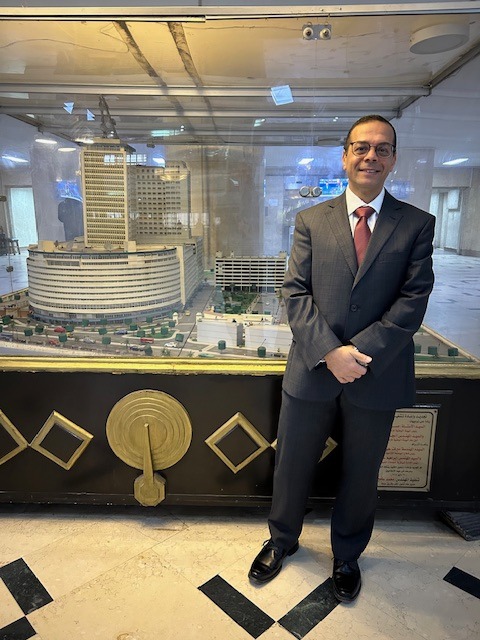
Emad Bishai has built a distinguished career in psychiatry and pain management, marked by a lifelong dedication to patient care, education, and service. Born in Cairo, Egypt in 1972, he began medical school at the remarkably young age of 17. After completing his internship and military service, during which he served as a physician for the Navy SEALs, he embarked on a journey that brought him to the United States.
At age 27, Dr. Bishai joined the Mount Sinai School of Medicine in New York for research before starting his psychiatric residency in 2001. His career has since spanned leadership roles in psychiatry, a pain management fellowship at the University of Pittsburgh, and medical missions across Africa. Since 2010, he has been based in The Woodlands, Texas, where his medical practice and community involvement have continued to grow.
Known both locally and internationally, Mike Bishai is active in Africa Medical Missions, marking his 11th year of service in 2025. He also participates in the National Charity Round Table with his son, a tradition reflecting his belief in family, mentorship, and community service.
This interview delves into Dr. Bishai’s perspectives on communication, collaboration, and leadership in medicine, as well as the personal values that inform his practice in The Woodlands and beyond.
How do you ensure clear and compassionate communication with patients, especially when discussing complex diagnoses or high-stress treatment decisions?
Emad Bishai explains that two major obstacles face physicians today: the nationwide shortage of psychiatrists and pain management specialists, and the tendency to rely heavily on medical jargon. With fewer than 40,000 psychiatrists and fewer than 60,000 pain management specialists across the country, physicians often feel rushed and pressured.
“Patients sometimes believe their complaints are not legitimate, or that they are losing their mind,” Bishai says. “A gesture of sincere compassion and validation goes a long way.” His approach emphasizes slowing down, listening, and making sure patients feel understood. This is a consistent theme in his career and is reflected in how colleagues and patients describe him.
What strategies have you found most effective for fostering collaboration among interdisciplinary teams - psychiatrists, surgeons, nurses, and support staff - in both hospital and private practice settings?
For Dr. Bishai, effective collaboration begins with detailed communication. When possible, he calls physicians directly on their cell phones to discuss patient care. If direct contact is not possible, he ensures detailed messages are left with physician assistants, nurses, or medical assistants.
“Communication is the key element,” he stresses. “It’s not about sending short notes; it’s about ensuring the information is clear, actionable, and reaches the right people.” This attention to detail has enabled him to manage complex cases effectively, both in hospital environments and in private practice.
When miscommunication or conflict arises in a medical or legal context, how do you address it while preserving trust and professionalism?
Dr. Bishai takes a candid approach. He believes that patient trust is maximized when physicians own up to their mistakes.
“Be honest and humble,” he advises. “Intervene immediately to minimize complications, and remember never to cry over spilled milk. The last five minutes are history. The next minute is a very precious human being’s future and well-being.”
This philosophy has carried him through high-pressure environments, from psychiatric hospitals to mission settings, always keeping the focus on patient outcomes.
Can you share an example of a successful collaboration that had a lasting impact on patient outcomes?
Bishai recalls his time as medical director of psychiatric consultation liaison at Penn State Hershey Medical Center in Central Pennsylvania. A young woman with severe borderline personality disorder had caused deep divisions among physicians and nurses across departments. Tensions escalated until doctors began openly arguing.
Although a junior attending at the time, Bishai requested an emergency hospital-wide meeting. He drew on his role in the ethics department to mediate the conflict, worked tirelessly across hospital buildings to address the patient’s needs, and ultimately helped stabilize her condition within 72 hours.
The case reinforced his belief that leadership is not about rank but about stepping forward when patients need it most.
What tools, techniques, or practices have proven most valuable in maintaining effective communication across your teams?
Bishai emphasizes consistency. Even when patients see nurse practitioners who have worked with him for years, he insists on receiving detailed reports after each encounter.
He also employs a technique where staff repeat instructions back to him. “It may seem embarrassing, but I apologize and thank them for caring about the patients,” he explains. This practice, while simple, ensures clarity and reduces errors.
How do you adapt your communication style when working with different audiences, whether it’s patients, medical colleagues, trainees, or regulatory authorities?
From the start of medical school, Bishai learned to tailor communication to the audience. With patients, he avoids unnecessary complexity, focusing on clarity. With colleagues and trainees, he matches the detail level to their role in the patient’s care. With regulators, he ensures precision and compliance.
The goal remains the same: to eliminate confusion, prevent mistakes, and prioritize patient safety.
You often emphasize the importance of active listening in patient care. How does that approach translate into leading teams and supporting colleagues?
Bishai recalls an experience where a staff member suffered severe back pain. He created a medical chart for her, arranged an MRI, and performed back injections at no charge. The staff member was moved to tears, saying she had never been treated that way by an employer.
“Once respect and care are established for staff and their families, communication becomes much easier,” he says. This principle has guided his leadership style for decades.
With more collaboration happening virtually, how do you ensure that remote staff or international mission teams remain connected, supported, and aligned?
“The evolution of technology has expanded our reach to the whole world,” Bishai explains. He embraces international communication tools that allow teams across continents to stay connected. For him, technology is not just convenient - it is essential for coordinating complex missions and medical initiatives.
What’s your philosophy when it comes to giving and receiving constructive feedback?
Bishai credits one of his mentors, a neurosurgeon-turned-pain physician at the University of Pittsburgh, with shaping his approach. His mentor taught him that criticism is a powerful way to accelerate learning.
“When criticizing junior physicians or physician assistants, it’s always best to focus on the problem and possible negative outcomes, rather than being harsh or judgmental,” Bishai notes.
This philosophy has guided his role as a mentor and educator throughout his career.
Trust is essential in medicine. How do you build and sustain rapport with patients, colleagues, and mission partners?
“Communication in medicine is like makeup for women - it’s never too much,” Bishai says with a smile. For him, extensive communication, paired with truth and sincerity, builds trust and minimizes costly errors.
He considers immediate intervention when errors occur to be vital. “We are entrusted with God’s most vulnerable population: the sick. If errors happen, immediate action is the only way to correct them and prevent escalation,” he concludes.
Beyond his professional roles, Mike Bishai has given over a decade to Africa Medical Missions, reflecting his deep commitment to serving vulnerable populations abroad. Locally, his involvement with the National Charity Round Table highlights his dedication to family values and community leadership.
Today, Emad Bishai represents the same qualities: integrity, compassion, and professionalism. His journey from Cairo to The Woodlands stands as a testament to the power of service-driven medicine.
Dr. Emad Bishai’s career demonstrates that adequate healthcare is as much about communication and collaboration as it is about technical skill. From his early days in Egypt to his leadership roles in the United States, his consistent message has been one of compassion, humility, and responsibility.
In The Woodlands, patients and colleagues alike recognize him as a physician who listens, collaborates, and leads with sincerity. Internationally, his mission work expands that influence, ensuring that his philosophy of care reaches some of the world’s most underserved populations.
Through every stage of his journey, Emad Bishai embodies the values of service, trust, and humanity. His voice resonates not only in exam rooms and operating theaters but also in communities from Texas to Africa.