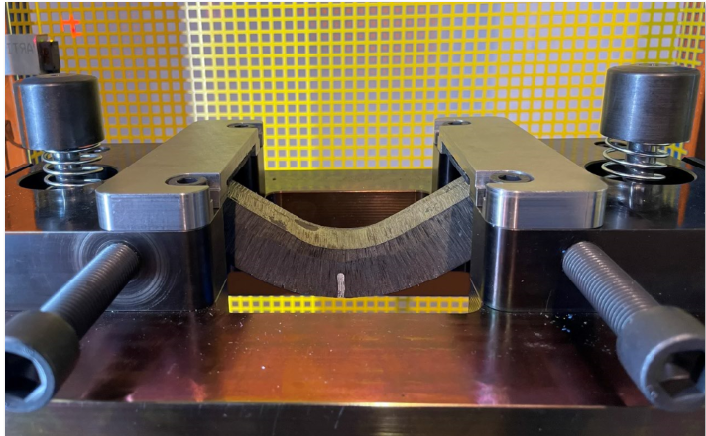
Materials do not always fail under slow and steady pressure. A steel beam may hold a heavy load for years, yet crack instantly when struck. Plastics often appear durable in gradual tests, but a single fall can expose hidden weakness. These examples show why resistance to sudden impact is just as important as strength under constant load.
Drop weight impact testers replicate these situations inside laboratories. A calibrated weight falls on a prepared specimen, creating sharp forces that imitate real accidents. The response is recorded and studied, whether it bends, fractures, or absorbs the shock. Drop weight impact machines have transformed this once simple act into a structured method of evaluation. Their results are now central to decisions in construction, transport, and manufacturing, where reliability cannot be left to chance.
The test begins with a defined weight lifted to a chosen height. The weight is released, striking the specimen with controlled force. Sensors measure energy absorption, deformation, and fracture. What seems like a crude drop becomes a source of highly detailed information about the material’s behavior.
A critical outcome is the nil-ductility transition temperature, known as the NDT. This value marks the point where steel shifts from ductile to brittle behavior. Above this threshold, the metal stretches and absorbs shock. Below it, the same steel can fracture suddenly. Engineers rely on this measurement when selecting alloys for pipelines, bridges, and vehicles exposed to cold climates. Without it, materials that appear strong may fail without warning.
Modern machines for drop weight impact testing make these results consistent. Earlier generations often produced different outcomes from one laboratory to another. Today, specimens are standardized, impacts are calibrated, and results are logged electronically. This standardization allows comparisons across projects and over time.
Flexibility is another strength of the method. Test conditions can be varied by adjusting the drop height, changing the weight, or using strikers of different shapes. This means the same machine can test welded steel joints, composite panels, or plastic casings. Laboratories gain broad testing capacity within one system, serving industries that demand accurate data under impact conditions.
The method is destructive. Each specimen is broken in the process. Yet the loss of one part provides data that may prevent the failure of thousands more. Fracture surfaces reveal brittle or ductile modes, while temperature control shows the safe limits of use. The principle turns a falling weight into a diagnostic tool that guides design, safety, and material selection across industries.
Early drop weight impact tools were limited. They used heavy frames, basic weights, and manual adjustments. Results often varied, and operators worked close to moving parts. These systems provided information, but not the level of accuracy or safety now required.
Today’s impact testing tools have advanced well beyond those designs. Computer control manages each stage of the process. Sensors capture impact energy, deformation, and fracture in real time. Results appear instantly and are stored digitally, reducing human error. This makes it possible to compare outcomes between laboratories and projects with confidence.
The range of modern machines is broad. A single unit may handle drops from a few joules to several thousand. This allows testing of plastics, composites, and structural steels under one system. Engineers can simulate both minor impacts and severe strikes without switching equipment. This flexibility lowers costs while expanding what laboratories can study.
Safety has improved as well. Shields, interlocks, and remote controls keep operators away from danger. Systems reset automatically after each strike, preventing secondary impacts. These features reduce risk while allowing faster throughput. More tests can be run each day without compromising worker safety.
Standardization is another key gain. Samples are prepared to fixed dimensions, weights are calibrated, and reporting is digital. Aerospace, automotive, and energy sectors rely on such precision because their data must withstand regulatory review. Modern drop weight impact machines provide records that are auditable, repeatable, and trusted.
Drop weight impact testers are used wherever sudden stress is a concern. Each industry faces unique risks, and these machines provide a controlled way to study them.
In metallurgy, they are standard tools for checking steel quality. Welded joints and alloys may pass steady load tests but fail instantly under impact. Detecting those weaknesses in advance prevents dangerous and costly failures in service.
The cable and electrical industries also use drop weight impact machines. Pipes, conduits, and casings must withstand sharp blows without cracking. Many of these products are tested against UL standards, which require proven impact resistance. Data from drop weight impact tools confirm compliance before products reach the market.
Construction and infrastructure projects face similar demands. Bridges, beams, and joints carry constant loads but must also survive shocks from traffic, weather, or accidents. Impact testing helps confirm that these components will not fail under sudden stress. The results guide engineers in choosing materials and designs that hold up under both routine and extreme conditions.
Aerospace and automotive industries depend on drop weight impact testers to simulate crash and collision scenarios. Aircraft panels, vehicle frames, and safety parts all endure impact during service. Controlled testing shows how they behave in emergencies. The findings influence both design improvements and certification.
Packaging and logistics provide another application. Boxes, cartons, and containers are often dropped during handling and transport. Companies test packaging to see whether goods survive these shocks. When a design fails in testing, it is revised before reaching customers, reducing losses and complaints.
Drop weight impact machines have reshaped how materials are tested and trusted. What began as a simple drop has become a controlled method that produces consistent results. The tests reveal not only if a sample fails but also under which conditions that failure occurs.
Industries use these findings to improve safety in bridges, pipelines, vehicles, and packaging. Without this testing, hidden flaws may only appear after materials are in service. By reproducing sharp impacts in the laboratory, engineers gain knowledge that steady load testing cannot provide.
The strength of drop weight impact testers lies in their ability to turn sudden force into measurable data. That data supports better design choices, safer materials, and products that survive both routine use and unexpected accidents.