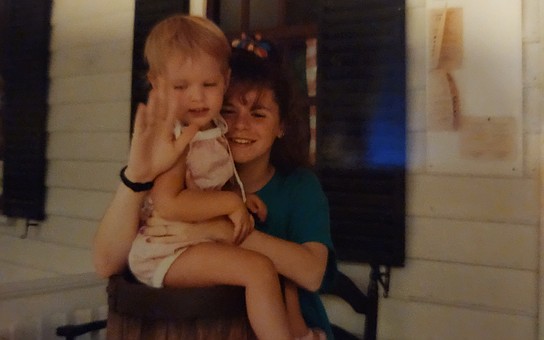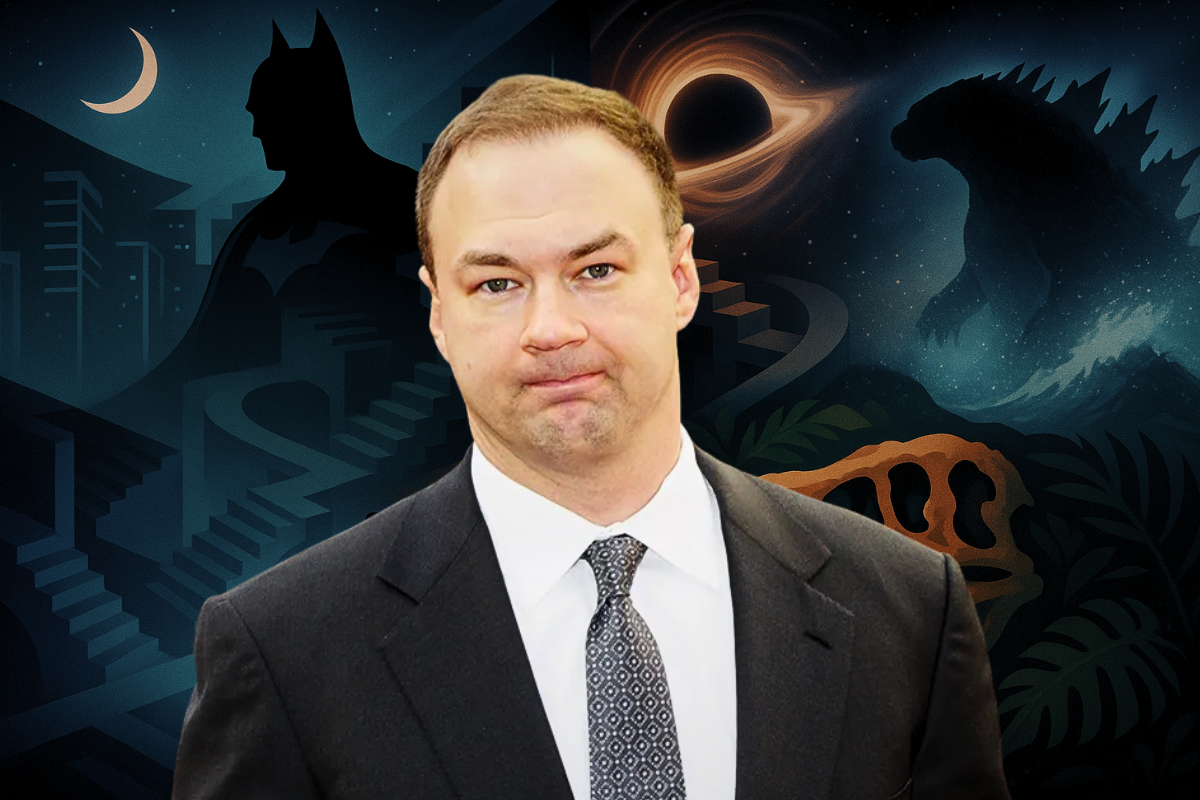
Thomas J. Tull grew up in Endwell, New York, in a modest household headed by a single mother who worked as a dental hygienist. Tull, the oldest of three children, felt early the weight of responsibility. In an interview, he recalled: “Struggling as a family financially, I grew up within the confines of constantly worrying (whether) the light is going to get turned off.” To help, he shoveled snow, mowed lawns, and looked for odd jobs—small acts, but in aggregate, they were his first capital (and his schooling in discipline).
At Hamilton College (Class of ’92), he arrived harboring dreams of law, but something in him resisted being boxed. As Tull later put it: “Be as brutally intellectually honest about your own makeup … what you enjoy, what motivates you … otherwise … you’ll just end up frustrated.” He describes those years as kindling: exposure to ambitious peers, big ideas, and the sense that luck and work could align.
By his own admission, “I was unemployable.” Rather than wait for someone else’s chance, he launched his own. His first ventures: a chain of laundromats (branded Smart Wash), followed by auto repair, and then tax and accounting offices via a roll-up of independent Jackson Hewitt franchises, eventually becoming chief operating officer of Tax Services of America.
His approach was always operational: find inefficiency, engineer structure, scale. In a podcast, he remarked, “What I’ve been good at throughout my career is looking at an industry or business model and finding the points where I could improve it and make it more efficient.” In 2001, he stepped deeper into capital markets by joining Convex Group (an Atlanta firm), rising to president.
In 2003, Tull walked away from a relatively secure path and made the leap into the unknown: he raised somewhere between $500 million and $600 million in equity capital to underwrite films through a new entity, Legendary Pictures. At that moment, most insiders would have called him a fool. Indeed, in an interview, his early pitch to financiers got brusque rejections:
“The first one we approached … their exact quote was ‘Wait, you want us to invest in a production company for movies? Can we get you a bottled water on your way out?’”
Undaunted, Tull viewed his slate of films as a diversified portfolio of bets. As he explained:
“We view each movie almost like [a startup]. … The hits will balance out the flops.”
In 2005, Legendary struck a landmark deal with Warner Bros. to co-finance a 45-picture slate over seven years. Tull’s philosophy was “hands on, fiscally responsible, creatively responsible.” He made it clear: he respected creative talent. “All I do is find out what [Chris Nolan] wants for catering, then stay out of the way in a corner somewhere, maybe clap softly.”
His taste in films reflected his enthusiasms—comic books, genre fare, spectacle. He backed 300, Watchmen, Inception, The Dark Knight trilogy, Jurassic World, Interstellar, The Hangover series, and more. On Godzilla, he confessed in interviews that he was a lifelong fan, and when the rights became available, he was ready: “I am a lifelong Godzilla fan.”
Tull’s worldview recognized that modern audiences have infinite options, and attention is scarce: “I have a supercomputer in my pocket … entertainment is coming in faster and faster increments … that makes it much more challenging to get people’s attention.” He believed what mattered was sharpness in marketing and telling stories that cut through the noise.
Even so, failure tracked him. Some films did not land; Blackhat is often cited as one. Reflecting in later interviews, Tull acknowledged that movie-making is perilous: “When you’re making a movie … there’s tons of variables … a lot of things have to come together.”
In 2016, the Chinese conglomerate Wanda Group acquired Legendary for $3.5 billion; Tull retained about a 20 percent stake. In January 2017, he stepped down as CEO.
After leaving Hollywood’s leadership seat, Tull repositioned himself as a tech-centric investor. He founded Tulco, headquartered in Pittsburgh, which builds and backs companies applying AI, data science, predictive analytics, and operational discipline.
In the Tulco model, film production lessons carry over: treat each business like a startup, calibrate risk, and apply data. He has emphasized in podcasts that “every movie you make is like a startup company.” Under Tulco, a major win was the sale of its AI-insurance business to Acrisure in 2020 for ~$400 million.
In 2025, Tull joined forces with Mark Walter to launch TWG Global, a new investment vehicle meant to accelerate AI applications across sectors. TWG is forming strategic partnerships with Palantir and XAI.
He remains active in frontier bets: biotech, space, and synthetic biology. He has backing in companies like Shield AI, Colossal Biosciences, Capella Space, and others.
Tull long rooted for the Pittsburgh Steelers—he says he started following them at age 4. In 2009, he became a minority owner of the franchise. That achievement was not merely symbolic: it merged his love of sport, legacy, and influence.
He also holds a minority stake in the New York Yankees. He once tried to buy the San Diego Padres (unsuccessfully). In 2013, he joined the board of the National Baseball Hall of Fame.
His sports investments deepen his public persona: from behind-the-scenes producer to visible stakeholder in cultural institutions.
Tull’s giving is neither splashy nor negligible. Through the Tull Family Foundation, he supports causes in youth, education, medical research, and conservation. During the COVID-19 pandemic, he gave $4.2 million in personal protective equipment (PPE) via his foundation. He has donated to the Children’s Hospital of Pittsburgh (supporting pediatric research and art therapy), and made grants to the University of Pittsburgh for brain cancer research.
Tull is also deeply embedded in institutional and educational governance. He sits on the MIT School of Engineering Dean’s Advisory Council; is a trustee at Carnegie Mellon; holds roles at the Smithsonian; serves in the board of the Baseball Hall of Fame, the National Football Foundation, and others.
In acknowledgment of his love for baseball and youth, he was inducted into the Little League Hall of Excellence.
He also personally balances business with art: Tull is a cofounder and musician in a rock/southern soul band called Ghost Hounds.
In interviews and podcasts, a few threads recur: intellectual curiosity, humility, self-awareness, and culture. In The Knowledge Project podcast, he reflected:
“Be as intellectually honest as you can be about not only your skill-sets, but what you enjoy, what motivates you … you have to put yourself in a position to be successful.”
“Great culture will trump a great business plan every day of the week … the right mindset … making those changes … is a lot easier.”
He also confronts the tyranny of success. “What got you here may not be enough,” he says.
His approach to risk is candid rather than romantic: he knows luck plays a role. “But like anything else, there’s tons of luck involved.” He urges constant self-evaluation: identifying when momentum or inertia has taken over, and having the courage to cut losses.
He is a voracious reader and says he is wired to absorb how the world works. Time is precious: “Unless somebody has invented something I’m not aware of, the one thing we can’t make any more of is time.”
His early advising style—across laundromats, tax offices, films, and frontier tech—is consistent: engineer predictability, layer data, recruit talent, and maintain flexibility.
Tull’s arc evokes classical self-made legends—Carnegie, Ford, Rockefeller—to more modern polymaths like Musk or Bezos. But even more apt are those crossover creators: Walt Disney (starting modest, building an entertainment empire) or David Geffen (from music to film and art). Those men largely stayed in media lanes; Tull leaped across tax, film, AI, biotech, and sports.
What links them: a mixture of ambition, timing, intellectual rigor, appetite for risk, and resilience. What distinguishes Tull is his willingness to relaunch himself repeatedly—and publicly—into new frontiers.
Thomas Tull’s story is not Hollywood glamour nor polished billionaire promo. It is a tale of a kid who worried the electricity might get cut off, who built laundromats, who rode into risk after risk, and who (so far) has turned more of them into wins than losses.