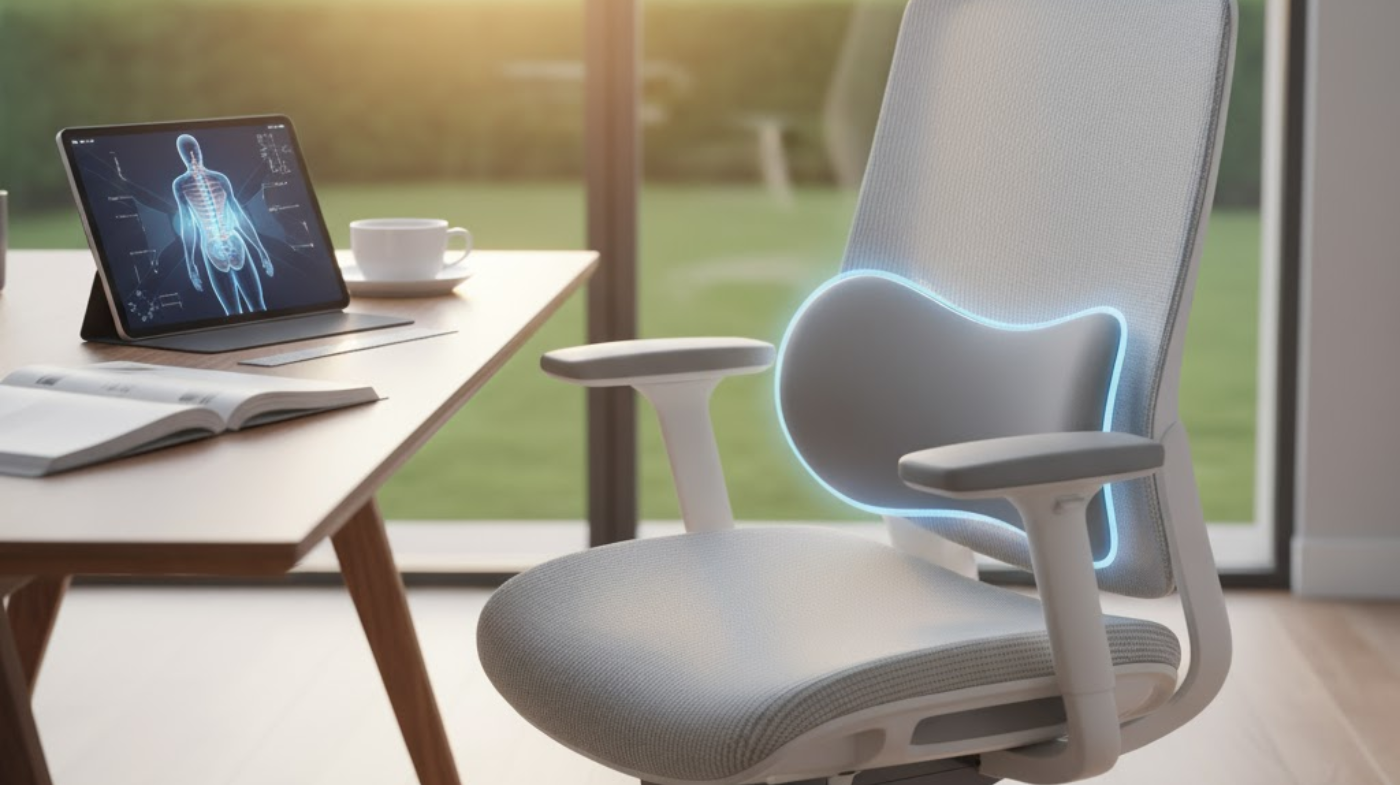
Chronic back pain strikes 80% of adults at some point, yet most don't realize their chair is the culprit. Poor lumbar support doesn't just cause discomfort; it triggers a cascade of health problems that cost thousands in medical bills and lost productivity.
This comprehensive guide reveals the hidden dangers of inadequate spinal support and shows exactly how proper lumbar positioning can transform your health. You'll discover the science-backed features that separate quality chairs from cheap alternatives, plus actionable strategies for selecting the perfect ergonomic solution.
Whether you're experiencing pain now or want to prevent future problems, understanding these critical insights could save you years of suffering and expense.
Transform your workspace comfort by choosing an office chair with footrest that properly supports your spine's natural curves while promoting healthy circulation throughout long work sessions.
Your spine naturally forms an S-shaped curve that distributes weight evenly across vertebrae. The lumbar region features a forward curve called lordosis, which requires specific support to maintain proper alignment. Without adequate support, this curve flattens or reverses, creating unnecessary stress on surrounding muscles and ligaments.
Modern seating often fails to accommodate this natural curvature. Standard chairs force the pelvis to tilt backward, causing the lower back to round unnaturally. This positioning increases pressure on spinal discs by up to 40 percent compared to standing posture.
Inadequate lumbar support triggers a cascade of physical problems throughout your body. Your hip flexors tighten from prolonged sitting, while glutes weaken from lack of engagement. This imbalance creates compensatory patterns that affect your entire kinetic chain.
The resulting muscle fatigue forces your body to rely on passive structures like ligaments and joints for support. Over time, these tissues stretch and lose their protective function, leading to chronic pain and reduced mobility.
Research demonstrates that appropriate lumbar support reduces intradiscal pressure by up to 25 percent. This pressure reduction occurs when the chair's backrest maintains your spine's natural lordotic curve, allowing muscles to relax while bones provide structural support.
Proper positioning also improves blood circulation to spinal tissues, enhancing nutrient delivery and waste removal. This improved circulation supports tissue healing and reduces inflammation associated with prolonged static postures.
Protect your long-term health by investing in highly-rated products for home and office that provide essential lumbar support, preventing costly medical treatments and chronic pain conditions.
Poor lumbar support creates immediate discomfort that worsens throughout the workday. Muscle tension builds as your body compensates for inadequate spinal alignment, leading to stiffness and soreness. This discomfort often radiates into the hips, shoulders, and neck as surrounding muscles work overtime.
The lack of proper support forces continuous muscle contraction to maintain upright posture. This sustained effort quickly leads to fatigue and cramping, making concentration difficult and reducing work efficiency significantly.
Chronic exposure to poor seating conditions accelerates spinal degeneration processes. Disc compression from improper positioning can cause permanent structural changes, including disc herniation and nerve compression. These conditions often require extensive medical intervention and lengthy recovery periods.
Prolonged poor posture also contributes to vertebral misalignment and joint dysfunction. Over years, these changes can become irreversible, leading to chronic pain syndromes and reduced quality of life.
Physical discomfort from inadequate lumbar support significantly impacts cognitive function and productivity. Pain and stiffness create mental distractions that reduce focus and decision-making abilities. Studies show workers with proper ergonomic support demonstrate up to 15 percent higher productivity rates.
Poor seating also increases sick leave usage and healthcare costs for both individuals and employers. The economic impact of back pain-related absences reaches billions annually across various industries.
Inadequate lumbar support contributes to numerous secondary health problems beyond back pain. Poor circulation from compressed positioning can lead to varicose veins and deep vein thrombosis risk. Shallow breathing patterns from slouched postures reduce oxygen delivery to vital organs.
The resulting stress response from chronic discomfort elevates cortisol levels, potentially affecting immune function, sleep quality, and mental health over time.
Maximize comfort and health benefits by selecting highly-rated products for home and office that incorporate adjustable lumbar mechanisms, quality materials, and ergonomic design principles.
Effective lumbar support must accommodate individual anatomical differences and preferences. Height adjustment allows users to position the support curve at their specific lumbar lordosis level, typically between the third and fifth lumbar vertebrae. This precise positioning ensures optimal spinal alignment for each user.
Depth adjustment controls how far the lumbar support projects forward, accommodating different torso lengths and preferred sitting positions. Some users require more aggressive curves, while others prefer subtle support that doesn't force excessive arch.
High-quality lumbar support utilizes memory foam or similar materials that conform to individual body shapes while maintaining structural integrity. These materials provide consistent support throughout extended sitting periods without losing their supportive properties.
Breathable fabrics and ventilation features prevent heat buildup and moisture retention, maintaining comfort during long work sessions. Quality materials also resist wear and deformation, ensuring long-term effectiveness and value.
Effective lumbar support seamlessly integrates with the chair's overall ergonomic design rather than functioning as an afterthought. The backrest angle must work harmoniously with lumbar curves to promote natural spinal alignment without creating pressure points.
Seat depth and height coordination ensures proper lumbar support positioning relative to hip placement and leg angles. This integration prevents conflicting ergonomic demands that could negate lumbar support benefits.
Built-in lumbar support systems offer superior consistency compared to add-on cushions or accessories. Pneumatic adjustment systems provide precise, tool-free customization that users can modify throughout the day as comfort needs change.
Fixed curve designs work well for users with consistent preferences, while dynamic support systems adjust automatically with movement and posture changes throughout the workday.
Adequate lumbar support maintains your lower back's natural inward curve while sitting. You should feel gentle pressure against your lower back without strain or gaps. If you experience back pain, fatigue, or need to use additional cushions, your current chair likely lacks proper support.
Yes, portable lumbar cushions and adjustable straps can improve existing chairs temporarily. However, built-in support systems typically provide superior consistency and adjustability. Consider these additions as short-term solutions while planning for a properly designed ergonomic chair.
Lumbar support specifically targets the natural lordotic curve of your lower spine with precise positioning and firmness. Lower back cushions provide general comfort but may not address anatomical requirements or maintain proper spinal alignment throughout extended sitting periods.
Proper lumbar support represents one of the most important investments you can make in your daily comfort and long-term health. The spine-protective benefits extend far beyond immediate comfort, potentially preventing costly medical treatments and chronic pain conditions that affect millions of workers annually.
Quality chairs with effective lumbar support systems pay dividends through improved productivity, reduced sick days, and enhanced quality of life. While the initial investment may seem significant, the long-term value in health protection and comfort makes proper seating an essential component of any workspace.
Remember that individual needs vary, and what works for others may not suit your specific requirements. Take time to evaluate options thoroughly, test different systems, and consider professional guidance when making this important decision for your spinal health and daily comfort.