
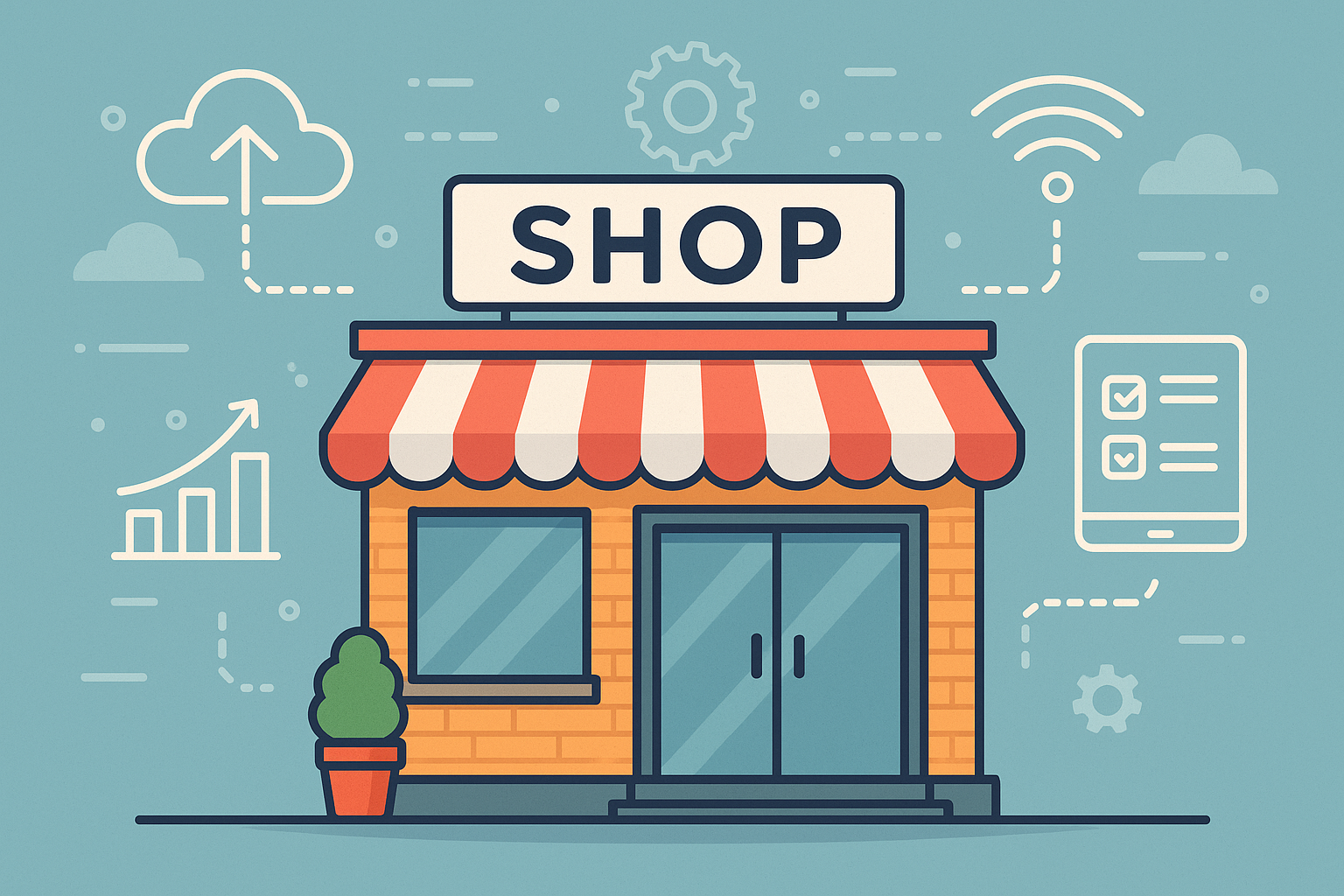
When you think of small businesses, you probably picture local bakeries, corner boutiques, or family-run coffee shops — not servers, cybersecurity, or data analytics. But under the hood, many small businesses are quietly powered by technology that rivals what big corporations use.
The shift has been subtle but dramatic. The pandemic accelerated digital adoption, forcing even the most traditional mom-and-pop shops to embrace online tools just to stay alive. Now, tech isn’t just a “nice-to-have.” It’s the invisible engine that keeps local businesses running efficiently, securely, and competitively.
For decades, point-of-sale (POS) systems were clunky terminals that did little more than process payments. Today, cloud-based systems like Square, Shopify, and Toast double as mini-CRMs. They track customer habits, manage inventory, and even automate marketing campaigns — all from the same dashboard.
The beauty of cloud technology is that it scales with the business. A single store can start with a free or low-tier plan and then upgrade as it grows, adding advanced analytics or payroll management when needed. No local servers, no expensive IT staff — just a browser and Wi-Fi.
It’s not glamorous, but this is the same digital foundation used by some of the world’s biggest retail operations. For small businesses, that levels the playing field in a way that was unthinkable 10 years ago.
Data used to sound like something reserved for Silicon Valley or Wall Street. But now, even local shops are swimming in it — often without realizing it.
Every transaction, website visit, and online order feeds into a pool of information that can help owners make smarter decisions. A bakery can use Google Analytics to see when online orders peak. A landscaping company can use Excel dashboards or Power BI to identify which neighborhoods generate the most recurring work.
Small business owners don’t need to be “data scientists” to benefit. Many cloud platforms include analytics dashboards by default, translating raw numbers into simple charts and trends. The tech is invisible, but the insight is powerful.
For deeper takes on how data is reshaping business at every level, outlets like BitFern regularly explore how technology is influencing everyday operations — not just in Fortune 500s but also in the local shops around the corner.
You don’t need to run a tech company to be a target. Small businesses are hit by more than half of all cyberattacks globally, largely because they’re seen as “easy” prey. But today’s entrepreneurs are getting smarter.
Simple steps like enabling multi-factor authentication (MFA), using password managers, and adopting cloud-based email security have become the new norm. Even something as small as automatically backing up files to Microsoft OneDrive or Google Drive can save a company from disaster.
And with new tools like Microsoft Defender for Business or free threat-detection dashboards, small business cybersecurity is no longer an enterprise-only concern — it’s becoming as common as antivirus software once was.
Automation isn’t just for factories or tech startups. Many small businesses are using it in creative, low-cost ways.
Zapier and Make (formerly Integromat) connect apps like QuickBooks, Gmail, and Slack — turning repetitive tasks into background processes. Think: new customers automatically added to a mailing list, or invoices sent instantly after payment.
Even AI tools like ChatGPT or Canva’s Magic Write are helping small teams punch above their weight. They’re being used to draft social media captions, summarize reports, and even brainstorm product ideas — not to replace creativity, but to give time back to the parts of the job that actually matter.
Having a website is no longer optional, but it’s the type of website that makes the difference. Smart business owners are moving beyond static “About Us” pages. They’re using SEO, social proof, and storytelling to build trust online.
A well-designed site integrated with analytics and automation can act like a 24/7 employee — capturing leads, scheduling appointments, and tracking what visitors care about most. Add a few social integrations, and suddenly that “small” business feels much larger than it is.
What’s interesting is that the most successful sites aren’t the ones loaded with flashy tech. They’re the ones that blend authenticity with just enough automation to stay consistent — a philosophy mirrored in how modern tech culture operates today.
As artificial intelligence, automation, and analytics tools become more accessible, the line between “small business” and “tech-enabled business” is disappearing.
Soon, every small business owner will have some form of digital assistant — whether that’s an AI chatbot handling customer questions, a predictive sales dashboard suggesting what to stock next, or a cybersecurity system that flags risks in real time.
The future isn’t about small businesses becoming tech companies. It’s about using technology to stay human — freeing people from repetitive work so they can focus on creativity, relationships, and growth.
Final Thought
Behind every neighborhood success story is a tech stack quietly doing its job. From cloud apps to automation scripts, these tools may never make headlines, but they’re the reason small businesses can compete, adapt, and thrive in a world that moves faster than ever.











