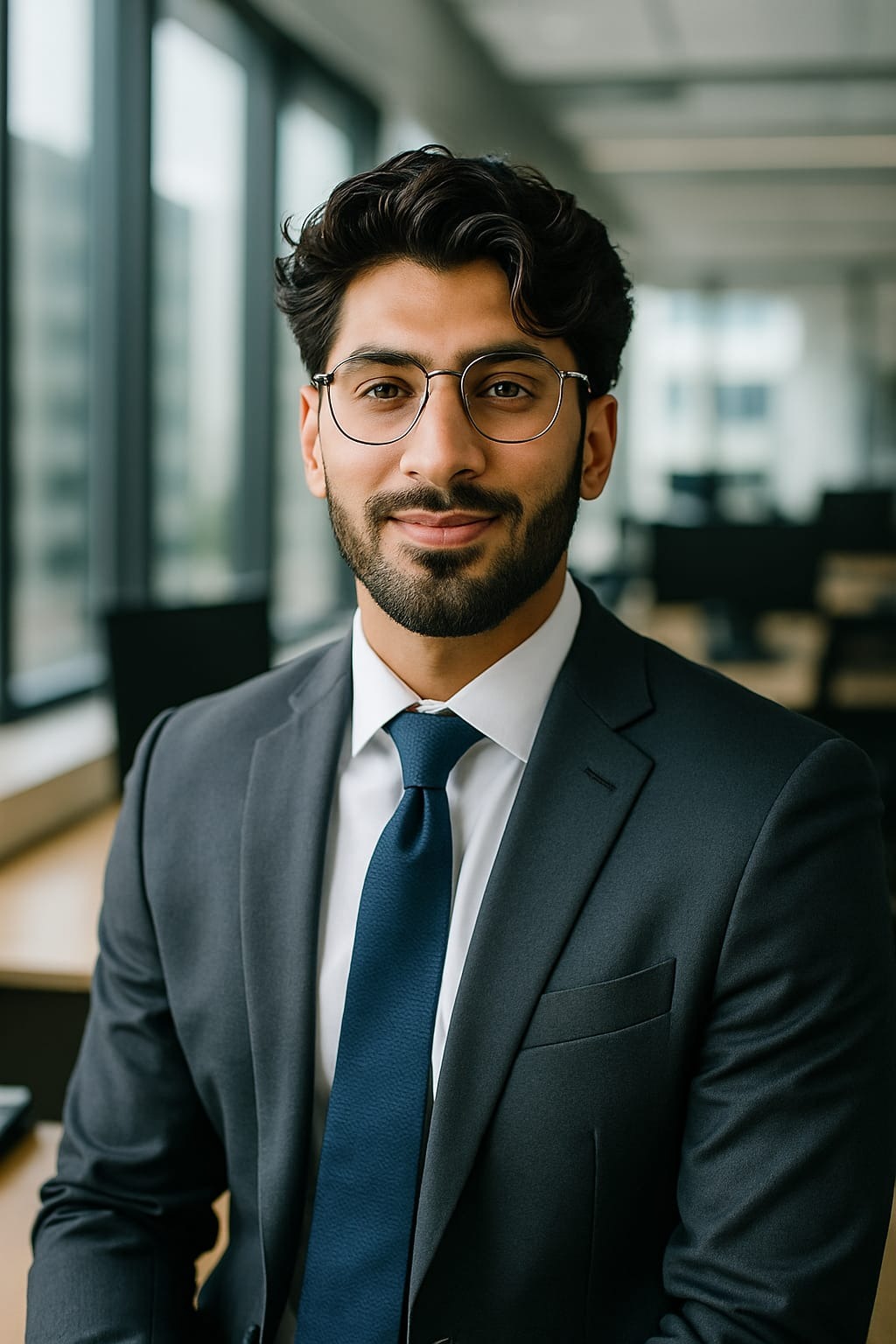
When Fawaz Sheikh talks about innovation, he doesn’t sound like most engineers who are eager to discuss systems or results. Instead, he talks about people. He’s part of a growing wave of early-career professionals who believe that technology should be more inclusive, intentional, and human-centered.
“My faith instills in me the conviction that creativity is a gift and responsibility, not merely a competitive tool,” he explained.
That belief has guided him since childhood, when his fascination with how things worked grew into a lifelong curiosity about how technology could serve real communities. Today, Sheikh uses engineering to design tools that create a lasting impact rather than short-term results.
A values-driven professional, he credits both his personal and professional ethics to his faith and upbringing, viewing his work as both a craft and a calling.
“I stay anchored in my mission by periodically reflecting through prayer, journaling, and conversations, ensuring what I pursue aligns with my deeper purpose,” he shared.
He leads with integrity and views creativity as a form of service, prioritizing ideas that lift others up rather than simply improve metrics on a screen. In every project, he builds in ethical checkpoints and makes a deliberate effort to include every voice at the table, especially those who are less inclined to speak up.
For him, innovation matters most when it blends curiosity, humility, and empathy, and when its results make life better for people.
Creating Connection in a Time of Distance
When the COVID-19 pandemic pushed everything online, Sheikh suddenly found himself juggling school, career planning, and a future that was anything but certain. The transition to remote work was difficult for everyone.
His teams were doing their best to adapt, but communication became much more challenging and the isolation started to take a toll. Sheikh knew something had to change.
“During the pandemic, as teams struggled with coordination and morale in remote work, I initiated a “virtual emotional feedback board” prototype within my organization,” he said.
That shared digital space gave people a place to post their thoughts anonymously. They could talk about things they were struggling with, ask for support, or share a bit about how they were feeling on any given day. Other team members could then respond, offer help, or leave words of encouragement, assuring one another that they weren’t alone.
What started as a small experiment soon became a permanent part of the organization’s culture. Sheikh considers the experience one of the biggest breakthroughs in his career so far.
Although the idea was nothing major, it reinforced his belief that the most powerful innovations are often the ones rooted in empathy and connection.
Building a Platform That Speaks Everyone’s Language
Another challenge Sheikh turned his attention to was the growing disconnect between technical teams and the nonprofit partners they aimed to support. He noticed that many organizations struggled to stay aligned because they didn’t have a way to see how projects were progressing, which often led to confusion or mistrust.
To change that, Fawaz Sheikh developed a stakeholder transparency dashboard, which still stands out as one of his proudest professional achievements.
“It bridged the communication and trust gap without heavy tech overhead,” he explained.
The web-based platform brought together concise project summaries, live data previews, narrative context, and feedback channels. By turning complex updates into a clear, accessible story, it gave non-technical partners a way to follow along with progress and contribute to decisions.
Engineering a New Kind of Marketplace
Right now, Sheikh is developing a community micro-enterprise enablement platform that ties his ethics and engineering together. The system allows neighbors to share their skills and services, from tutoring and crafts to tech support.
Users can book those services through small payments or bartering, earning credits that can be used for mentorship or other learning opportunities.
Behind the scenes, the platform includes a dashboard for nonprofits and local organizations. It identifies where certain skills are missing, tracks participation, and points out areas where new training could help. This data helps organizations understand where to focus their efforts while giving individuals more autonomy and opportunity.
The goal is to use technology to strengthen local economies and the sense of trust that keeps them connected.
The Art of Staying Curious
Creative energy doesn’t appear out of nowhere, and Sheikh has learned to protect and renew his own. He keeps a “challenge journal” where he writes down frustrations, inefficiencies, and half-formed ideas that might grow into something useful later. Revisiting those notes allows him to track his thought process and see how small sparks of curiosity can evolve into real solutions.
To keep his thinking fresh, he sets creative constraints that push him to explore new angles, often asking himself questions such as “How might we accomplish this if resources were zero?”
On top of that, he runs brainstorming sessions that follow “yes, and” rules, which keeps his ideas flowing. He also spends time observing and learning from the people he hopes to serve, using shadowing and interviews to understand their needs.
Sheikh looks for inspiration in many places outside of engineering. He reads about art, social justice, and philosophy, drawing connections between seemingly unrelated fields. He also meets regularly with organizations in his community, ensuring he stays up to date with the problems they’re facing.
Leading With Vulnerability and Vision
Beyond his engineering work, Sheikh devotes time to giving back within his community, aiming to make a positive difference in his personal life just as he does in his career. One of the ways he does this is through the Purdue Muslim Association, where he mentors fellow classmates struggling with academic or emotional concerns. Those experiences have taught him that authenticity is far more valuable than perfection.
“In mentoring, I explicitly normalize failure by sharing my own experiments and missteps, which lowers the barrier for others to try,” he shared.
By talking honestly about his own mistakes, Sheikh makes it easier for others to take risks and go after their goals without fear of failure. He encourages teams to run small, manageable experiments instead of high-stakes launches, which gives them room to explore different ideas without losing sight of what they’re trying to achieve.
Alongside that, he promotes cross-disciplinary collaboration and uses what he calls “moonshot prompts” to stretch creative thinking beyond the obvious.
When a team switches direction or rethinks an idea, Sheikh values the insight gained from the process just as much as the final result. To him, every adjustment and discovery is a sign of growth, proof that learning is actively taking place.
“Over time, this builds a culture where experimentation is expected and supported,” he said.
Redefining Success on His Own Terms
For Sheikh, success has never been about speed or scale. He believes that real progress balances measurable results with genuine impact, and that an achievement means little if it doesn’t leave people better off.
When evaluating outcomes, he looks through two lenses. One measures performance—how well a project works, how it’s received, and whether it reaches the people it’s meant to help.
The other looks deeper, focusing on values like inclusion, resilience, and fairness. Efficiency matters, but not when it’s at the expense of Sheikh’s values.
“If an initiative is efficient and popular but erodes trust, excludes vulnerable voices, or undermines dignity, I consider it a compromised success,” he said.
Inspired by philanthropists like Warren Buffet, he envisions a future where success enables service and where innovation creates space for generosity.
“Mentoring and thinking about future generations also fuels purpose,” he said. “When I feel weariness, I pause, recalibrate, and re-center on why I began.”
That mindset keeps him moving forward, always considering what his work will mean for those who come next. For Fawaz Sheikh, progress is not just a matter of advancement but of accountability, and the future of innovation depends on keeping humanity at its center.