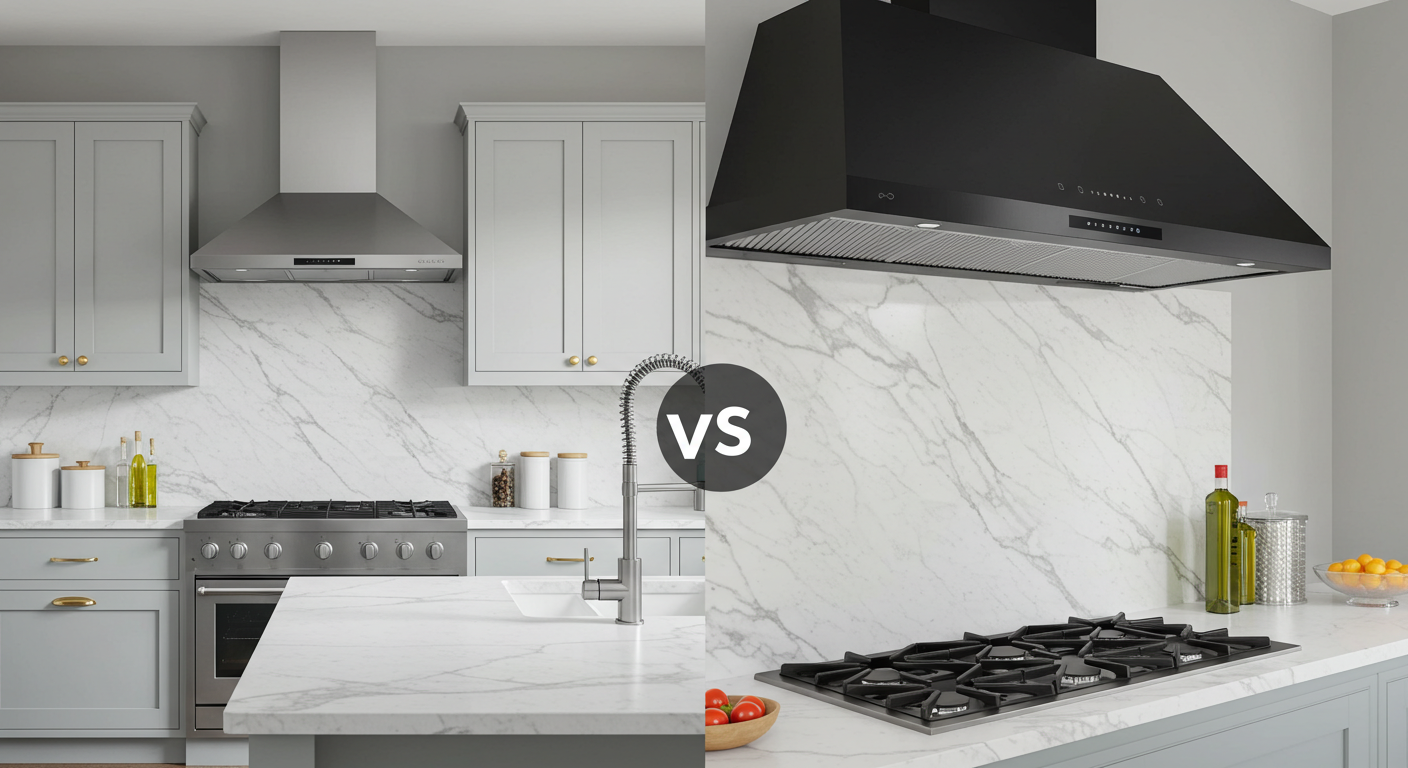
Choosing the right range hood depends on how your kitchen is set up and how you cook day to day. Whether you're building a new space or updating an existing one, it's worth knowing the difference between ducted and ductless designs.
Ducted hoods move air outside through vents. Ductless ones filter and recirculate the air back into the room. Both have clear uses depending on layout, airflow needs, and how much cooking you do at home.
In this article, we’ll explain how each option works, where each one makes sense, what to consider when deciding which type of hood best fits your kitchen, and how exploring kitchen appliance packages can ensure your hood matches your other appliances perfectly.
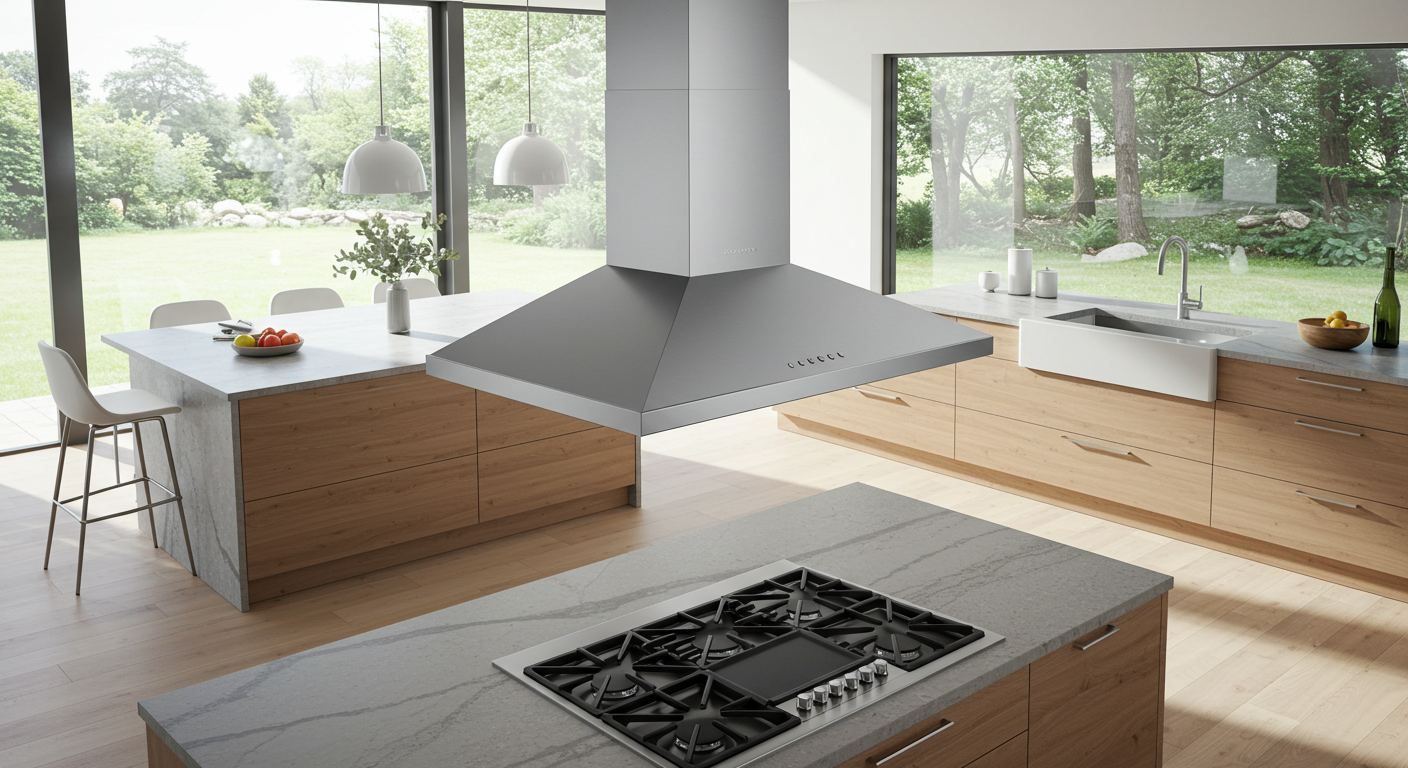
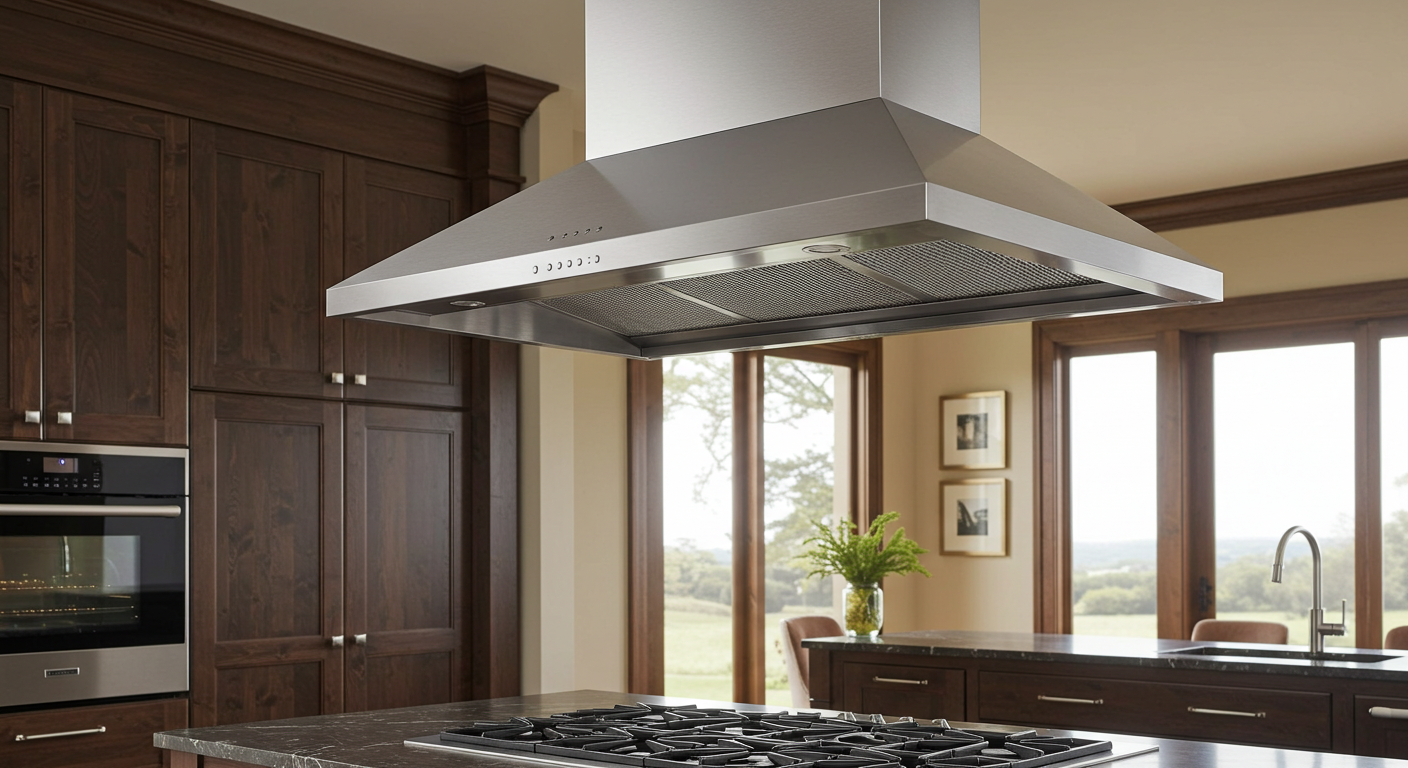
A ducted range hood vents air outside your home through a duct system. It pulls in smoke, grease, steam, and cooking odors, then pushes them through ductwork to release the air outdoors. If you do a lot of heavy-duty cooking, especially with a gas range, this setup is usually the most effective at keeping your kitchen air clean.
Ducted hoods are common in larger kitchens or new builds where ductwork can be installed into walls or ceilings. They’re great if you want to remove smoke and odors completely, not just filter them.
According to Dr. Andrew Persily, Senior Researcher at the National Institute of Standards and Technology (NIST): "Proper kitchen ventilation is critical for indoor air quality. The choice between ducted and ductless range hoods depends on cooking habits, kitchen layout, and home construction."
– NIST
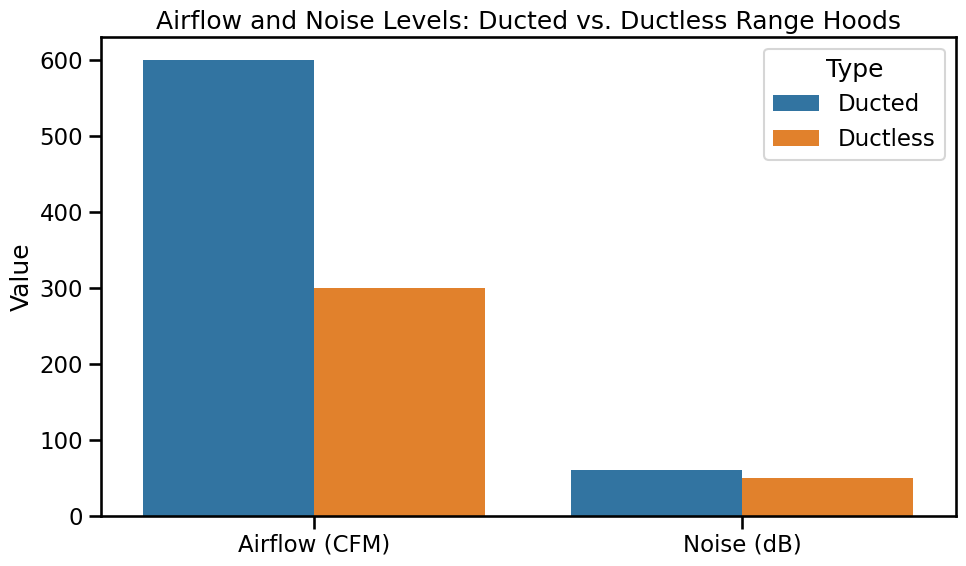
Some models come with a higher CFM (cubic feet per minute) rating, meaning they can move more air quickly. This makes them ideal for frying, searing, or cooking with high heat.
That said, installing a ducted model requires more planning. You’ll need to position it near an exterior wall or have room for a long duct run. If you’re doing a full kitchen remodel or designing a new space, it’s a solid investment for long-term performance.
A ductless range hood, also called a recirculating range hood, doesn’t vent air outside. Instead, it pulls in the air, runs it through a charcoal filter, and then pushes it back into your kitchen. These are especially useful in apartments, condos, or older homes where installing ducts isn’t practical.
Because they don’t require external ventilation, ductless models are much easier to install. You can mount one under a cabinet or against a wall without needing to run a duct. That makes them a good fit for quick upgrades or budget-conscious remodels.
That said, the air doesn’t leave your home. It’s cleaned and recirculated, so while the filter does a decent job with odor and some grease, it won’t clear out heavy smoke like a vented system can. This is something to keep in mind if you cook frequently with oils or spices that linger in the air.
Most ductless range hoods need their filters replaced every few months, depending on how often you cook. A clean filter keeps it running efficiently and helps keep your kitchen air fresh.
When deciding between a ducted vs ductless range hood, it’s helpful to lay things out side by side. Each has its place depending on how you cook, your kitchen layout, and whether you’re doing a full renovation or just replacing a unit.
Here’s a quick comparison to help you choose the range hood that’s best for your kitchen:
Ducted hoods tend to outperform ductless in terms of raw ventilation, especially when paired with a gas range or high-output cooktop. But a ductless model is often the practical solution when ductwork isn’t possible or cost-effective.
The right range hood depends on more than just what looks good over your cooktop. You need to weigh your kitchen layout, how you cook, and whether you're willing to install new ductwork or prefer a plug-and-play option. Many homeowners shopping at Innovdepot find it helpful to consider their hood choice alongside their entire cooking setup.
Here are a few things to consider:
Tip: Whichever range hood for your kitchen you choose, make sure it matches the size and power of your cooktop, and double-check the CFM rating to ensure it’s strong enough for your needs.
Yes, you can convert a ducted range hood to a ductless model, and vice versa, but there are trade-offs. Not every setup allows for it, and you’ll need the right parts and expectations.
You’ll need a recirculating kit, which typically includes a charcoal filter and cover plates. These filters help clean the air before it’s pushed back into the kitchen. The process is usually straightforward, especially for under-cabinet range hoods and microwaves with built-in vents.
However, even with filters, it won’t perform exactly like a ducted system. Recirculating range hoods are best for light cooking and minimal smoke.
This gets trickier. You’ll have to install ductwork, cut through cabinetry or walls, and ensure the hood connects to a proper exhaust point. Not every kitchen layout makes this easy, and hiring a pro might be necessary.
If your home allows for external venting, going with a ducted setup will usually give you better long-term results. But for renters or apartments, installing a ductless hood is often the only option.
According to Consumer Reports, always check the manufacturer’s instructions to see if your range hood can support conversion.