Creating a cryptocurrency sounds simple until you try. You’ve probably seen stories of developers launching meme coins overnight or startups raising millions through tokens on Ethereum. But behind the hype, the actual cost to create a cryptocurrency varies wildly.
It depends on what you’re building, how secure it needs to be, and whether you’re launching a simple token or an entirely new blockchain.
In 2025, creating your own cryptocurrency could cost anywhere from a few thousand dollars to well over six figures. That range covers everything from deploying a smart contract on an existing blockchain like Ethereum or Binance Smart Chain to building a new cryptocurrency from scratch with its own network, wallet, and exchange.
This article breaks down what actually goes into building a crypto project, from development and security audits to crypto press release distribution and exchange listings, and what it really costs to do it right.
Before you estimate costs, you need to define exactly what you’re building. Not all cryptocurrencies are the same, and neither are the costs to develop them.
If you're planning to create a cryptocurrency, you're either building a token or a coin:
Creating a token is faster and cheaper. Creating a coin is more complex but gives you more control.
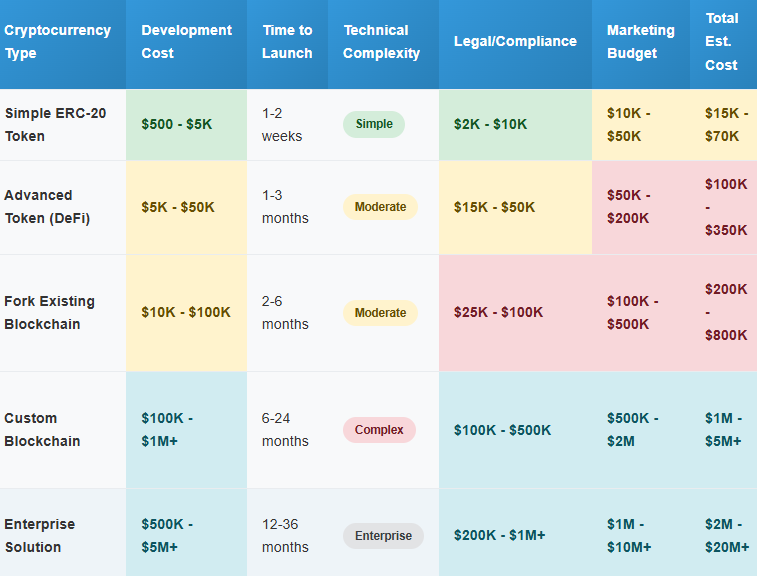
Here’s how the cost changes:
If you want to launch a utility token for a DeFi app or NFT marketplace, a token on an existing blockchain may be all you need. If you're building a full cryptocurrency platform or aiming for deep integration into digital finance, creating a new blockchain might make more sense, but the development cost will reflect that.
Once you know what type of cryptocurrency you're building, the real development begins. Whether you're creating a token or building your own coin, there are several components that affect the final cost.
If you're launching a token on Ethereum or another blockchain, you'll need a smart contract. This includes functions like token minting, transfers, and governance features.
A crypto wallet is how users interact with your token or coin. If you're building your own wallet, you’ll need UI/UX design, blockchain integration, and mobile compatibility.
If you're building a new cryptocurrency with its own blockchain, you'll need to launch and manage nodes.
Want your token listed on exchanges? You’ll need to either pay listing fees or build your own crypto exchange platform for native trading.
Users need a simple way to interact with your token or platform. That means building a clean interface and backend APIs.
No matter what you're building, token security is non-negotiable. A vulnerability can lead to lost funds and zero trust.
You can hire a freelance developer to create a cryptocurrency, or you can work with a full cryptocurrency development company. Each comes with pros, cons, and different pricing.
Building the tech is just one part of launching a cryptocurrency. The real cost includes everything it takes to get your project live, legal, and trusted.
Here’s what else you need to budget for.
If you skip this part, it could cost you a lot more later.
Every country has different rules around digital currencies, crypto tokens, and securities. A good crypto lawyer will help you stay compliant, avoid fines, and structure your token in a way that doesn’t break local laws.
Investors still read white papers. A solid one explains your use case, tokenomics, roadmap, and how your cryptocurrency actually works.
If nobody hears about your token, it won't matter how great the code is. Launching a cryptocurrency without marketing is like shouting into the void. Professional distribution platforms like Bitwire help crypto projects get their launch announcements to credible news outlets rather than relying solely on social media buzz.
If you’re handling wallets, exchanges, or token transfers, security isn't optional.
If you want your coin or token to be traded, you’ll either need to list it on an existing exchange or build your own.
Even after launch, you’ll need developers on call. Blockchains evolve, wallets break, and bugs happen. You’ll also need community managers, Discord mods, and maybe even legal updates as regulations change.
Your choice of blockchain doesn’t just shape your project; it shapes your costs.
Some teams want to create a new cryptocurrency on its own blockchain. Others prefer launching a token on an existing platform like Ethereum or Binance Smart Chain. The decision affects development time, transaction fees, community reach, and final cost.
Here are the most common options if you want to create your own cryptocurrency or token:
If your goal is to get to market quickly, build on an existing blockchain. If you’re building something long-term, like a digital currency platform or crypto exchange development, it might be worth the extra investment.
It depends on what you’re building. A simple token on Ethereum or BNB Chain might cost $2,000 to $10,000. A full blockchain with its own coin and crypto wallet could cost $100,000 or more. The final cost depends on whether you use existing blockchain platforms or build from scratch.
Yes, but it’s risky. There are token generators and no-code tools that let you launch basic coins. Still, if you’re serious about your crypto project, you’ll want a developer to create a cryptocurrency properly, with security, custom logic, and real tokenomics.
Not unless you have a strong reason. Most projects create tokens on existing platforms like Ethereum, Binance Smart Chain, or Solana. Building your own blockchain is expensive and only makes sense if you need full control, custom consensus, or new infrastructure.
Launch a basic ERC-20 token on Ethereum or a BEP-20 on Binance Smart Chain. Use a verified smart contract template, skip the extras, and start small. Just be aware that gas fees, audits, and listing costs still add up fast.
It varies. DEX listings (like Uniswap or PancakeSwap) are almost free aside from liquidity costs. Centralized exchanges like Binance, Coinbase, or Kraken may charge $10,000 to $300,000, depending on your project's size, community, and legal structure.
Creating a cryptocurrency in 2025 is easier than ever, but doing it right still takes money, planning, and purpose.
If you're just looking to test an idea or launch a simple token, you can build on an existing blockchain and keep your costs low. But if you're aiming to build your own cryptocurrency platform, crypto exchange, or new blockchain, expect to invest serious time and capital.
The cost to create a cryptocurrency ranges from a few thousand dollars to hundreds of thousands, depending on your goals. Smart contracts, wallets, audits, marketing, and legal structure all play a role in the final cost.
But here's the truth: the success of your cryptocurrency has less to do with how much you spend and more to do with what you're building and who it’s for.
Don’t just launch a coin. Build something that matters.