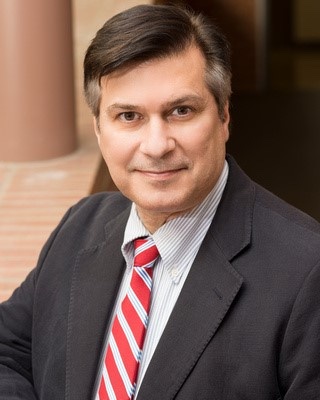
Stephen Laga, M.D., is a renowned cardiothoracic surgeon who has significantly impacted the fields of general and cardiovascular surgery. He earned his medical degree from St. Louis University School of Medicine and completed his internship at St. Louis University Group Hospitals. Further honing his skills, he completed a general surgery residency at Rush Presbyterian St. Luke's Medical Center in Chicago and a thoracic surgery residency at Baylor College of Medicine. Dr. Laga's pursuit of excellence led him to a fellowship in cardiovascular surgery at Baylor. Throughout his illustrious career, Dr. Laga has served in key roles at prestigious medical institutions, including Froedtert South Medical Group, and held positions in hospitals across Illinois, Louisiana, and Texas. Additionally, his service as a Major in the U.S. Air Force Medical Corps underscores his dedication to patient care and leadership. Board-certified in both surgery and thoracic surgery, Stephen Laga, M.D., is known for his patient-centered approach, prioritizing clear communication and evidence-based care. Beyond his professional achievements, he finds joy in sailing.
The following interview delves into Dr. Laga's career journey, insights, and the innovative approaches he has adopted in his field.
Innovation and Creativity
How do you foster a culture of innovation and forward-thinking in your field?
You have to create a culture of excellence. Define and shape a culture of excellence. It gives you a competitive advantage, improves customer experiences, and attracts top talent. You need a clear vision of what you want to achieve and a supportive leadership style. Bring out the best in each person you have. A structured approach is crucial. Assess each individual's strengths and weaknesses and focus on enhancing their strengths. Support people in becoming stronger.
Can you share an example where an unconventional approach led to a major breakthrough in your career?
EVAR and TAVR are among the latest ones. While I was not the first, I have wholly adopted these procedures, which have saved lives. Earlier, such procedures had to be done openly, involving more complications and a challenging recovery. We can now help much sicker patients and offer them options they wouldn't have otherwise. We can eliminate most aneurysms from rupturing. TAVR is a huge breakthrough in aortic valve replacement; patients with severe aortic stenosis can undergo TAVR and live much better lives. Everything must be based on logic to achieve great outcomes.
What role does creative problem-solving play in your decision-making process?
Creative problem-solving heavily focuses on brainstorming. Discuss the problem collectively, ask for ideas, and remain silent until the end. Allow others to provide their opinions and experiences; you learn a lot about your team this way.
How do you encourage your team to push boundaries and explore new ideas in your industry?
You need to define your priorities and communicate limits. Clarify what you're willing to do and not do. Provide resources and take breaks to recharge.
What’s the most innovative solution you’ve implemented to overcome a professional challenge?
A long time ago, when I was with Dr. DeBakey, he advised sticking to your guns when treating the aortic cross clamp. Doing everything on the cross clamp prevents complications. Although this was a theory at the time, as long as the heart is well-protected, my experience and results have vindicated me.
How do you stay ahead of the curve and remain inspired to innovate in a rapidly evolving field?
Read, read, read. Attend meetings and converse with colleagues. I read both old and new literature. Older literature tackled problems that are still relevant today. For instance, there was a tremendous push for artificial blood due to bypass surgery needing blood, which never worked out. However, it led to numerous blood-saving procedures, so today, about 40% of my cases don't require blood, and over 80% don't need blood in the operating room.
Expertise and Achievements
What techniques do you use to generate fresh ideas and drive continuous improvement?
Assessing my skills and brainstorming with colleagues is crucial. I utilize the Torrance Tests of Creative Thinking, which focus on fluency and evaluation. The Kirton Adaptation and Innovation Inventory is another tool, designed to enhance collaboration and reduce conflict by understanding cognitive styles.
How do you balance cutting-edge advancements with practical, real-world applications?
Understanding the limits and consequences is vital. For example, with Artificial Intelligence and self-driving cars, it's about not being the first or last but finding a critical balance. I employ an intraoperative camera for documentation, benefiting both treatment and medical-legal aspects.
What's an exciting project, initiative, or idea you're currently working on?
We're initiating Transcatheter Aortic Valve Replacement (TAVR) at my hospital, collaborating with seasoned interventional cardiologists. The logistics are complex but promising. Additionally, I'm learning Carotid Artery Stenting, which will significantly enhance the care level we can provide.
How do you measure the impact and success of your creative initiatives?
Success is measured by achieving original goals and exploring new opportunities. For example, launching TAVR at Froedtert South will allow us to treat more patients locally. Similarly, Carotid Artery Stenting will broaden our community service.
Vision for the Future
What future trends do you foresee in cardiothoracic surgery and medicine in general?
I anticipate a greater emphasis on minimally invasive procedures and personalized medicine. We are already seeing this with TAVR and similar innovations. As technology advances, so will our ability to provide tailored treatments that are less invasive and more effective.
How do you plan to adapt to these trends and continue leading in your field?
Continuous learning is key. By staying informed about the latest research and techniques, I can adapt and incorporate these advancements into my practice. It's also about fostering a culture of collaboration and innovation within my team.
In conclusion, Stephen Laga, M.D., continues to shape the field of cardiothoracic surgery through his dedication to innovation and patient care. His efforts ensure that both he and his team remain at the forefront of medical advancements, improving patient outcomes and setting new standards in healthcare.