
When you first start journaling, almost any pen will do. But as your habit grows—from jotting down quick thoughts to crafting meaningful, expressive pages—you begin to notice the details: smudged ink, scratchy lines, and hand fatigue. Suddenly, how a pen writes matters just as much as what you write.
For many journaling enthusiasts, especially those drawn to the refined aesthetics of Japanese-style journaling, smooth writing isn’t just a luxury—it’s a necessity. The sensation of gliding across the page without resistance encourages focus and flow. A good pen becomes more than a tool; it becomes part of the ritual.
Whether you’re outlining a week, reflecting on your day, or capturing fleeting ideas, the pen in your hand can elevate or interrupt the entire experience. That’s why smooth-writing pens have become essentials for journalers around the world.
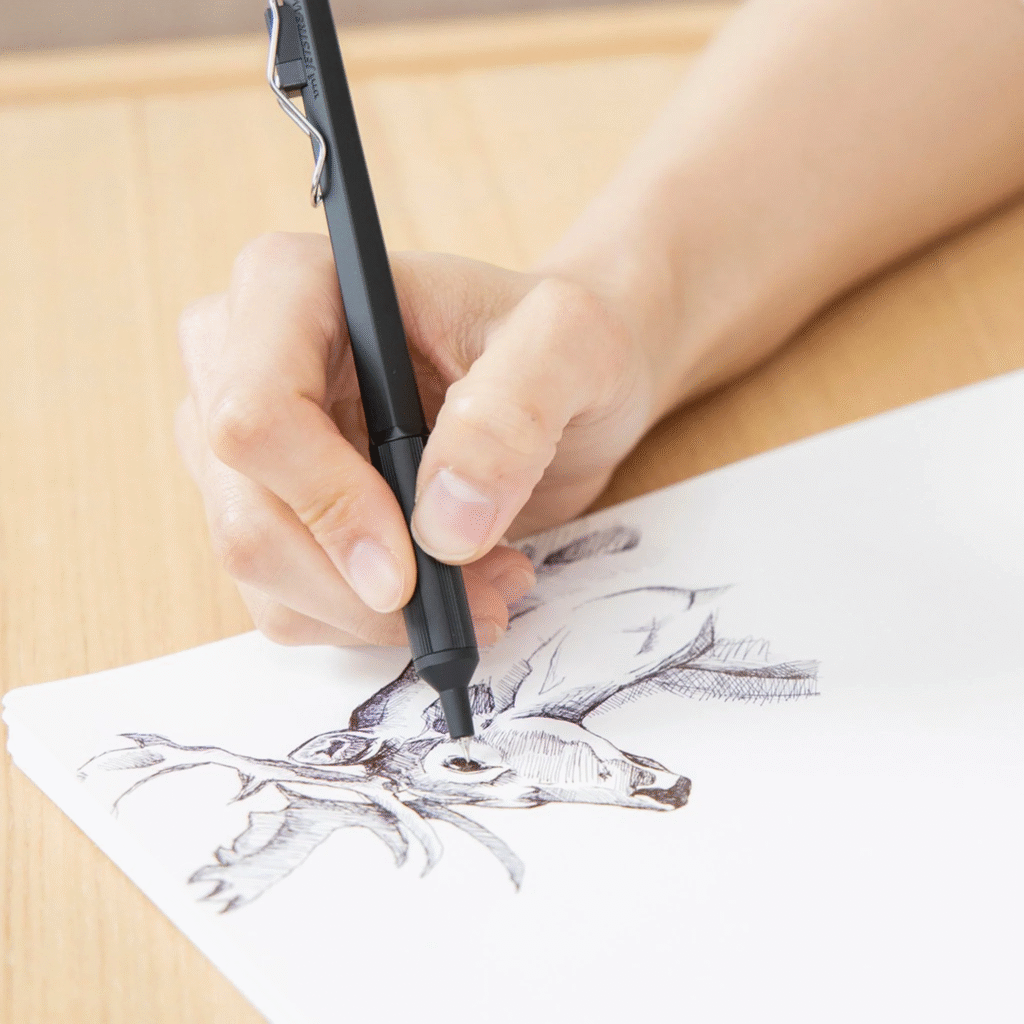
In Japan, journaling is a quiet craft. It’s not just about documenting events but about slowing down and expressing the small textures of everyday life. From color-coded planners to mood trackers with watercolored accents, each page blends structure and creativity.
What truly sets Japanese journaling apart is the care given to writing tools—especially pens. Journalers regularly test different models for ink flow, grip comfort, tip precision, and even how the ink behaves on different types of paper. The goal? A writing experience that feels seamless.
This thoughtful relationship with stationery has shaped Japan’s global reputation for producing finely engineered writing instruments. Among those, one tool stands out not just for its design, but for how it feels in the hand—Uni Jetstream smooth writing pens, known for their effortless glide and precision.
Ask any consistent journaler what keeps them coming back to the page, and they’ll likely say: the feel of the pen. That’s where a well-crafted, smooth-writing tool can make all the difference.
The Uni Jetstream uses a hybrid ink formula that combines the fluid glide of gel with the fast-drying reliability of oil-based ink. This creates a crisp, clean, and controlled writing experience—free from smudges or skips. Whether you’re sketching intricate designs or writing in tight spaces, the low-viscosity ink ensures ultra-smooth, consistent, and vibrant results every time.
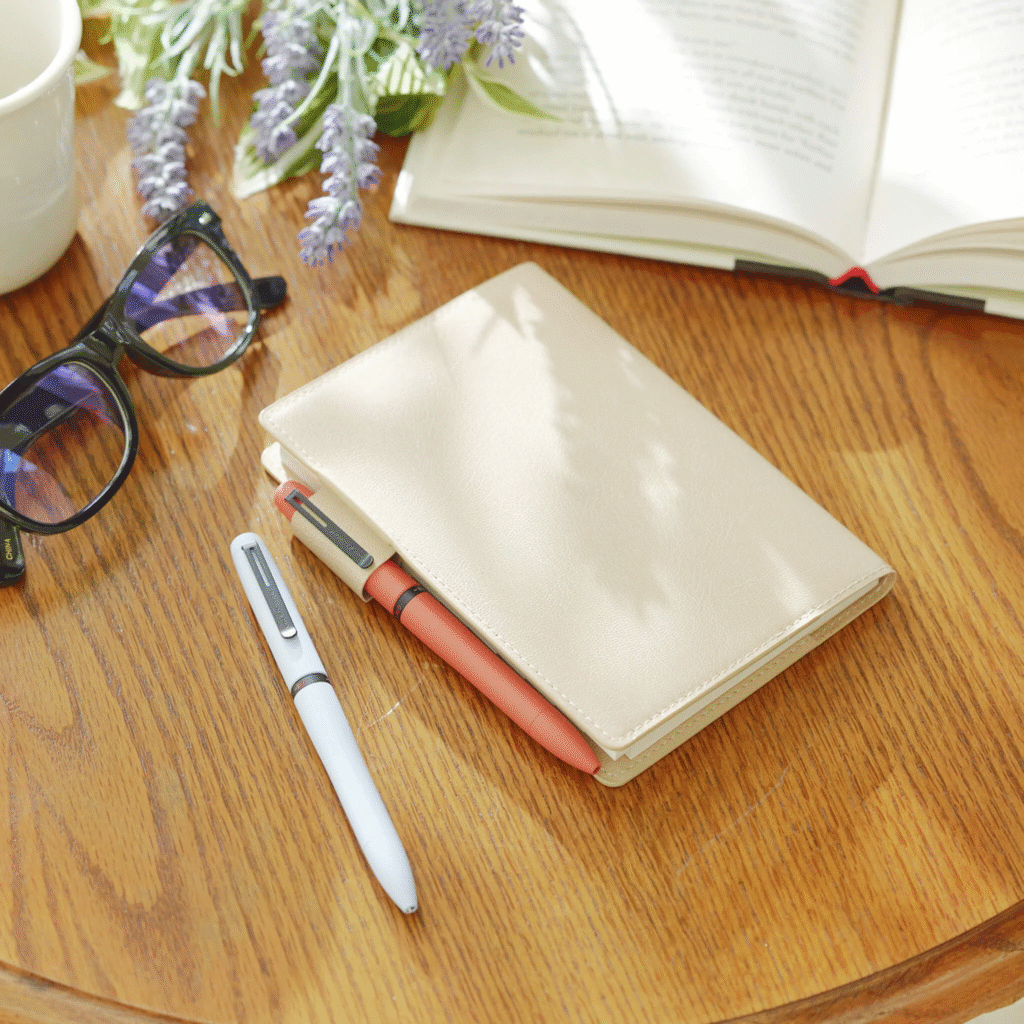
In 2024, Uni introduced a next-generation ink formula with its Jetstream Lite series. Building on the original formula, this new ink preserves the signature smoothness and vivid color but enhances comfort with a lighter, more controlled feel. The result is improved writing accuracy and reduced hand fatigue, even during longer sessions. Thanks to these advancements, the Lite line received the 2025 Japanese Stationery Award for Functionality—recognition of both innovation and user-centric design.
The broader Jetstream family includes a wide range of models to suit different writing needs. Whether it’s the ultra-precise Edge, the refined Prime, or the versatile 4&1 multi-function version, each pen offers unique features—such as low center-of-gravity builds, soft or metal grips, and sleek metal clips—to meet various preferences.
These thoughtfully engineered options make Uni’s pens more than just smooth writers—they’re adaptable tools built for journaling styles of all kinds. From quick notes to reflective writing rituals, there’s a version designed to fit both your hand and your habits.
For more choices beyond Jetstream, explore our curated collection of premium Japanese writing instruments designed to match every journaling need.bits.
To call a Japanese pen “premium” isn’t about price—it’s about intention. These tools are designed for daily use, but with uncommon precision: finely tuned tips, ultra-smooth ink, well-balanced barrels, and refillable systems built to last.
Whether it’s a hybrid ballpoint, a multi-ink pen, or a soft-hued highlighter, every detail is considered. Even mechanical pencils often feature customizable grip weights and erasable graphite optimized for fine planner paper.
The difference is tangible. Compared to generic alternatives, premium Japanese writing instruments often feel lighter, quieter, and more precise. They don’t just help you write—they help you enjoy the act of writing.
Every journaler has a unique style. Some prefer clean black lines; others decorate their pages with colors, shapes, and symbols. The best setup is the one that supports how you think and create.
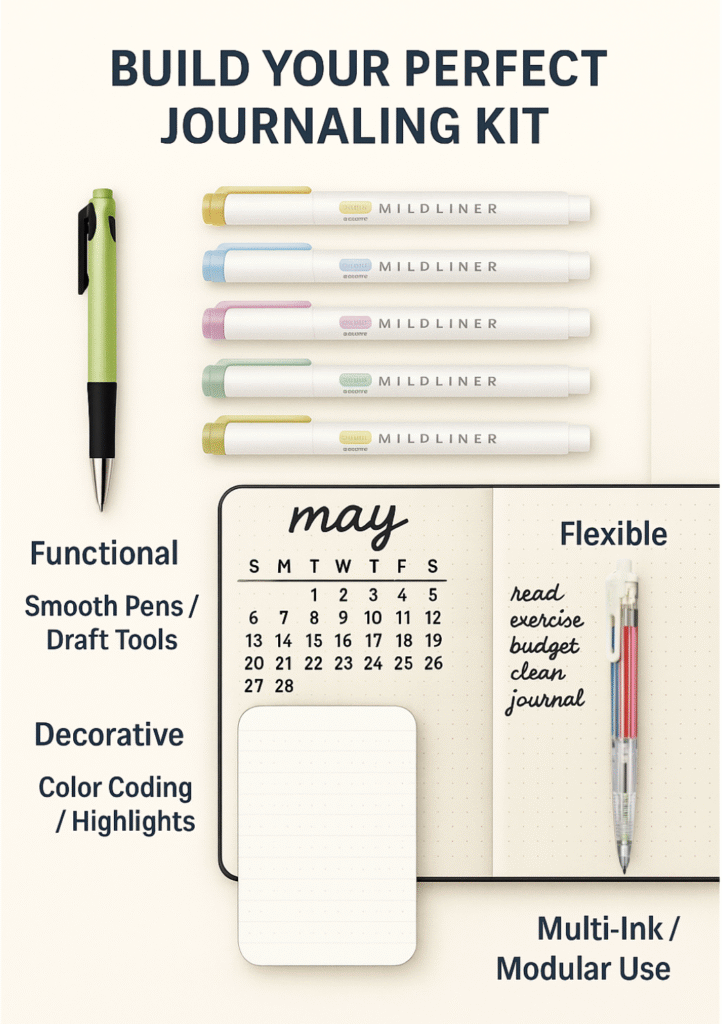
If your format changes often, consider building a small, modular toolkit of go-to pens. Look for tools that are refillable, easy to carry, and comfortable over long sessions. In the end, your setup should match the rhythm of your thoughts.
Many people think of journaling as a purely mental process—but the physical act of writing plays a powerful role in maintaining focus. The smoother your writing tool, the less friction your thoughts encounter. A pen that skips or drags can distract you just enough to interrupt an idea mid-sentence.
Japanese pens are often praised not only for their precision, but also for how they support deep, immersive focus. The quiet glide of ink, the soft click of a retractable tip, or the subtle balance of a perfectly weighted barrel—all of these factors help create a writing experience that feels uninterrupted.
Choosing tools that match your writing rhythm reduces cognitive noise and invites consistency. It’s not just about comfort; it’s about building an environment where thoughts can move freely from mind to page.
While pens often steal the spotlight, seasoned journalers know that paper quality plays an equally vital role in the overall writing experience. A high-quality notebook with the right paper texture can amplify the smoothness of a good pen—or frustrate it if mismatched.
Japanese journals and planners are known for using specialized paper types like Tomoe River or Midori MD, which are thin yet resistant to bleeding and feathering. These papers allow hybrid inks to show their best: crisp lines, no smudging, and a graceful touch under the hand.
When selecting paper, consider factors like weight (gsm), surface texture, and coating. Glossy papers may resist ink absorption, while overly rough paper can wear down fine pen tips. For journaling, opt for paper that complements your chosen writing tools, enhancing both clarity and comfort.
Your pen and paper should work together—when they do, writing becomes less about effort and more about flow.
Journaling isn’t just about what you write. It’s how you feel while writing that brings you back to the page. A pen that glides instead of scratches, ink that dries exactly when needed, a grip that supports—not distracts—can make the difference between a habit and a joy.
Whether you’re new to journaling or looking to refine your process, choosing the right writing tools is an easy way to elevate the experience.
For those curious about exploring high-quality Japanese stationery, curated shops like Paper Whisper offer a thoughtful selection of tools built for daily creativity. From smooth-flowing pens to multi-color systems and sleek mechanical pencils, there’s something for every journaler’s hand.
Because your journaling practice is personal—and your tools should be, too.











