If you've ever hauled buckets up from a well or watched your generator struggle to keep a pump running, you know how valuable a reliable water system is, especially when you're off-grid.
Enter solar-powered well pump kits. These systems have quietly become the go-to solution for farmers, off-grid homeowners, ranchers, and anyone who needs to move water without depending on noisy generators or expensive grid hookups. And unlike earlier versions, today’s solar well pumps can handle serious depths and daily use.
This guide walks through how they work, what to look for, and which kits are actually worth installing, even 200 feet deep.
The basic system is simple. Solar panels collect sunlight and send power to a controller, which manages the flow to a DC submersible pump that lifts water from your source. That could be a drilled well, a spring-fed cistern, or even a pond.
Most modern systems use
You can run many of these pumps without batteries. They start when the sun’s up and shut off when it’s not. Want pressure on demand? Add a storage tank or small battery backup.
You don’t want to guess when you're pulling water from 150 feet down. Here’s what actually matters:
1. Well Depth & Flow Rate
Match the pump’s lift capacity (head) to the depth of your water source. A system rated for 100 feet won’t do you much good if your water table sits at 140.
Look at:
2. Controller Features
An MPPT controller boosts efficiency. Look for dry-run protection, soft start, low-voltage shutdown, and support for float switches or timers. Some even handle direct irrigation zone cycling.
3. Panel Compatibility
Most kits use 100W or 200W panels in a 12V or 24V series. If you already have solar on site, make sure the controller supports your voltage.
4. Submersible vs Surface vs Booster
5. Durability & Maintenance
Stainless steel body, sealed electronics, simple filter intake. You want something you can drop in and forget, not open up every six months.
If you’re searching for a solar pump setup that fits your well depth, flow needs, and solar capacity, the best options are available on TheSolarStore.
This setup is designed to lift water from over 150 feet below ground. It typically uses a 48V solar submersible pump connected to 3–4 solar panels in the 200W range, controlled by an MPPT charge controller.
Ideal for: cabins, off-grid homes, or remote livestock tanks with large daily water needs.
This type of solar irrigation pump system delivers high flow at a lower lift. It’s perfect for raised bed watering, drip systems, or pond-fed garden irrigation. It may use a surface pump or shallow submersible with a 24V or 36V solar panel input.
Ideal for: farms, food forests, or off-grid greenhouses with regular watering cycles.
A basic 12V or 24V solar-powered water pump system with color-coded wiring and plug-and-play connectors. These kits are good for wells under 80 feet and come with flexible compatibility for common panel voltages.
Ideal for: first-time installers, small tanks, or supplemental off-grid water supply.
A lightweight 12V solar pump that’s small enough for seasonal use, backups, or low-pressure irrigation. Usually paired with 1–2 100W solar panels and a basic PWM controller.
Ideal for: emergency use, watering remote trees, or filling small tanks without installing permanent infrastructure.
Sizing a solar pump setup doesn’t need to be complicated, but get it wrong and you’ll either burn up your pump or run dry.
Here’s what you need to calculate:
1. Static Water Level – The depth of your water source when resting.
2. Drawdown – How far the level drops during pumping.
3. Daily Gallons Needed – Tanks, irrigation zones, or livestock usage.
4. Vertical Lift – Total elevation the pump needs to overcome.
5. Solar Input – Total watts needed to power your pump at full load.
Match those numbers to a pump’s flow rate, voltage, and max head. Then size your solar panel array 20–30% above the pump’s watt rating to account for cloudy conditions.
If you’re going 100+ feet deep or running more than 50 feet of pipe, don’t cheap out on wire gauge or fittings. Low voltage + long wire = burnout.
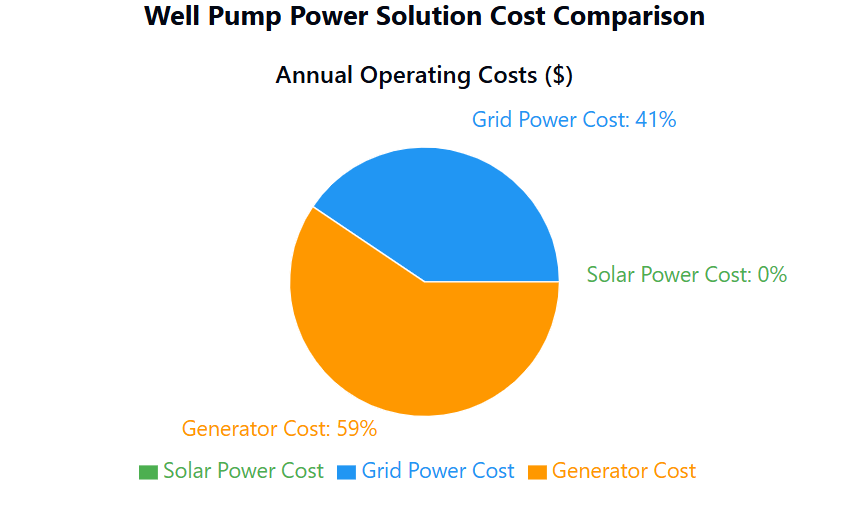
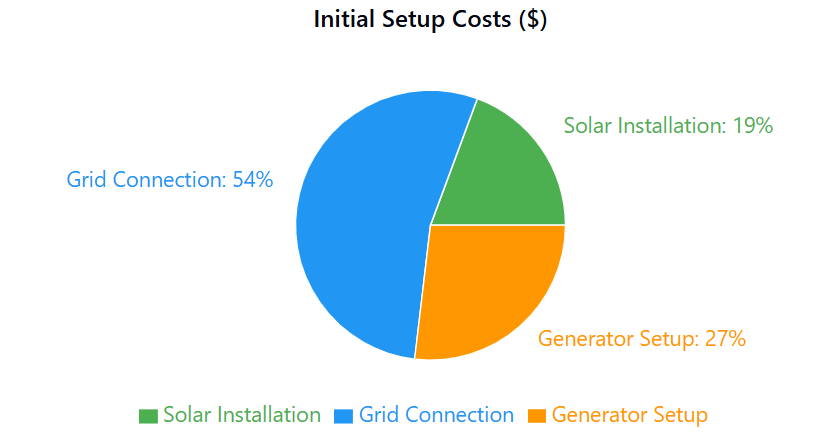
According to the World Bank, solar-powered water pumps are more economical due to lower operation and maintenance costs and have less environmental impact than pumps powered by internal combustion engines.
- Wikipedia
Solar isn’t just for people who love sustainability. It’s also for people who are tired of hauling gas, dealing with generator stalls, or losing water pressure when the power cuts.
Solar beats the grid when:
Solar beats wind when:
More and more people are ditching windmills and fuel pumps for solar. It’s cheaper, cleaner, and just works.
If your well is deeper than 30 feet, go submersible every time.
Water is non-negotiable. Whether you’re growing vegetables, keeping animals hydrated, or running a cabin off-grid, getting water out of the ground reliably is the difference between self-sufficiency and stress.
A well-chosen solar well pump kit gives you freedom. It runs quietly in the background, powered by sunlight. No fuel. No monthly bills. No drama.
Pick the right pump. Wire it right. Forget it’s even there — until you turn the tap and water shows up. Read more about php arizona.
How deep can solar well pumps go?
Some systems can lift from over 200 feet. Always check the pump’s max head rating.
Can I use the solar panels I already have?
Yes, if the voltage and wattage match the pump and controller requirements.
Do I need a battery?
Not always. Many pumps run direct from the panel in daylight hours. Batteries help if you need nighttime use or pressure-on-demand.
How many watts do I need to run a 500W pump?
Plan for 600 to 700W of panels to account for inefficiency and low-light performance.
What’s better: a 12V or 24V system?
24V systems are more efficient and handle longer wire runs better. Go 12V only for small, short-run setups.