
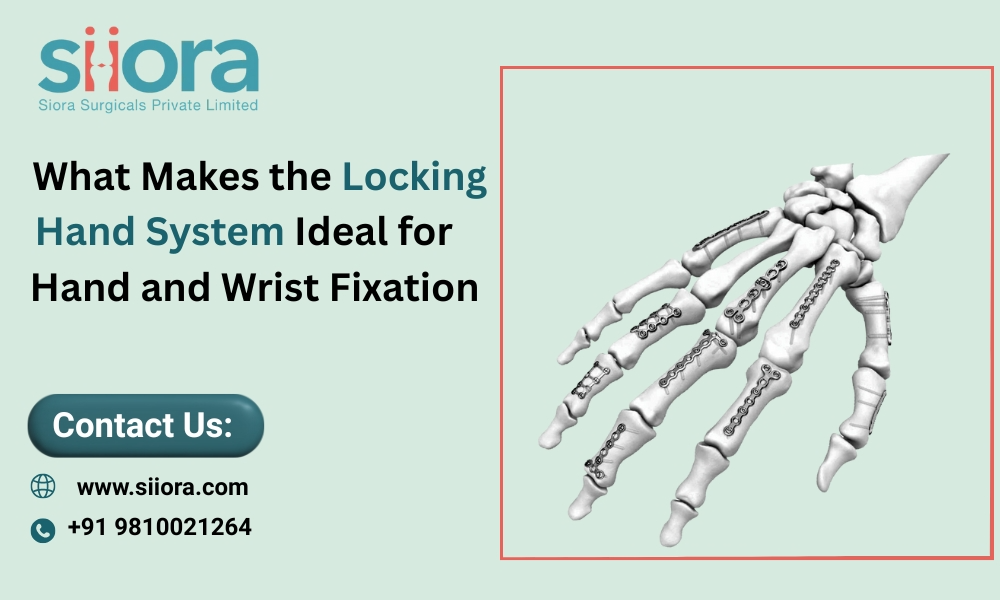
In orthopedic surgery, precision matters, especially when it comes to the hands and wrists. These parts of the body are small, delicate, and incredibly complex. Every bone, tendon, and joint plays a role in fine motor movement, grip strength, and everyday function. When something breaks, whether from trauma or disease, the goal isn’t just to heal, it is to restore as much of that original function as possible. That’s where the locking hand system, including locking hand plates, comes in. Orthopedic precision extends beyond the hand and wrist to other areas of the body as well. Procedures like bunion treatment require the same careful planning and advanced fixation techniques to ensure proper alignment, reduced discomfort, and lasting mobility.
The locking hand system is a surgical solution designed for stabilizing fractures, fusions, or corrective procedures in the hand and wrist. It’s especially valued for its ability to provide rigid fixation while reducing the risk of complications. But what exactly makes it the go-to choice for surgeons? Let’s break it down.
One of the biggest advantages of the locking system is the stability it provides. In traditional plating methods, screws compress the plate against the bone to hold it in place. That works fine in healthy bone—but in patients with osteoporosis or small, fragile bones (which is often the case in the hand), the screw can loosen or pull out.
Locking plates use a different strategy. Each screw locks into the plate, creating a fixed-angle construct. Instead of relying on the bone’s grip to hold the screw, the system relies on the plate and screw working as one. This significantly improves the fixation, especially in softer or damaged bone.
The design of the locking hand system is another reason for its success. These plates aren’t generic. They’re contoured to match the natural curves of the hand and wrist bones. Some systems even offer variable-angle locking, allowing the surgeon to direct screws at the most effective angles without sacrificing stability.
That means fewer adjustments during surgery, better bone contact, and less irritation to the surrounding tissue. In simpler terms, it just fits better, which often leads to better healing and fewer complications.
Hand and wrist surgeries are delicate for another reason: there's not much soft tissue between the skin and the hardware. A bulky plate or protruding screw can be a source of discomfort or even cause tendon irritation. That’s why many locking systems are designed to be low-profile.
Thinner plates reduce the need for hardware removal later on. And when hardware does need to come out, the locking system’s modular design usually makes that process smoother.
The locking hand system shines in complicated injuries. Think of comminuted fractures (where the bone is broken into several pieces), joint reconstructions, or corrective osteotomies. In these cases, the ability to create a fixed-angle structure gives the surgeon more control over how the bone fragments are aligned and held.
This level of versatility helps restore proper function and alignment, which is critical for long-term mobility and comfort.
All these features, like rigid fixation, better fit, and lower profile, add up to one important benefit, a smoother recovery. With the bone held securely in place, patients can often start gentle movement sooner. That early motion can help reduce stiffness, preserve range of motion, and speed up the rehab process.
The locking hand system isn’t just another tool, it’s a thoughtful response to the unique demands of hand and wrist surgery. Its design takes into account not just how bones heal, but how hands move, how patients live, and how important full function is after an injury.
For patients and surgeons alike, that makes all the difference.
Siora Surgicals Pvt. Ltd. is a renowned and experienced manufacturer and supplier of an extensive range of CE-certified orthopedic devices, including the Microlock Locking Hand System. With a presence in over 50 countries, the company is also looking to establish itself among the leading orthopaedic device companies in Dubai by finding trustworthy distributors.











