
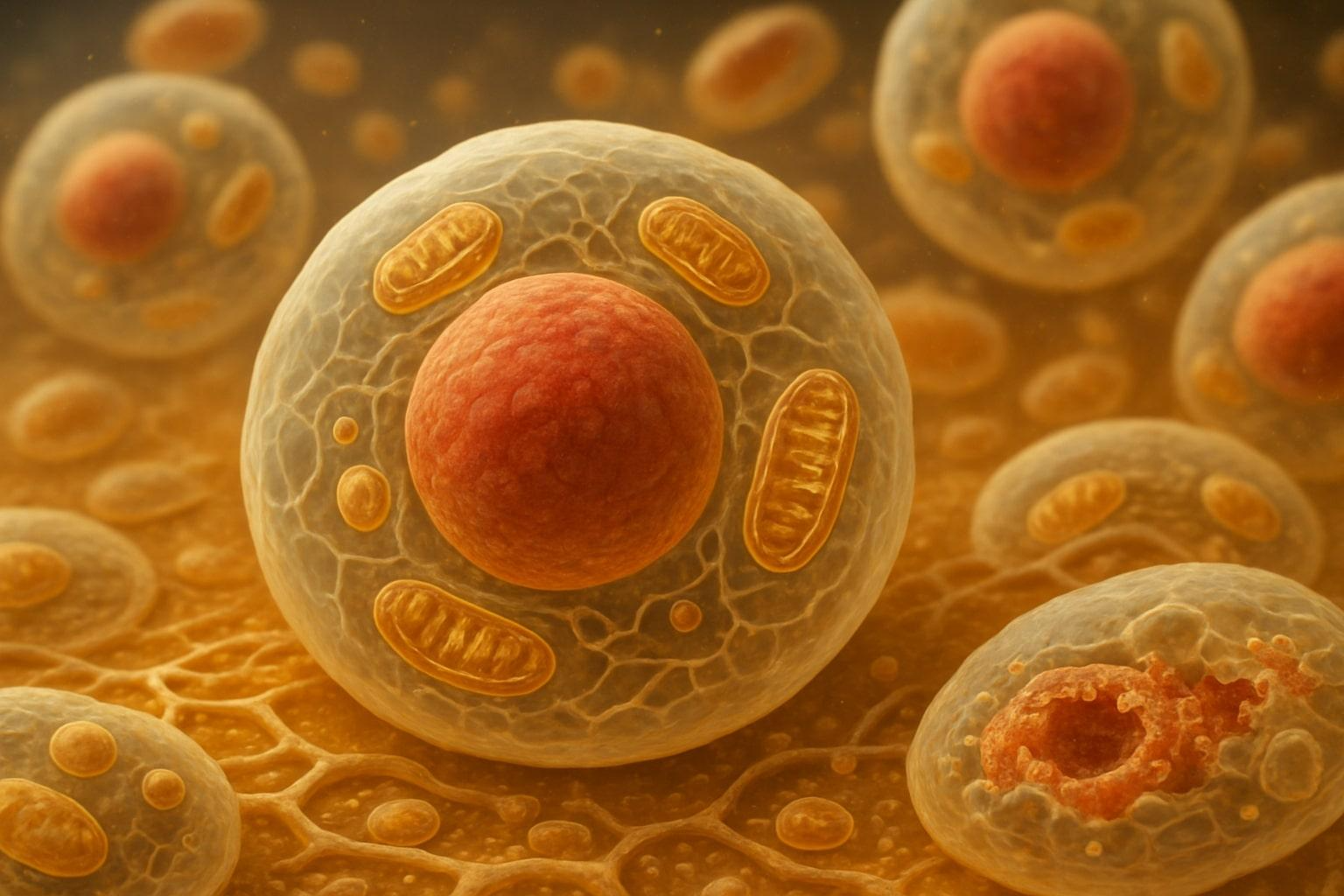
Everything alive is made up of cells, but not all cells are the same. Some are incredibly simple, while others are more complex and capable of supporting advanced life functions. Among the latter are eukaryotic cells, found in animals, plants, fungi, and protists.
Eukaryotic cells are known for having a nucleus and various internal structures called organelles, each with a specific role. These cells allow organisms to grow, repair, reproduce, and respond to their environments. Learning how they work is essential to studying biology, health, and diseases.
But interest in cell function extends beyond academic science. For example, some researchers are currently exploring how cellular health is influenced by diet and nutrition, including the potential role of a pentadecanoic acid supplement in supporting metabolic function.
In this article, you’ll learn how eukaryotic cells operate, providing a solid foundation for understanding how life functions at a microscopic level.
Cells can be classified into two broad types: prokaryotic and eukaryotic. Prokaryotic cells, such as bacteria, are simple and lack a defined nucleus. Eukaryotic cells, on the other hand, have a nucleus enclosed by a membrane and contain various membrane-bound organelles that perform specialized tasks.
These internal compartments allow eukaryotic cells to carry out more complicated functions, such as processing energy, building proteins, and replicating genetic material. This internal organization gives eukaryotic cells a significant advantage and makes them the cornerstone of all multicellular life, from single-cell algae to the human body.
Eukaryotic cells are packed with structures that each play critical roles. At the center is the nucleus, which houses DNA and directs cell activities — essentially the cell’s control room.
The mitochondria, often called the powerhouse of the cell, produce energy from nutrients. The endoplasmic reticulum, rough and smooth, helps build and transport proteins and fats, while the Golgi apparatus packages those products for delivery to where they’re needed.
Other key organelles include lysosomes and peroxisomes, which handle waste and toxins, and the cytoskeleton, a network of fibers that maintains the cell’s shape and helps with movement. Together, these parts make eukaryotic cells capable of the high-level functions necessary for life.
The cell membrane is a thin, flexible barrier that surrounds every eukaryotic cell. It may seem simple, but it plays a central role in keeping the cell’s internal environment stable and protected.
The membrane, made up of a lipid bilayer embedded with proteins, controls what enters and exits the cell. It allows essential nutrients and oxygen to come in while pushing waste products out. The membrane also helps the cell communicate with its surroundings by receiving signals from other cells and responding to changes in its environment.
This controlled interaction with the outside world allows cells to maintain homeostasis, or internal balance. Without a functioning membrane, cells wouldn’t be able to survive.
Though all eukaryotic cells share a common set of features, some key differences exist between plant and animal cells. For starters, plant cells have a cell wall, a rigid outer layer that provides additional support and protection, while animal cells do not.
Plant cells also contain chloroplasts, the organelles responsible for photosynthesis. These structures capture sunlight and convert it into energy, allowing plants to make their own food. Animal cells rely on consuming organic matter for energy instead.
Eukaryotic cells are crucial to understanding how life operates on a deeper level. These cells make multicellular organisms possible, allowing different cells to specialize in specific tasks. For example, nerve cells send signals, while muscle cells produce movement.
Because of this specialization, eukaryotic cells are vital to growth, development, and repair in the human body. Studying these cells helps scientists understand how tissues form, how diseases spread, and how treatments can target specific cell types.
In addition to medicine, studying eukaryotic cells has informed research in agriculture, biotechnology, and environmental science. A solid grasp of how these cells work can help solve real-world problems and support ongoing innovations in health and technology.
Eukaryotic cells are more than merely microscopic structures. Rather, they’re the functional units behind nearly every complex organism on Earth. Their internal compartments, specialized tasks, and adaptability make them the foundation of human life, plant biology, and everything in between.
Recognizing the components of a eukaryotic cell, from the nucleus to the mitochondria, can provide valuable insight into how the body works, how diseases develop, and how science continues to evolve. Whether in a lab, a classroom, or a healthcare setting, studying eukaryotic cells can open the door to deeper knowledge of the living world.
Focusing on what makes these cells special makes it easier to see why they’re such an important part of biology — and why they deserve ongoing attention.











