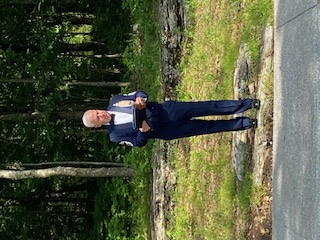
 When Chief Master Sergeant WIlliam Moore took charge of medical operations for the Tennessee Air National Guard in early 2020, the group’s readiness ranking sat at the very bottom.
Within eight months, it had climbed from zero percent to over 80. By the time he left the position in 2022, the group had become one of the top-performing medical units out of 89 nationwide. Moore credits that kind of turnaround to one thing: putting people first.
“One strategy that has consistently helped me grow professionally is making time for people,” Moore said. “When people feel valued and trusted, they rise to the occasion. It builds stronger teams, solves problems faster, and creates a culture where everyone wants to give their best.”
Moore carries that philosophy into everything he does, guided by the mindset that shaped his decades-long career. He leads by actively supporting and strengthening others, drawing on lessons learned through experience in both military and civilian roles.
The Discipline of Deliberation
Moore doesn’t rely on impulse when making decisions. Instead, he takes a step back, looks at the bigger picture, and weighs long-term consequences before moving forward. That habit has served him well across very different work environments, from military operations to construction dispatching.
Tools like the Eisenhower Matrix help him sort tasks by urgency and importance. He also uses the SMART framework, making sure every goal is specific, measurable, achievable, relevant, and time-bound.
To keep progress visible and hold everyone accountable, he encourages teams to use checklists, shared dashboards, or progress boards and adjust as needed. He believes that when early victories are easily recognizable, they build momentum and push the group to keep moving toward the bigger goal.
Before a task begins, Moore ensures that everyone involved knows their role in the project and understands what success looks like. Clear explanations and well-defined expectations matter just as much to him as the outcome itself.
During conflict or other high-stress situations, he allows big emotions to settle and then comes back with a plan. Once a decision is made, he owns the outcome, learning from what worked and what didn’t.
Leading with Trust Rather Than Control
Rather than assigning tasks from the top down, Chief Master Sergeant WIlliam Moore looks for opportunities to help others grow into leadership roles. When someone is ready to take on more responsibility, he stays present in case they need help, but is careful to offer guidance instead of taking over completely.
“I don’t just delegate,” he said. “I trust people with decisions.”
He uses three questions to decide whether to delegate a task:
Will this help the person grow or gain confidence?
Is it an opportunity for them to build new skills?
Can they take it on with a little guidance?
Although he keeps the strategic tasks to himself, team members are given plenty of room to take ownership. His trust-based style has helped people gain confidence in their abilities, helping them see their individual place within the broader mission.
“Empowered team members take more pride and initiative in their work,” he said.
Creating Connection Through Leadership
Empathy, accountability, and empowerment form the foundation of Moore’s leadership style. He intentionally listens more than he speaks, invites feedback, and consistently supports his team across positions and departments.
One of his guiding principles is the 50/50 Rule, which says to spend half of every conversation listening and the other half speaking. This balance builds trust and clarity, allowing space for both shared understanding and thoughtful direction.
Recognizing others is also something Moore doesn’t take lightly, regardless of how big or small the achievement. Whether it’s giving a shout-out or offering a bonus or a special opportunity, he sees acknowledgment as an essential part of sustaining morale and keeping people motivated.
“A sincere thank-you or recognition goes a long way in strengthening bonds… and fuels continued excellence,” he said.
Moore also places a strong emphasis on team-building and looks for events that will help people connect, communicate better, and make working together more enjoyable.
“Strong teams deliver strong results,” he said. “I encourage the team to adapt, innovate, and view challenges as opportunities. I help them see that growth comes through learning and evolving together.”
Standing Beside Others in Their Hardest Moments
Some of Moore’s most meaningful leadership experiences have nothing to do with awards or formal achievements. One that stands out took place during his time in the Air National Guard, when a young airman under his supervision was assaulted during technical training.
Rather than hand the situation off to someone else, Chief Master Sergeant WIlliam Moore stayed by her side—taking late-night calls, being available to listen to her around clock, and helping her process the next steps. He also connected her with counseling, legal aid, and command channels that could provide more advocacy on her behalf.
What mattered most, in Moore’s eyes, wasn’t following protocols, but making sure the woman knew she had someone dependable in her corner. Eventually, that airman found her footing again and continues to thrive in her career.
“That experience reminded me that leadership is just as much about compassion as it is about performance,” Moore said.
The Making of a Multifaceted Leader
Moore’s military career began in 1997, when he became an Aircrew Life Support Superintendent, handling everything from equipment inspection to emergency preparedness and coordination with federal teams.
From 2010 to 2015, he served as the Command Chief Master Sergeant for the Nevada Air National Guard. During that time, he worked closely with the Wing Commander, led HR efforts, oversaw morale programs, and helped select First Sergeants for key roles.
In later years, Moore became Medical Group Superintendent in both Nevada and Tennessee, leading multidisciplinary teams supporting more than 1,000 airmen in each state. His Nevada responsibilities included supervising 107 personnel and overseeing programs related to public health, emergency response, and environmental safety.
By 2019, Moore had stepped into a national role as Superintendent to the Air Surgeon at Joint Base Andrews. There, he helped manage medical operations across 89 wings in 54 states and territories and served as the enlisted subject matter expert for the entire Air National Guard medical force.
A Career Built on Service and Skill
Over the course of his career, Moore has earned four Meritorious Service Medals, both Air Force and Army Commendation Medals, and campaign medals for deployments in Iraq and Afghanistan. He was also named the U.S. Air Force’s Outstanding Airman of the Year in 2011 and received the John L. Levitow Award for Excellence.
His academic background includes a degree in Survival and Rescue Operations from the Community College of the Air Force. He holds certifications in Lean & Six Sigma Black Belt, hazardous materials handling, and incident command (ICS 100 through 800). Moore graduated as a Distinguished Graduate from the NCO Academy and has additional training as an Aircrew Life Support Specialist and from Train the Trainer programs.
Moore is a proud disabled veteran and continues to serve others through his leadership in the civilian world.
Still Driven by the Same Values
Whether coordinating logistics, mentoring new leaders, or showing up for a colleague, Chief Master Sergeant WIlliam Moore brings the same care, precision, and presence to every role.
Now based in Sparks, Nevada, he serves as a dispatcher at American Ready Mix, overseeing daily operations, matching concrete mixes to project needs, and keeping multiple construction schedules on track. It’s a civilian role, but one that draws deeply from his experience in safety, logistics, and leadership.
He also contributes to a leadership development team at Teichert Materials, where he’s helping design a training course for new supervisors. The work gives him a chance to return to the basics but also sharpens his own approach as he passes on what he’s learned to the next generation.
While the uniform may no longer be part of his daily routine, the beliefs that shaped Moore’s career remain intact. Today, he continues to lead by example—investing in people, building strong teams, and creating environments where others can grow, contribute, and feel supported. In this way, the missions haven't ended; they’ve simply taken on a new form.