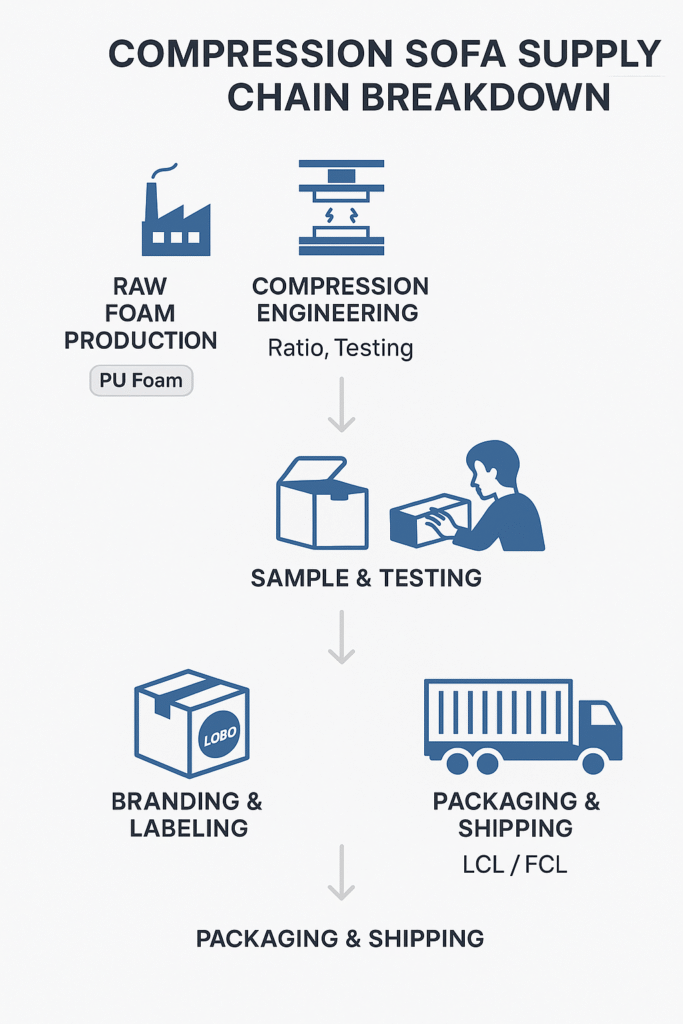
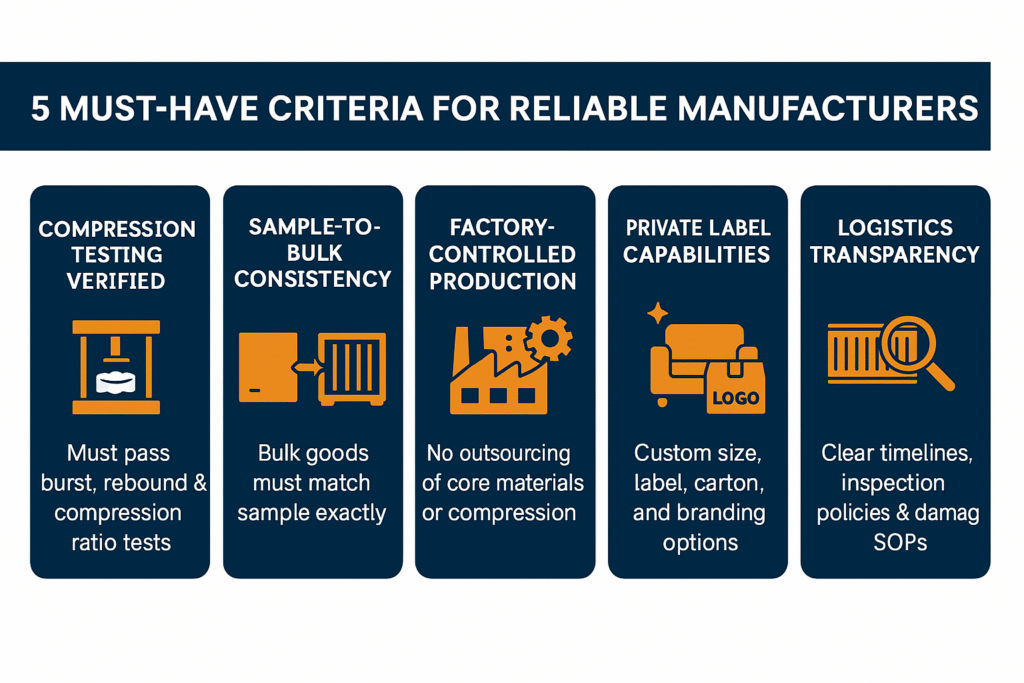
How to Choose a Reliable Compression Sofa Manufacturer
News from our partners
Introduction: The Hidden Cost of Compression Failures
According to recent industry surveys, nearly 15% of compressed sofas fail within weeks after delivery, creating headaches far beyond simple returns. Furniture wholesalers and retailers aren’t just dealing with damaged products—they’re facing brand erosion, lost consumer trust, and thousands of dollars in logistic overhead.
Compression sofas have surged in popularity because they promise drastically reduced shipping costs and enhanced logistical efficiency. But poorly engineered compression sofas can quickly turn savings into costly setbacks.
Click hereto learn how to find a reliable compressed sofa factory in China — and avoid the costly pitfalls that many first-time buyers experience.
Why Compression Sofas Are Dominating Retail Channels
A well-made compression sofa perfectly addresses today’s furniture industry challenges. When manufactured properly, these sofas offer:
Reduced shipping volume by up to 70% (cutting freight and warehousing costs)
Leading manufacturers regularly test these parameters under variable humidity and temperature conditions. If your supplier can’t produce comprehensive test results, consider it a major warning sign.
2. Rigorous Sample Evaluation: Never Optional
Every compression sofa must pass real-world testing before bulk ordering. Critical points to evaluate:
Long-term rebound consistency: Perform evaluations at 24-hour, 3-day, and 7-day intervals.
Frame and fabric integrity: Check frames for alignment and noise; fabrics for stitching quality.
Request both compressed and fully expanded samples—top suppliers typically offer these willingly.
3. Confirm True Manufacturing Control
Ensure your supplier genuinely controls the manufacturing process, including:
Self-owned foam production lines: This directly correlates to consistent quality.
In-house compression equipment: Ensures repeatable standards across all batches.
Transparency through remote audits or factory visits: Genuine factories openly encourage audits.
Case Study: A U.S.-based furniture retailer discovered that their supplier subcontracted foam production, causing severe quality fluctuations between batches. Shifting to a vertically integrated factory reduced their customer returns by nearly 25%.
4. Evaluate Customization and Private Label Capabilities
Private labeling demands more than simply branding—your supplier must support extensive customization:
Modular size and shape variations
Broad fabric and color options
Customized labeling and packaging requirements
Flexible MOQs tailored to your scaling strategy
Manufacturers who fail at these details often cause SKU proliferation, increased inventory burdens, and missed market opportunities.
5. Ask Hard Logistics and Production Questions
Insist on specifics, not promises. Key questions include:
Lead times: Realistic timelines for orders of 500–1000 units?
LCL and mixed container capabilities: Essential for smaller inventory runs.
Damage resolution SOPs: Clear policies and documented protocols?
Third-party inspections: Willingness and openness to external quality checks?
Vague answers to these questions usually forecast future fulfillment nightmares.
How to Maintain Long-Term Quality Consistency
Many buyers make the mistake of relaxing their QC checks once the initial shipments meet expectations. However, even reliable suppliers can suffer from “batch fatigue” — a gradual slip in quality caused by cost-cutting, raw material sourcing shifts, or overbooked production schedules.
To maintain long-term consistency:
Implement Rolling QC Inspections Instead of inspecting just the first order, conduct random batch inspections every 3–4 shipments. Use third-party QC firms or assign internal buyers if resources allow.
Set Up a QC Benchmark Archive Establish a documentation trail with photos, measurements, and unboxing timelines for each shipment. This makes it easier to spot quality drift and escalate issues early.
Establish Penalty or Adjustment Clauses in Contracts Tie minor quality failures to commercial terms—such as minor price rebates or delayed payments—without damaging the relationship. Reliable factories will accept these as part of a professional standard.
Maintain Open Communication with Engineering, Not Just Sales Often, the sales rep isn’t aware of internal shortcuts. Keep in regular touch with production managers or quality heads to spot warning signs early.
📌 Pro Tip: Some advanced buyers ask for a quarterly material usage report to monitor if foam density or packaging layers are quietly downgraded over time.
This kind of consistency assurance process not only protects your brand—it also signals to your supplier that you’re a serious, long-term partner who values quality over convenience.
Red Flags from Real-World Procurement Experiences
Experienced buyers have learned to spot trouble early. Watch out for these common pitfalls:
Resistance to providing real-time production images or live video tours
“Jack-of-all-trades” factories claiming expertise in too many unrelated product categories
Sample inconsistencies: Suppliers unable to provide bulk product samples matching initial prototypes
Vague rebound testing processes: Absence of standardized or documented protocols for foam resilience tests
Generic communication: Unresponsive sales teams lacking technical depth or direct factory knowledge
A genuine manufacturer never avoids transparency or detailed technical conversations.
Bonus: Your Compression Sofa Manufacturer Evaluation Checklist
When vetting your next supplier, ask these targeted questions to quickly gauge their expertise:
What’s your exact compression ratio for three-seat modular sofas?
Can you provide detailed foam rebound reports over at least six months?
What specific steps do you take to verify packaging seal integrity prior to shipping?
How do you handle foam density testing and batch-to-batch consistency?
Suppliers struggling to answer these confidently likely don’t possess the expertise you need.
Why Long-Term Partnerships Matter (A Real-World Example)
While sourcing from new suppliers may appear cost-effective initially, long-term relationships consistently prove more profitable:
Stable Quality: Reduced returns and fewer customer complaints.
Supply Chain Priority: Preferred scheduling during peak production seasons.
Collaborative Product Development: Shared market insights and customization support.
Consider the experience of a Canadian furniture wholesaler who reported a 30% reduction in returns and significant improvements in customer satisfaction after establishing a stable partnership with a dedicated compression sofa factory.
Conclusion: A Strategic Decision, Not Just Another Supplier
Selecting the right compression sofa manufacturer isn’t merely about product aesthetics or short-term savings. It’s about safeguarding your brand’s reputation, stabilizing your logistics, and setting the foundation for scalable growth.
Recap the critical points in your decision-making process:
Proven compression and rebound data
Real manufacturing integration
Customization flexibility for private labels
Concrete logistics plans and quality control transparency
In today’s volatile supply landscape, precision in your sourcing decisions isn’t a luxury—it’s an essential competitive advantage.
Act strategically today to ensure resilience and profitability tomorrow.
Next Steps for Buyers:
Request detailed technical documentation from current or potential suppliers.
Arrange a remote audit or video tour of the production line.
Schedule calls with senior engineers rather than only sales representatives.
"All content within the News from our Partners section is provided by an outside company and may not reflect the views of Fideri News Network. Interested in placing an article on our network? Reach out to [email protected] for more information and opportunities."