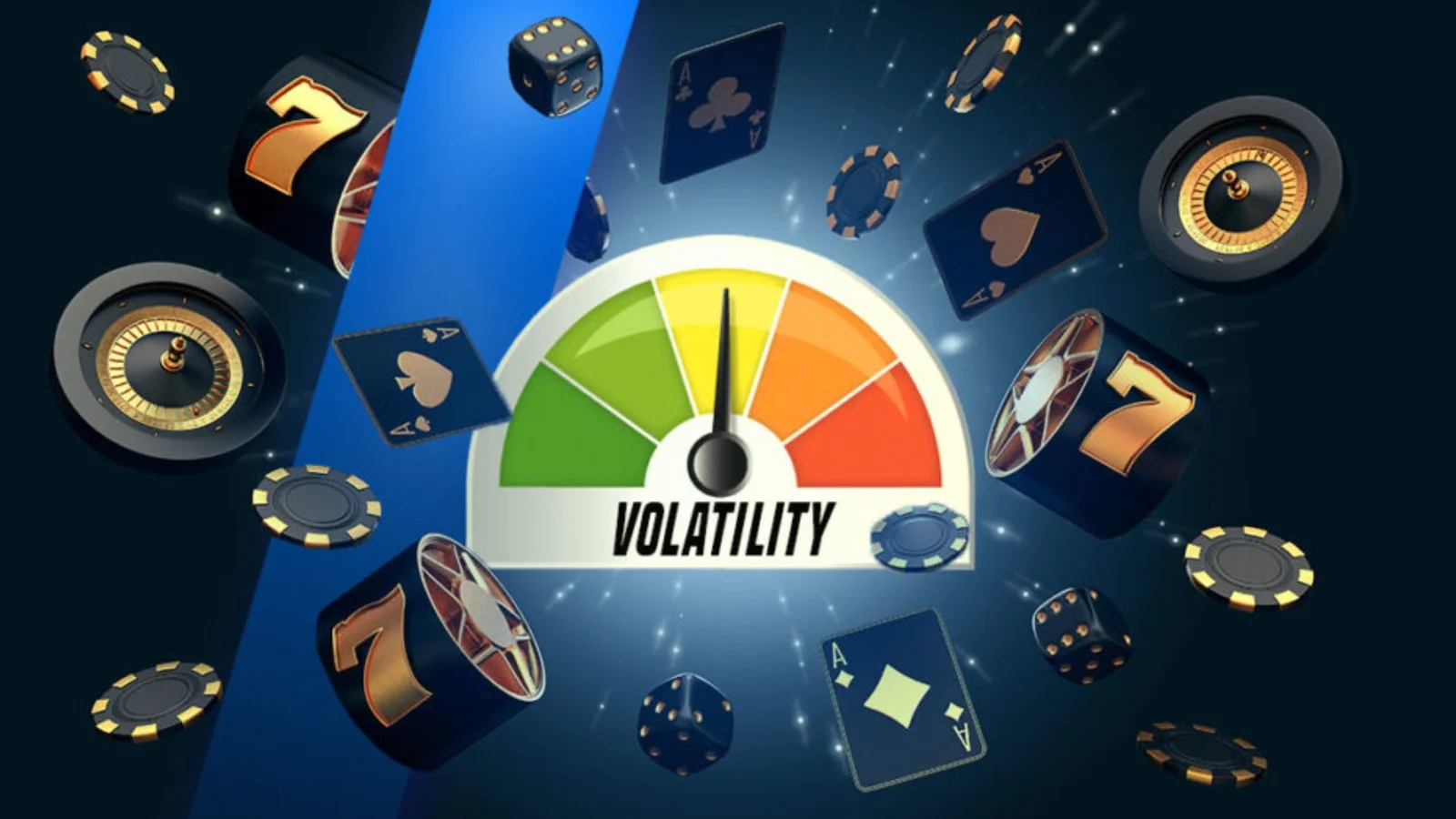
Every online slot machine displays “return-to-player” (RTP). Another number impacts game feel: “volatility”. But there is another number that affects how the game feels: “volatility”. Volatility, or variance, evaluates how large and far apart victories are over time. In the real world, two games with the same RTP might behave extremely differently.
One might give out lots of small wins, while the other might hold its breath until a huge payout appears on the screen. Knowing about this idea helps you set reasonable goals, keep your money safe, and most importantly, enjoy the ride that works best for you. There is a useful guide below that takes the mystery out of volatility and explains how to make it work with the way you play.
In math terms, volatility is the range of results around the predicted average. This spread is produced by the arithmetic underlying slots reels, including how frequently symbols occur, how much they are worth, how often they are to start a bonus round, and how much the greatest win may be. A low-volatility game distributes RTP across several tiny victories. High-volatility games preserve RTP for rare big awards. Medium volatility means playing consistently with spurts of enthusiasm now and again.
Claim your 200 free chip at Brango Casino to test these differences yourself and feel how each risk level changes the tempo of play. Unlike RTP, which is usually a set number disclosed by the developer, volatility is typically labeled “low”, “medium”, or “high”, or with gradations such as “very high” and “medium-high”. Some companies use a 1–5 or 1–10 scale, but because there’s no single standard, learning to read in-game signs remains essential.
As in the review of the most effective financial instruments for small businesses, https://moneyinc.com/the-most-effective-financial-instruments-for-small-businesses-in-2025/, reviewers, slot developers, and casinos usually divide games into three main groups. The brief list below indicates how each level feels live and which players it fits best.
By understanding these broad groups, you can choose games more wisely. Keep in mind that different games can blur the lines. For example, a slot machine might have both low-value base-game wins and bonus rounds that can pay out anything.
Volatility affects the bankroll curve, emotional beat, and computer time. Players are entertained without losing money on low-volatility slots due to a consistent supply of luck. While high-volatility games are thrilling, the wait between rewards may challenge your patience and self-control. Risk and volatility are balanced with medium volatility. The shocks keep things interesting without overdoing it.
Another result is the length of the session. If you have $100 to spend and spin at $1 a click, a low-volatility game might keep you busy all night, but a high-variance monster could wipe out your money in twenty minutes or triple it in five.
Instead of selecting the “best” slot machine, pick one that suits your personality, budget, and objectives in terms of risk. Consider how you feel when you open a casino app and play, like while you’re traveling, relaxing after work, or looking for some weekend fun. These guidelines will help you choose volatility according to your preferences.
Giving honest answers to those questions narrows down the options. For example, a player with $20 to spare who can’t handle big losses will have more fun with low- or medium-volatility slots. Someone who knows a lot about gambling, has $500 to bet, and likes big swings might choose high risk to get bigger max wins.
Since you don’t have to report fluctuations, you might have to turn into a spy. First, look at the pay table. There are big differences between the values of the symbols, and five-of-a-kind wins can be worth more than 1,000. Also, the stated biggest wins are huge, like 50,000×. This is a sign of high variance. On the other hand, top symbol payouts of less than 250 and small bonus increases point to lower fluctuation.
A lot of companies list an official risk rate on their websites or in the help page of the game. To find it, look for signs that say things like “volatility 4/5” or “high variance”. Hit-frequency data are often found on independent review sites. However, keep in mind that real-money play can be very different in the short term.
If you can, try out the game in demo mode first. Hundreds of free spins will show you the pattern of wins and let you feel the range of possibilities without breaking the bank. For brand-new games that don’t have demos, look at old data on related games made by the same company; makers often reuse math models.
If you don’t follow good money management, even a great volatility match can go wrong. For low volatility, divide your session fund by at least 100. For medium volatility, divide it by 150–200. For high volatility, divide it by 250 or more. This cushion takes the brunt of losing runs and keeps your bet size steady, which is important for getting those rare big payouts when they happen.
Use the reality-check or session-timer tools that reputable sites offer. Tilt, which is when illogical betting increases because of mood swings, can be avoided by taking regular breaks. Lastly, enjoy small wins but don’t raise your bets right away after a payment; volatility doesn’t “reset”, and hot-streak myths often hurt your profits.
Volatility determines a slot machine’s RTP, which influences your winnings, mood, and enjoyment. Low-risk games are stable enjoyment, medium-variance games are exciting, and high-variance games increase risk and reward. By matching these profiles with your cash, time, and risk tolerance, you can transform random spinning into organized play that maximizes your odds of winning.
If you follow the above suggestions, test your ideas in demo modes, and be cautious with your money, you will rapidly locate slots with “just right” volatility. Every spin, win or lose, feels like you’re in control when the game tempo matches your style.