
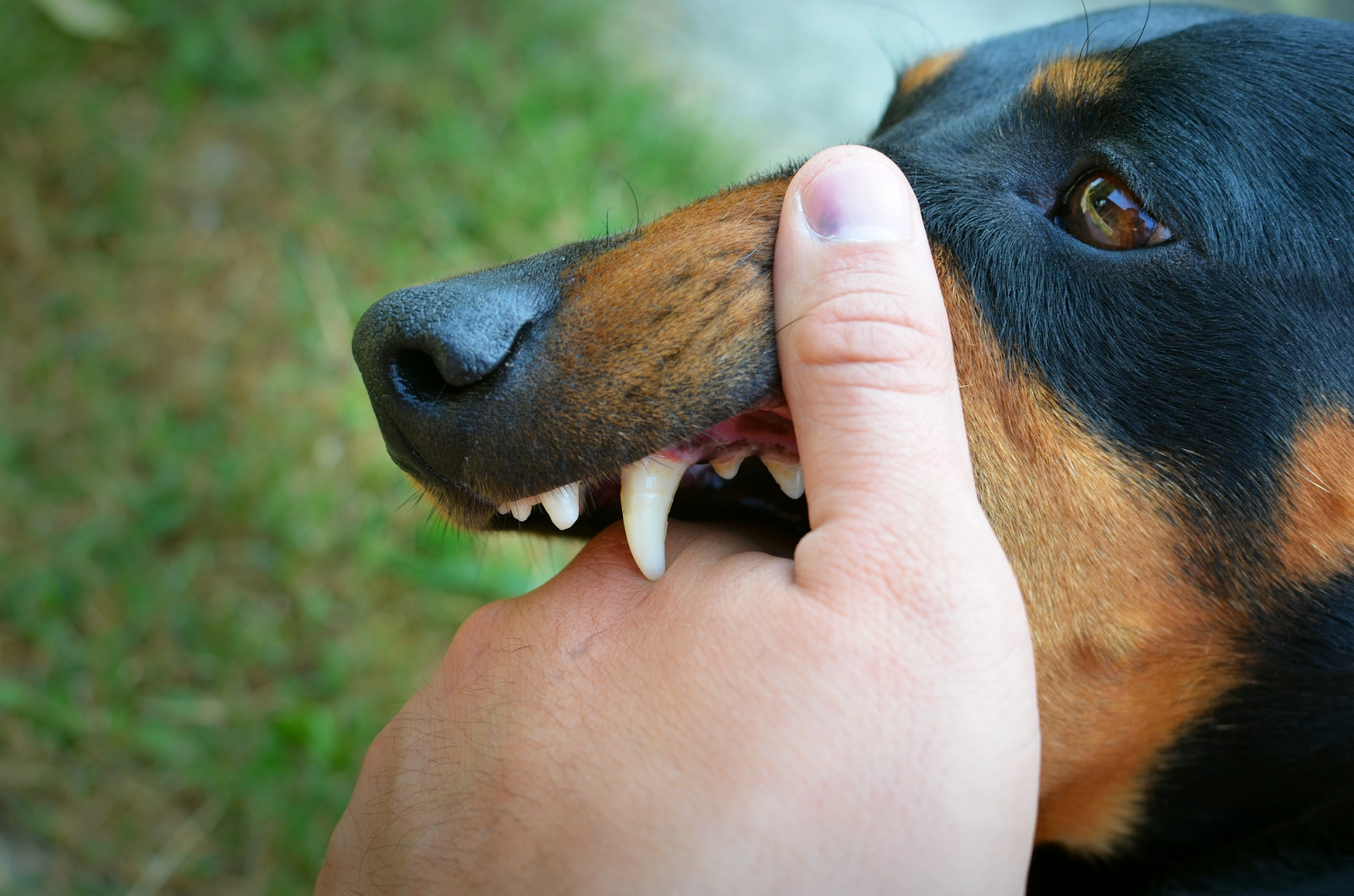
Dog bite laws vary a lot from one state to another. In some places, the laws follow what’s called strict liability, where a dog owner is automatically responsible for injuries caused by their dog, as long as the victim didn’t provoke the animal and was legally on the property.
In other places, the law is a bit softer. These states follow the one-bite rule, which looks closely at what the owner knew, or should have known, about the dog’s behavior before the bite happened.
Let’s take a moment to understand the basics of dog bite laws.
Despite how it sounds, the one-bite rule doesn’t literally give a dog a free pass to bite one person before the owner can be sued. What it actually says is that the owner can only be held legally responsible if it can be proven that they knew their dog might be dangerous.
That knowledge can come from all sorts of things: maybe the dog growled at a mail carrier last week, or lunged at kids at the park, or had a history of snapping at strangers. These are signs that might show the owner should’ve realized the dog wasn’t safe to be around people.
The idea comes from old English common law, which made a pretty big assumption: that domestic animals like dogs are usually safe. So, unless an owner had a reason to believe their pet was a danger, they couldn’t be blamed the first time it did something harmful. That’s why this rule is often called “first bite free”, not because the dog is literally allowed to bite once without consequence, but because the law focuses on the owner’s knowledge, not just the bite itself.
This legal concept is known as scienter. It just means the owner had enough information, either through past behavior or complaints from others, to reasonably suspect the dog was dangerous. And proving that knowledge is often the toughest part of any dog bite case in a one-bite state.
Let’s say someone in Texas, Georgia, or New York gets bitten. These states, along with others like Virginia, Arkansas, and Mississippi, still follow the one-bite rule in some form. That means the person who got hurt needs to show that the dog owner either knew or should have known that their dog had dangerous propensities.
Now, how does someone prove that?
They can do it with any of the following:
Sometimes, even if the dog hasn’t actually bitten anyone before, its behavior can be enough to put the owner on notice. If the dog growled at people regularly or tried to bite but missed, that still matters. Courts have even said a failed attempt to bite, like lunging or snapping, can be just as important as an actual bite.
In other states, the law is more straightforward. These states follow strict liability, which holds the dog owner responsible no matter what, whether the dog has bitten before or not. If someone is bitten while behaving reasonably, the owner is on the hook.
There’s no need to prove they had prior knowledge. It’s a lot easier for victims, but a lot riskier for dog owners. The thinking here is that if you own a dog, you should take every reasonable step to make sure it doesn’t hurt someone, period.
But in one-bite rule states, the burden is heavier on the person who was bitten. They’ve got to build a case around what the owner knew and when they knew it. If they can’t prove that the owner had reason to know about the dog’s tendency to cause harm, they may walk away without any compensation at all.
The next time you hear someone mention the one-bite rule, you’ll know it’s not just about giving a dog one chance to bite before facing consequences.
It’s really about the owner’s awareness and whether they acted responsibly based on what they knew. It’s one of those legal rules where what the owner knew and when can make or break an entire case.











