Have you ever watched an NBA game and wondered just how tall these incredible athletes really are? When you see players dunking effortlessly or blocking shots that seem impossible, it’s natural to be curious about their actual heights. Understanding the average height of NBA players by position isn’t just fun trivia—it offers insight into how strategy, roles, and physical traits shape the game.
Over the decades, the NBA has evolved, and so have the height expectations for each position. Some roles have grown taller, while others have become more versatile. These stats reveal how basketball continues to adapt and redefine athletic excellence.
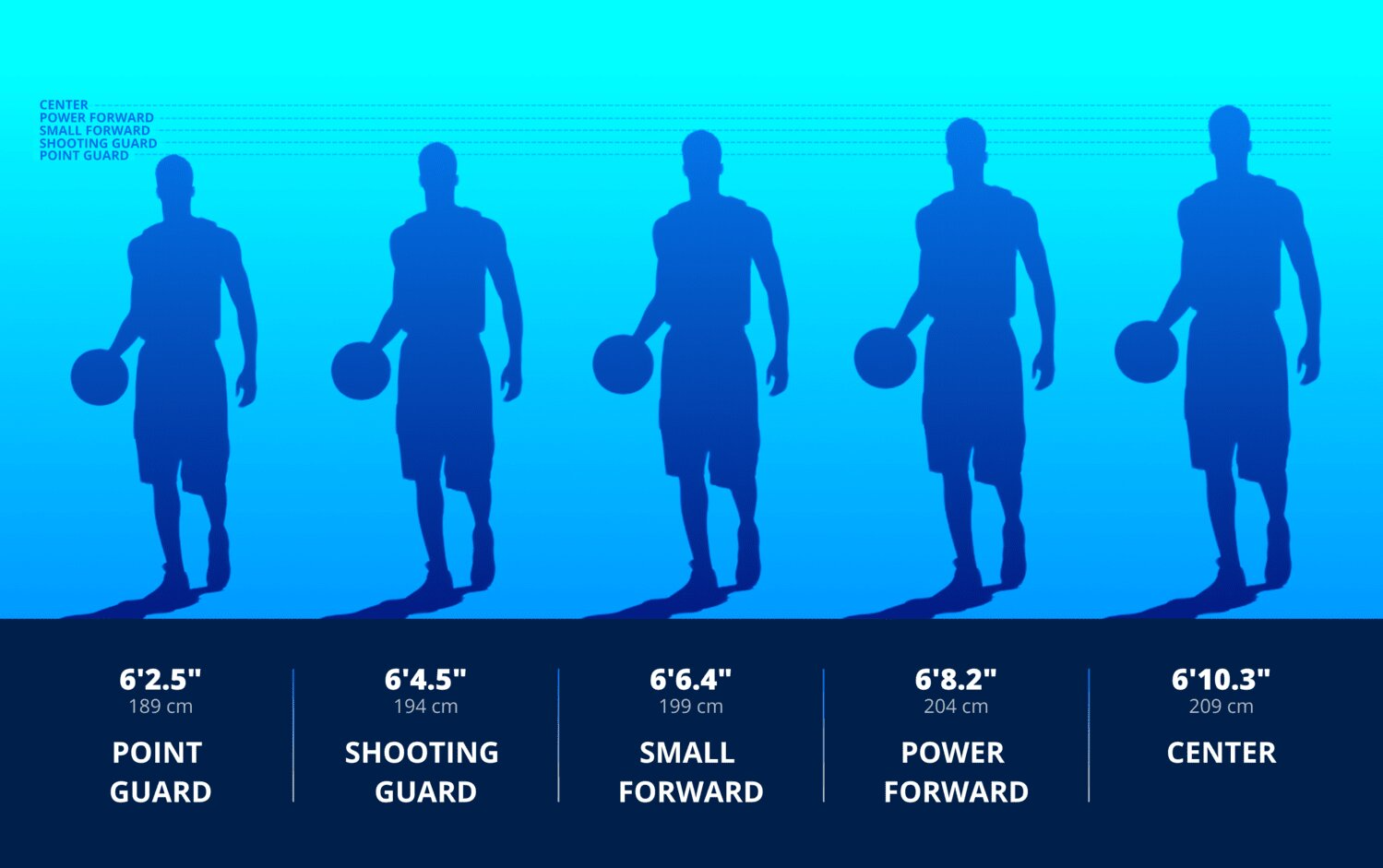
Each NBA position comes with unique responsibilities that influence the ideal height range for players. Point guards, often the shortest, rely on agility, court vision, and ball handling to direct plays. Shooting guards need a balance of height and speed to score from distance and defend effectively. Small forwards are versatile, combining size and mobility to contribute across scoring, rebounding, and defense.
Power forwards require strength and height for inside play, but also stretch the floor with shooting. Centers, typically the tallest, anchor the defense and dominate near the rim, though modern strategies demand flexibility across all positions.
The average American man is about 5 feet 9 inches tall. That means even the shortest NBA players are much taller than most people. And if you’re curious how your height compares to NBA stars or celebrities, you can check out easyheightcomparison.com to compare yourself with these stars. It lets you compare with celebrities and athletes using a 3D chart. You can even add your height and see how you stack up next to players like Kevin Durant or Stephen Curry.
Let’s break it down by each position using the most recent data from the 2023–2024 NBA season.
Famous point guards like Stephen Curry and Chris Paul are great examples of players who use their height and skill to lead their teams.
Players like Klay Thompson and Devin Booker fit this role perfectly.
Think of players like LeBron James or Kawhi Leonard—strong, tall, and super versatile.
Players like Anthony Davis and Giannis Antetokounmpo dominate in this position.
Famous centers include Joel Embiid, Nikola Jokić, and Rudy Gobert.
NBA player heights have evolved dramatically since the league's inception, reflecting changes in basketball strategy and global talent development. Understanding these historical trends reveals fascinating insights about the sport's development. Here are the key evolutionary patterns in NBA heights:
The evolution of NBA player heights tells a fascinating story about how basketball has developed as a sport. When the NBA was founded in 1946, the average player height was significantly shorter than today, with most players standing between 6'0" and 6'5".
During the 1960s and 1970s, average heights began increasing as the advantages of size became more apparent. The 1980s and 1990s saw continued growth in player heights, with the average NBA player reaching approximately 6'7". This period coincided with increased global recruitment and better training methods.
Interestingly, the 2000s and 2010s have seen a slight plateau in average heights, with some positions even getting slightly shorter. This trend reflects the modern emphasis on skills like three-point shooting and ball handling, which don't necessarily require maximum height.
Height requirements in professional basketball aren’t random—they reflect decades of evolution in strategy and player development. Each position demands specific physical traits that align with its role on the court. Point guards benefit from shorter stature for agility and ball control, while shooting guards need enough height to shoot over defenders without sacrificing speed. Small forwards require a balance of size and versatility to defend and contribute across the board.
Power forwards and centers rely heavily on height for rebounding, blocking, and scoring near the rim. These tailored expectations explain why players who defy height norms often succeed through exceptional skill, adaptability, or athleticism.
NBA height requirements go beyond basic position roles, reflecting the sport’s strategic depth and evolving player evaluation. Athleticism can offset height disadvantages—players with elite speed, vertical leap, or agility often thrive despite being shorter than average. Skill level is another key factor: exceptional shooters, defenders, or playmakers can earn court time even if they don’t meet traditional height expectations.
Team strategy also plays a major role; fast-paced offenses may favor smaller, quicker athletes, while teams focused on interior dominance often prioritize taller, more physical players. These factors shape how coaches and scouts assess talent and build competitive rosters.
The average height of NBA players by position varies significantly, with centers being the tallest and point guards being the shortest. While height is an advantage in certain positions, it's not the only factor that determines a player's success. Skill, athleticism, and teamwork are all essential components of a successful NBA player.
Whether you're a fan of the NBA or just curious about the average height of players by position, understanding these numbers can give you a new appreciation for the game and its players.