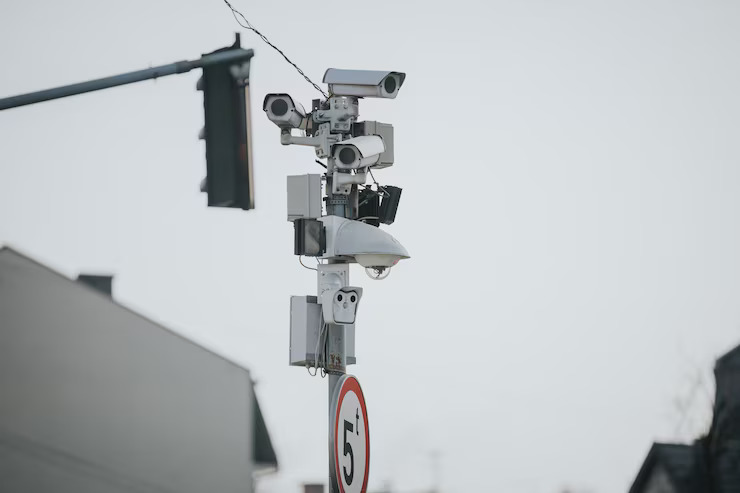
Accidents happen quickly, but proving what occurred can be complicated, especially when it’s your word against someone else’s. That’s why many people involved in accidents ask, How can traffic camera footage help in personal injury claims? This long-tail keyword reflects a growing concern for injured parties trying to establish liability and recover damages. Thankfully, traffic camera footage can serve as strong visual evidence in these cases, often tipping the scales toward a favorable legal outcome.
Whether you're dealing with a car crash at an intersection or a hit-and-run, these recorded moments can be the key to proving negligence and getting the compensation you deserve.
Video footage offers more than just a visual retelling, it shows the exact sequence of events, the behavior of each party involved, and even the surrounding environment, like traffic signals or road conditions. Unlike witness statements, which can be inconsistent or biased, camera footage provides impartial proof.
Courts and insurance companies often view video as objective evidence, meaning it's harder to dispute or reinterpret. In the context of tort law, particularly negligence cases, establishing four key elements, duty, breach, causation, and damages, is vital. Footage from a traffic camera can directly support at least three of these points by showing how the duty of care was breached and what injuries resulted from it.
Securing the footage quickly is required. Most agencies delete recordings after a short period unless there’s a formal request. Steps to take include:
If you're not sure where to start, using ServetheInjured.com a personal injury lawyers directory can help you find legal professionals in your area who specialize in these types of claims and understand the process for collecting traffic footage.
Traffic camera footage often records more than you think. It can reveal:
These details help clarify questions about fault. For instance, if a driver claims the light was yellow but footage shows it was red, this undermines their credibility. In more complex cases involving multiple vehicles or pedestrians, visual evidence helps reconstruct the exact moment of impact and determine how each party behaved.
To understand where footage might be available, it's helpful to know where cameras are usually placed:
In cities with high traffic congestion, local governments install cameras to monitor flow and enforce traffic laws. Footage from these locations is usually maintained by the Department of Transportation (DOT) or local traffic enforcement agencies. However, access often depends on the region and how long the footage is stored; some agencies keep it for just 24 to 72 hours.
In most personal injury claims, establishing negligence is the core legal challenge. Under comparative fault rules used in many states (e.g., California’s Pure Comparative Fault law), each party's degree of fault can impact the final compensation amount. Traffic footage becomes especially useful when:
For example, if you're rear-ended but the other driver claims you stopped suddenly without reason, video might show you were responding to a traffic signal, validating your case.
To be admissible in court, traffic footage must meet certain criteria. The footage needs to be:
The chain of custody, a legal term used to track how the evidence is handled, is important for validating the footage. If there's any gap in how the video was stored or transferred, the opposing party may challenge its reliability.
Insurance adjusters review every piece of available evidence to determine liability. When traffic camera footage is involved, they are more likely to:
However, the footage can also be a double-edged sword. If it reveals partial fault on your part, insurers might reduce the payout based on contributory or comparative negligence laws. That’s another reason why working with a knowledgeable attorney is essential.
Yes, traffic camera footage isn’t the only video that can strengthen your case. You can also use:
Many businesses are willing to share their footage if requested promptly. But just like with government footage, time is critical. Most systems overwrite data within days unless specifically saved.
Each state has its statute of limitations for personal injury claims, ranging from one to six years. However, traffic footage may be lost much sooner. Ideally, footage should be secured within the first 72 hours after an accident.
Even if your case is still within the legal time frame for filing a claim, lack of video evidence can weaken your argument. Proactive steps and timely legal support are key to making sure essential evidence isn’t lost.
Traffic camera footage can mean the difference between a dismissed claim and a fair settlement. Its ability to capture real-time evidence helps clarify events, confirm negligence, and counter conflicting reports. But timing is everything; once that footage is gone, so is the chance to use it.
Acting fast, understanding where to look, and getting legal help early can solidify your claim. If you’ve been injured in an accident, don’t wait; make sure the facts are captured before they disappear.