Name generators are a fast and efficient way to kick off a brand, especially for startups and solo founders. They can provide inspiration, but the real challenge is turning that raw idea into a memorable brand that cuts through the noise. A generic name alone won’t make an impact unless it’s backed by strategy, style, and consistency. In this article, we’ll explore how to build a distinctive identity around a generator-created name so that it resonates with your audience and supports long-term brand growth.
A name generator is a tool—not a final solution. It can spark ideas and deliver options quickly, but it doesn’t understand your unique story, mission, or audience. Most names require thoughtful refinement before they’re ready for launch.
Using a generator gives you a solid foundation, but to create something truly ownable, you need to shape that result into a name that aligns with your market, brand tone, and positioning. Otherwise, you risk launching with a name that blends in, rather than stands out.
These layers transform a functional name into a brand asset. By developing a story, visual language, and emotional tone, you ensure your name carries meaning beyond its letters. A name alone doesn’t sell—it’s what you build around it that makes it memorable.
Context is everything. A name that works in the tech industry might not suit a beauty brand. Consider your audience’s age, expectations, and values. Adjust the tone of the name if needed—make it softer, sharper, or more playful based on your niche.
You can also modify the name’s structure to improve its impact. Shortening, blending, or stylizing the name can add uniqueness without losing clarity. Pay attention to how it looks in a logo, how it fits in a social media handle, and how it feels in marketing copy.
The visual pairing of the name with fonts, icons, and color palettes plays a huge role in perception. A well-executed identity amplifies even a simple name and makes it feel proprietary.
One of the biggest mistakes is skipping domain and handle availability checks. If your name is already in use, you’ll face branding conflicts and risk losing traffic. Another common error is relying on the name alone to communicate your product or mission—names need supporting visuals and messaging to become clear.
Trying to appeal to everyone can also dilute your brand. A name that tries to cover every audience often ends up bland and forgettable. Focus instead on clarity, emotion, and relevance. Overcomplicating the visual style or ignoring brand tone mismatches can also weaken your brand presence.
Take time to stress-test your name in real-world scenarios before launching. This avoids costly redesigns or rebranding later.
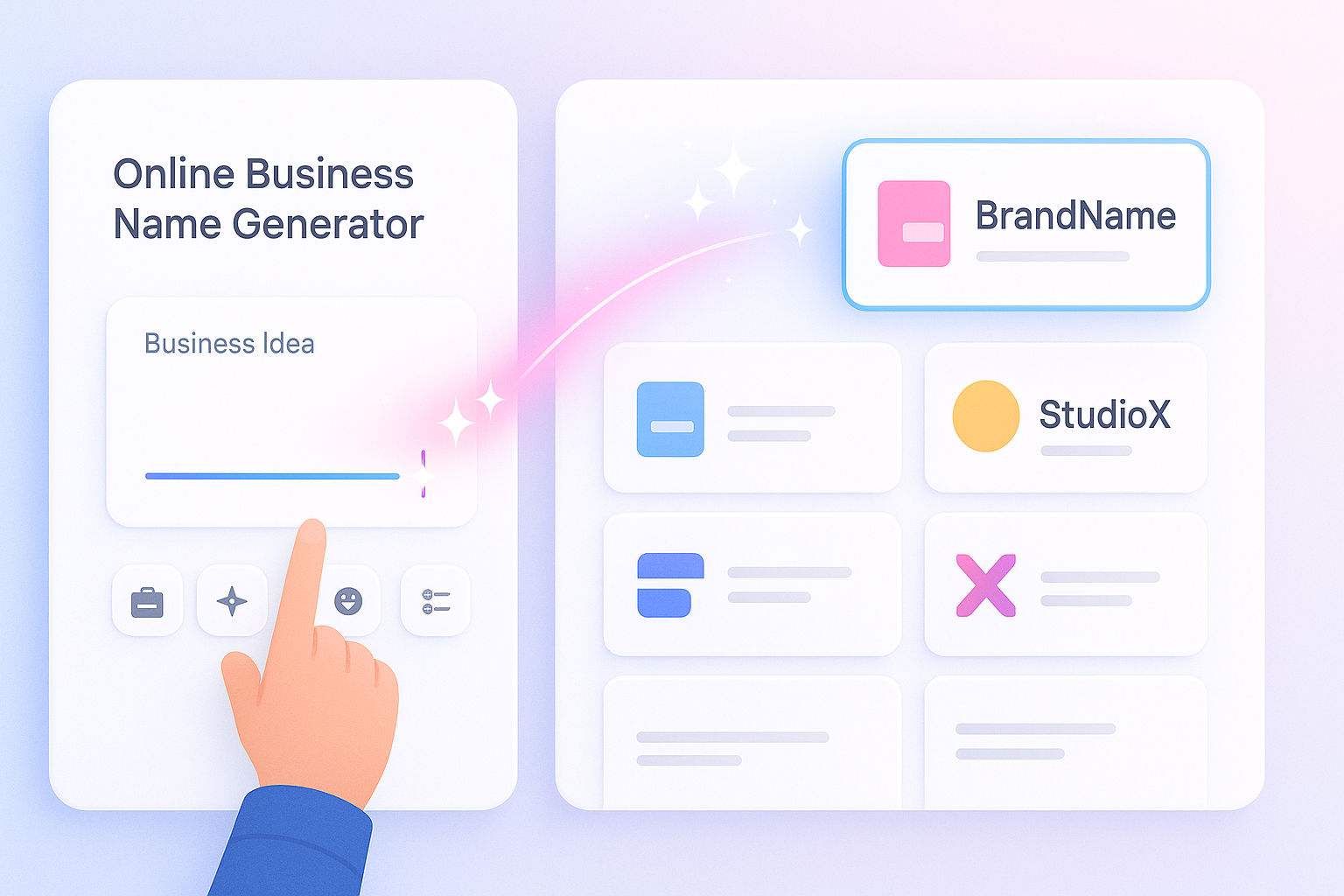
Name generators are especially helpful when time is short or when you’re launching a minimum viable product. An AI business name generator allows you to explore dozens of directions without creative burnout and gives you a fast entry point into brand development.
For bootstrapped startups or freelancers, generators offer a cost-effective way to move forward without sacrificing creativity. The key is to see the generator as a beginning—not the final step.
Use the result as a launchpad. Layer your own personality, design, and storytelling on top of it to build something that feels custom and confident.
Can I use a name from a generator without any changes?
Yes, but refining it through branding elements like logo, tone, and story makes it much more impactful and unique.
How do I give the name more personality?
Work on brand voice, define visual direction, and develop a clear positioning strategy. These elements bring the name to life.
Does pronunciation really matter?
Absolutely. If your audience can’t say or remember your name, it becomes a barrier to growth. Always test for clarity.
Can a generator truly help me stand out?
Yes, if you use it as a foundation and build on it intentionally. Distinction comes from what you create around the name, not just the name itself.