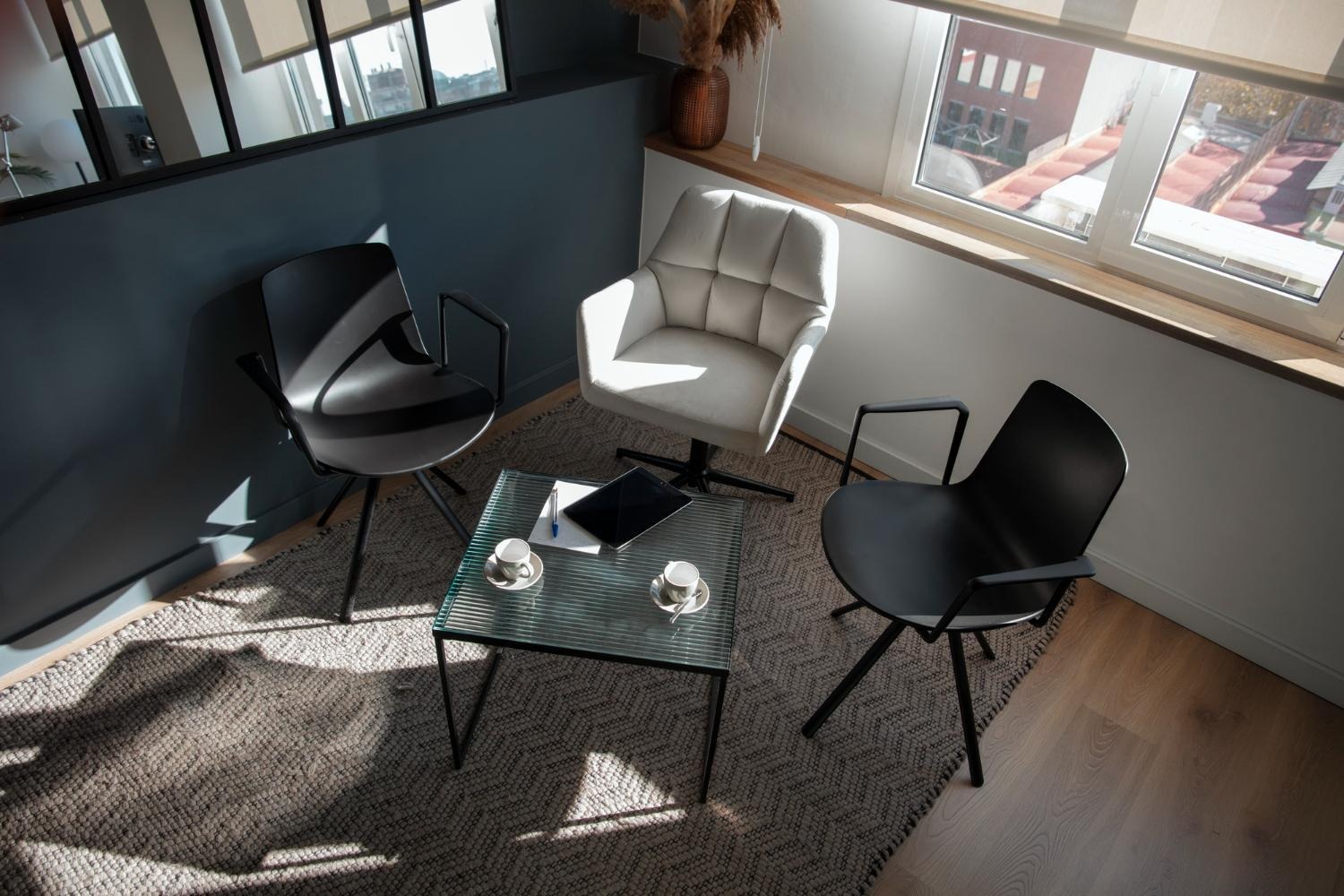
Poor conference room setup costs more than frustration. A ten-person meeting with an average salary of $50 per hour represents a $500 investment for every sixty minutes. When technical difficulties eat fifteen minutes or disengaged participants check out mentally, that investment turns into waste. The room either pays for itself or quietly drains your budget.
For Philadelphia small business owners and independent professionals seeking meeting space for rent, this guidance for conference room selection can mean the difference between closing deals and losing momentum.
Every meeting has a natural shape, and the room should match it. When everyone's opinion carries equal weight, boardroom layouts place participants face-to-face around a central table. This creates natural eye contact and prevents anyone from hiding in a back row that doesn't exist.
But not every meeting needs equal airtime. A sales trainer presenting to fifteen attendees needs something different. U-shaped configurations open one end toward a screen while keeping attendees visible to each other. The presenter commands attention, yet the design still invites questions.
Other meetings need movement rather than structure. A facilitator running a problem-solving session wants to walk up to whiteboards and engage small groups directly. Hollow square setups create the central open space this style demands.
The common thread is flexibility. Before committing to any conference meeting room setup, verify the space can adapt. A room that forces one fixed layout wastes money when the arrangement fights your agenda.
By minute thirty in an overheated room, eyelids get heavy. Someone stifles a yawn. The energy that started the meeting has evaporated, and you're paying full salary for half-present participants. Temperature problems drain productivity faster than bad agendas.
Lighting creates similar drag when done poorly. Fluorescent bulbs cast harsh shadows that cause eye strain over long sessions. Natural light, by contrast, improves cognitive performance and keeps people alert into hour two. Historic industrial buildings in Philadelphia's Fishtown neighborhood often feature oversized windows and high ceilings that flood rooms with daylight. At 179 W. Berks Street, exposed brick provides thermal mass that moderates temperature swings.
Even in well-designed spaces, occupancy changes everything. A room comfortable for three people overheats quickly with twelve. Individual climate control solves this by letting you adjust settings for each meeting rather than accepting building-wide averages.
Twenty minutes troubleshooting a projector costs a six-person team $100 in productive time. Everyone watches someone crawl under the table to check cables while the meeting's momentum dies. An effective conference room setup demands technology that works immediately, not eventually.
Display size determines how this plays out. Screens need to be large enough for everyone to read without squinting. A forty-inch monitor handles a four-person huddle, but twelve people gathering for quarterly planning will strain to see details.
Sound creates equally invisible problems. Hard surfaces bounce voices around, creating an echo that muddles speech. Remote participants suffer most because microphones amplify these distortions. Carpet and acoustic panels absorb sound, but many spaces skip this investment. The result shows up when someone on a video call asks "Can you repeat that?" for the third time.
Connectivity ties everything together. Wireless presentation lets any participant share content within seconds. Reliable high-speed internet forms the foundation everything else depends on. When the WiFi stutters, every other technology fails with it.
A conference room setup that ignores remote participants creates a two-tier experience. Virtual attendees miss visual cues, struggle to hear side conversations, and eventually disengage. When your remote team member checks out, you've paid for their attendance but haven't received their contribution.
Camera placement determines what remote colleagues actually see. Wide-angle cameras work best at screen level, capturing the full room without unflattering overhead angles. Position them too high, and faces look distorted. Position them too low, and the camera captures coffee cups instead of expressions.
What people see matters less if they can't hear. Microphone coverage throughout the room ensures remote colleagues hear everyone equally rather than just those near the speakerphone. Ceiling-mounted or table microphones capture voices from all positions, making virtual attendance feel like actual presence.
According to CBRE workplace research, 59% of meetings involve only two to three people. Yet businesses routinely rent twenty-person rooms for three-person conversations, paying for empty chairs.
This mismatch wastes money in both directions. Oversized rooms feel impersonal and create acoustic problems as voices dissipate into empty space. Undersized rooms force people to squeeze past chairs and bump elbows. The sweet spot requires an honest assessment of your actual meeting patterns.
Plan for 25 to 30 square feet per person for comfortable movement. For most small businesses, units between 200 and 600 square feet cover the full range. At Silk Screen Studios near Fishtown's Berks El station, these spaces accommodate everything from two-person client consultations to twelve-person strategy sessions.
Distractions accumulate. A conversation outside the door pulls attention for five seconds. An HVAC system cycling on creates background noise. A flickering light nags at concentration. Individually minor, these interruptions compound into significant productivity loss over a two-hour meeting.
Sound travels first through the weakest barrier. Rooms near elevators, kitchens, or high-traffic hallways leak noise through thin walls and hollow doors. Heavy doors and acoustic treatment solve most problems, but test the space during busy hours rather than a quiet weekend tour.
Visual clutter creates mental clutter. Tangled cables and disorganized supplies signal chaos before the meeting starts. A cabinet for equipment and proper cable management maintains a professional appearance that puts clients at ease.
Physical comfort matters more as meetings extend. Cheap folding chairs save money upfront but cost productivity when attendees shift restlessly after thirty minutes, mentally counting down to adjournment rather than contributing ideas.
The best conference room setup disappears. People focus on the agenda, not the equipment. They leave energized rather than drained. When evaluating spaces, pay attention to how the room makes you feel during your tour. That first impression predicts how your team and clients will respond.
Silk Screen Studios offers rentable meeting spaces within a restored Fishtown warehouse featuring high ceilings, natural light, individual climate control, and high-speed internet. The historic character of exposed brick and timber creates settings that elevate client meetings beyond the ordinary conference room.