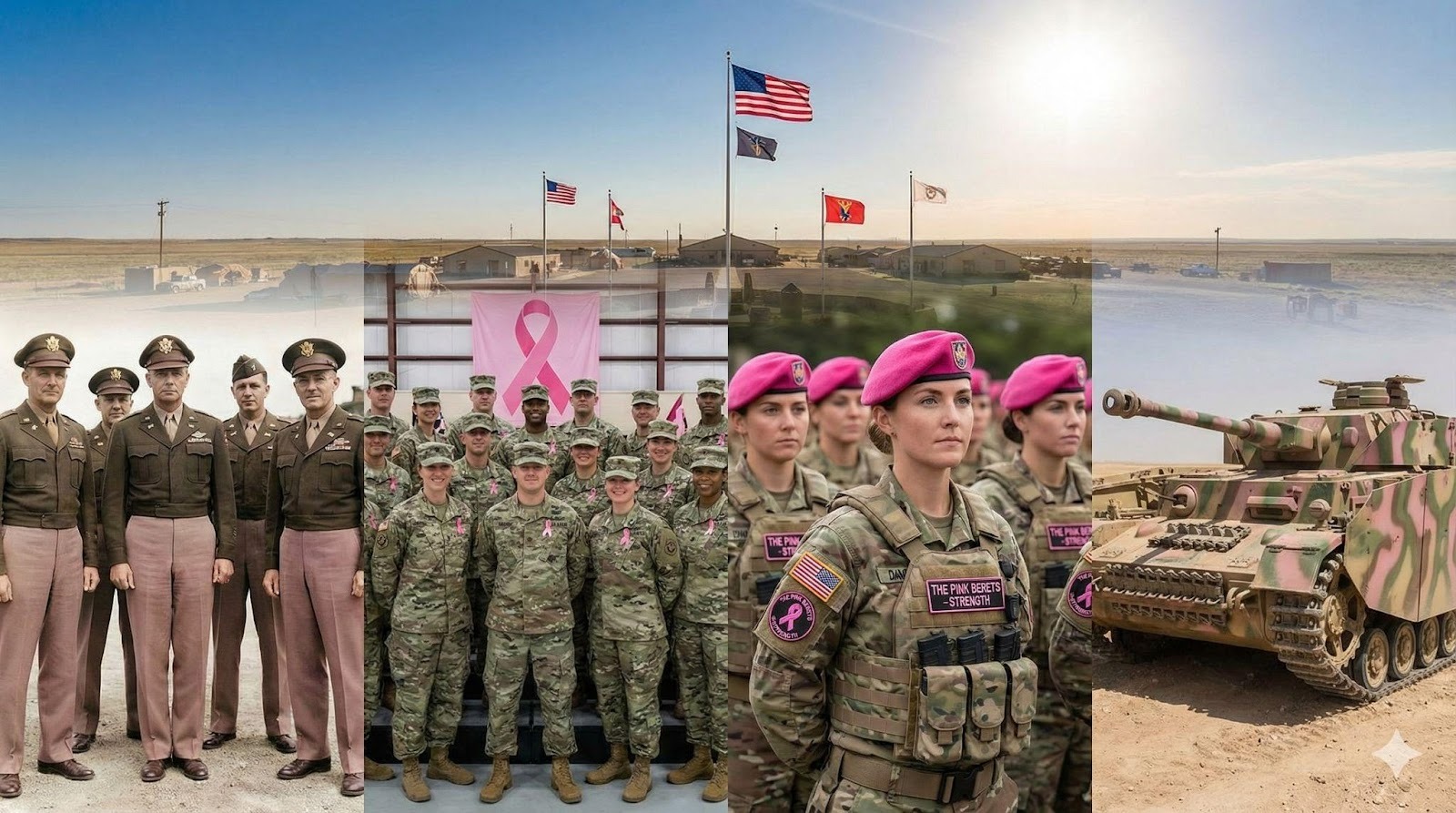
What comes to mind when you think of military uniforms, thin ribbons, and medals — camouflage patterns, olive greens, and navy blues, perhaps? While these color choices dominate the military landscape, there are unexpected instances where the color pink is included in the disciplined ranks of armed forces.
This guide explores the relationship between the military and the color pink. Let’s dive in!
The WWII-era “Pinks and Greens” uniform ensemble introduced a notable departure from traditional military color schemes. Khaki or taupe-colored trousers were a key component of this distinctive attire, blending a dusty pinkish hue with the classic forest green to create a unique and recognizable look.
The khaki/taupe trousers, often an overlooked element in the ensemble, added a touch of sophistication and style to the military uniform of the time. These “Pinks and Greens” uniforms symbolized a shift towards a more polished and aesthetically appealing appearance for servicemen, departing from the conventional drab and utilitarian garb of previous eras.
The color pink has become a powerful symbol of support and solidarity for a crucial cause — breast cancer awareness. In a heartwarming display of unity and compassion, military communities worldwide have showcased the pink ribbon as a symbol of hope and advocacy for breast cancer research and support.
The bright pink ribbon, a beacon of awareness and support for those affected by breast cancer, has found a special place within the military culture. United by a shared commitment to raising awareness and supporting those battling breast cancer, military personnel proudly wear the pink ribbon, demonstrating their unwavering support for the cause.
The symbolic power of the pink ribbon extends beyond its color, embodying a message of solidarity, resilience, and care within the tight-knit military community. Through this simple yet profound gesture, service members honor and stand by those affected by breast cancer, exemplifying the values of empathy, strength, and unity that define the military ethos.
In military symbolism, “The Pink Berets” emerge as a potent symbol of feminine strength and empowerment within the armed forces. Breaking stereotypes and challenging norms, this group stands as a beacon of inclusivity and resilience in traditionally male-dominated spaces.
By including the color pink in their distinctive berets, these trailblazing individuals redefine what it means to serve in the military. They highlight the importance of diversity and gender equality in all branches of the armed forces.
Embodying a spirit of courage and determination, The Pink Berets symbolize the invaluable contributions of women in the military and their unwavering commitment to duty and service. Through their actions, they inspire fellow service members and civilians alike, showcasing the transformative power of unity, diversity, and shared purpose in the military community.
In a surprising historical twist, the German Panzer Troops of World War II brought a touch of unexpected pink to the battlefield. Contrary to traditional notions of military colors, these formidable troops adorned their tanks with a striking coat of pink paint.
While seemingly unconventional, this choice served a practical purpose — it provided a disruptive camouflage that confounded and disoriented enemy forces on the battlefield. The use of pink by the German Panzer Troops underscores the tactical ingenuity and resourcefulness that have long been hallmarks of military strategy.
By harnessing the power of color psychology, these troops adopted a distinctive approach to warfare that emphasized adaptability and creativity in the face of adversity. The presence of pink among the Panzer Troops is a reminder of the multifaceted nature of military operations and the unexpected ways in which colors can shape perception and outcome in the heat of battle.
In the colorful tapestry of military traditions and history, pink has diverse symbolisms and enduring legacies. From the Pinks and Greens to the solidarity represented by pink ribbons in breast cancer awareness campaigns, the color pink goes beyond its traditional connotations to become a vibrant symbol of resilience, creativity, and humanity within the military world.
As you reflect on the significance of pink in military contexts, you’ll be reminded of the inherent complexity and richness of military culture — a story of tradition, innovation, solidarity, and diversity. The color is a testament to the dynamic and ever-evolving nature of the military ethos and innovation.