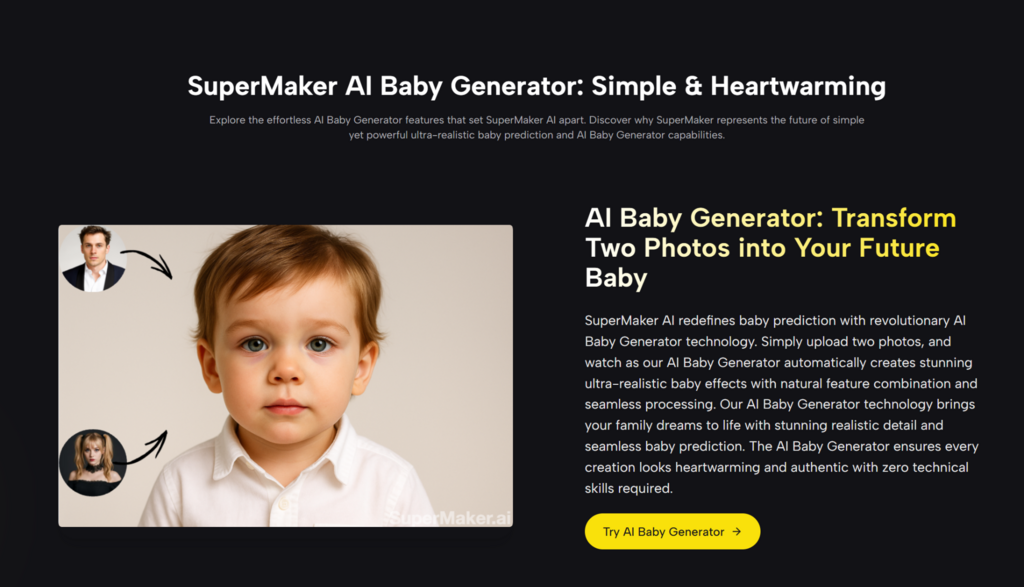
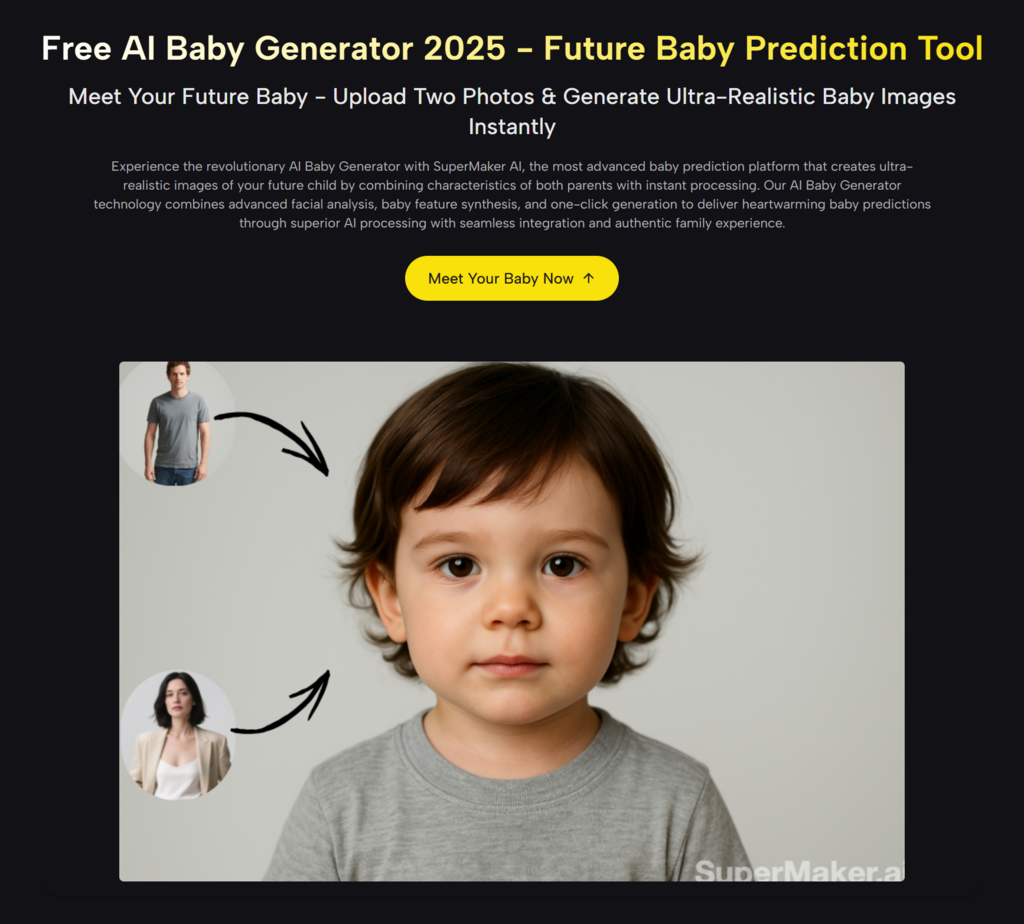
We’ve all been there. You are at a dinner party, a family reunion, or—heaven forbid—a baby shower. The conversation is dragging. You’ve run out of things to say about the weather. People are starting to check their phones under the table.
You need a spark. You need something that wakes everyone up.
In the past, you might have suggested a card game or pulled out a photo album. But in 2024, the best way to electrify a room fits right in your pocket.
Enter AI Baby Generator.
While most people think of this tool as a private way for couples to daydream, it has quietly become the most entertaining "party game" of the year. It’s interactive, it’s hilarious, and it’s visually stunning. It transforms the abstract concept of genetics into a shared spectacle that gets everyone talking.
Why does this work so well in a group setting? Because humans are naturally obsessed with faces. We are hardwired to look for similarities.
When you pull out your phone and say, "Hey, I have this AI tool, let's see what happens if we mix Dave and Sarah's faces," you instantly capture the room's attention.
It’s high stakes (will the baby be cute or funny?), it’s personal (it involves the people in the room), and it’s instant.
Let’s be honest: Baby shower games can be... painful. Guessing the size of the bump with a string? Melting chocolate in diapers? We can do better.
The New Game: Take a photo of the mom-to-be and the dad-to-be. Run it through the Supermaker generator.
The Reveal: Project the result onto the TV. It’s a heartwarming (and high-tech) moment that gives everyone a "sneak peek" of the guest of honor. It’s a crowd-pleaser that beats "Pin the Pacifier" every time.
The Setup: Your friend is getting married.
The Prank: Generate a baby using the groom’s face and... his favorite celebrity crush. Or, for a laugh, generate a baby using the groom and his best man.
The Result: It’s the perfect comedic fodder for a toast. It’s lighthearted, silly, and visually engaging.
The Experiment: Take a photo of Grandma and Grandpa. Generate a baby.
The Question: Does the AI baby look like any of the actual grandkids sitting at the table? It’s a fascinating test of digital genetics vs. real biology that gets the whole family debating whose nose is dominant.
You might be hesitant to try this in public because you remember the old apps that made everyone look like a blurry alien. You don't want to show your friends a low-quality image.
This is where the technology shift matters. We have moved from "Morphing" to "Generating."
If you want to use this as an icebreaker at your next gathering, here is a quick guide to running it smoothly.
1. Be the Director
Don't just let people upload random photos from Facebook. The lighting will be bad, and the result will be underwhelming.
Pro Tip: Act like a photographer. Line your friends up against a plain wall. "Okay, look at me, smile." Snap a fresh photo right then and there. The consistency in lighting will make the AI result look shockingly real.
2. Build the Hype
Don't show the screen immediately.
"Okay, the AI is processing... it's analyzing your eyebrows... oh wow, it's making a decision about the nose..."
Narrate the process. Build the anticipation.
3. The Big Reveal
Turn the phone around (or cast it to the TV). Watch the reaction.
There is always a split second of silence followed by an explosion of noise. "That's YOUR chin!" "No way, that's totally her eyes!"
While it’s great for laughs, I’ve seen this tool do something else at parties, too.
I was at a dinner recently where a couple who had been on the fence about having kids tried it. They were joking around, but when the image loaded—a little girl with the father’s smile—the mood shifted. It wasn't just a party trick anymore. It was a moment of connection.
That’s the beauty of the baby generator ai free tools available today. They are versatile. They can be the loudest game at the party, or the quietest moment of reflection in the car ride home.
We rely too much on passive entertainment. We show each other TikToks or talk about shows we’ve watched.
AI Video Generator Agent offers active entertainment. It invites everyone in the room to participate in a small, digital experiment. It sparks debate, laughter, and wonder.
So, next time the conversation lulls, don't reach for the weather forecast. Reach for a photo, open the generator, and ask the room: "Who wants to see the future?"