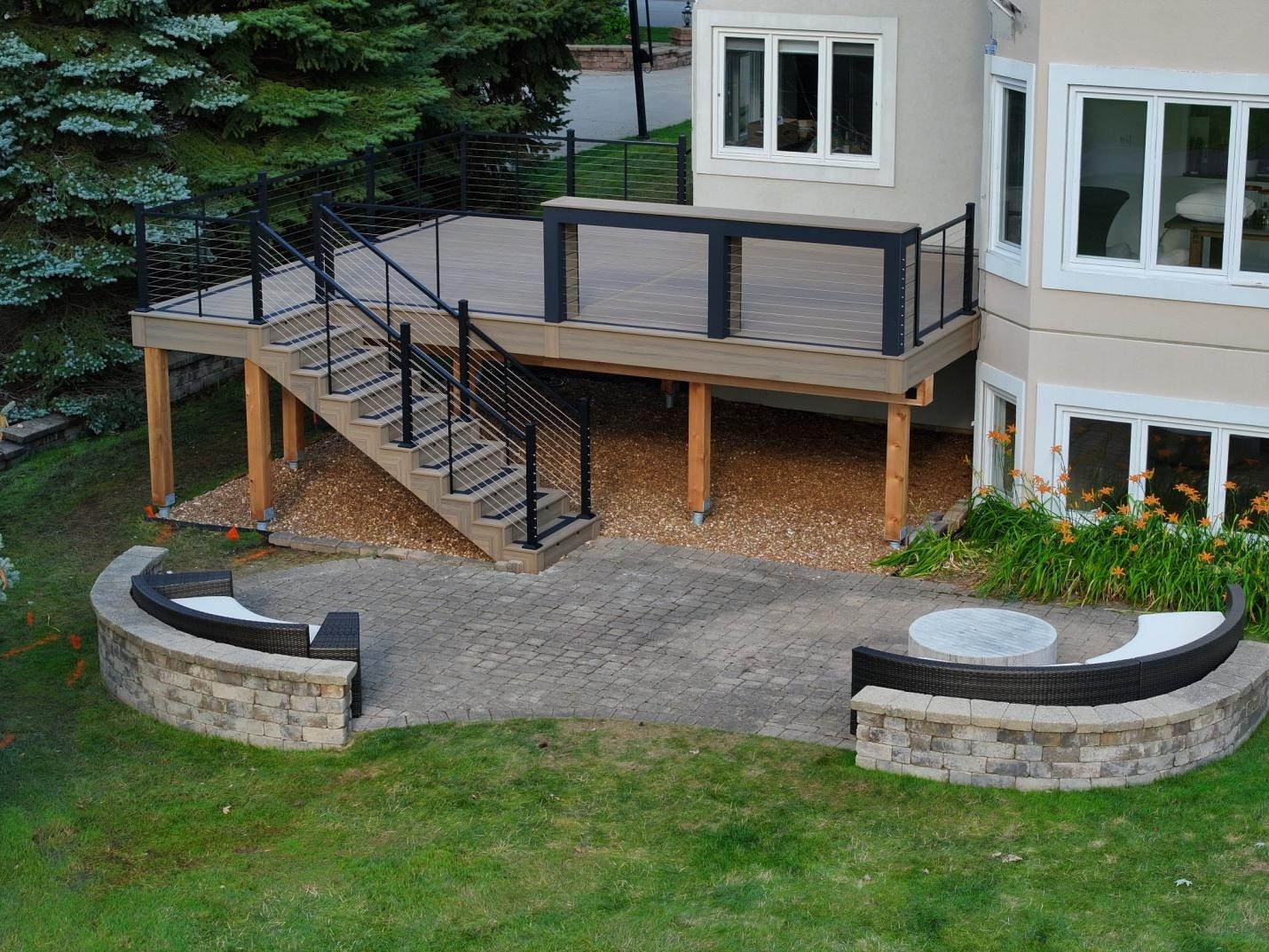
Every new deck construction conversation almost always starts with what the upfront cost is. Composite deck materials are known to be initially more expensive than pressure-treated wood, but we shouldn’t forget that a deck is not a short-term project. It’s going to be a permanent outdoor living area that you will walk on and use every day; and as it is outside, it will be exposed to the changing seasons and weather all year round. Radu Oprea, CEO at Wolf Spirit Deck, notes that 80% of his repair calls are for wood decks over 12 years old. We should look beyond the first invoice and think about what your deck will cost you over the next 30 years. When you switch your mind in this direction, the value of your project will change drastically.
Pressure-treated wood is a popular choice in the U.S. because it’s cheaper to install. Composite decking installation is usually 30-60% higher. This is a huge differencewhen it comes to the upfront price of a new deck project. Wood looks more affordable, but people don’t realize that the upfront cost is just the beginning of the financial story.
Here’s a quick look at what initial costs actually look like for a standard residential deck in 2025/2026:
Yeah, composite costs more upfront. But skip ahead to year seven. Now look at what you’ve actually spent in total.
A pressure-treated deck will require consistent maintenance. Especially if you live in a humid place like Naperville, IL. As part of the maintenance, you will have to clean and power wash it regularly. You will need to sand it to reduce splintering. Staining or painting is another thing that should be done every 1-3 years, and on top of all this you will have to check for old cracked or rotting boards and replace them.
When you think about 30 years ahead, all these maintenance things will cost time and money, even if you do a part of it yourself.
Because composite decking is engineered from a blend of wood fibers and plastic, it is naturally resistant to insects, UV rays, and moisture—eliminating the primary causes of deck failure.As part of its maintenance, you will just have to do minor cleaning. You don’t need to sand, stain or paint it like you would do with a traditional wood deck. The boards last a lot longer and you don’t have to replace them as often or as many as wood decks require.
Compared to wood, composite deck maintenance will cost you over 30 years only a fraction of what wood will require.
In real-world conditions, pressure-treated wood decking often shows significant wear within 10–15 years, even with proper care.
In real life a pressure-treated wood deck will start to need serious maintenance after about 10-15 years. In 30 years, most of them need to be resurfaced, the structure in general needs repair and in other cases a full deck replacement.
All these repairs cost money.
High-quality composite decking is designed to last:
For many homeowners, a composite deck installed today can last the full 30-year period without major repairs or replacement.
While exact numbers vary by region and deck size, the long-term pattern is consistent nationwide.
Over 30 years, pressure-treated wood often includes:
Composite decking typically includes:
When these costs are totaled, many homeowners find that composite decking equals—or outperforms—pressure-treated wood financially over 30 years.
Beyond dollars, ownership experience matters.
Pressure-treated wood often means:
Composite decking offers:
For many homeowners, this difference alone justifies the initial investment.
Modern buyers understand maintenance.
By contrast, an aging wood deck may raise questions about upcoming repairs and ongoing upkeep.
So, here’s the deal with composite and wood decking. If you are planning to live in your current house, a composite deck would make more sense because it will last longer with a lot less maintenance and a lot less money invested in maintenance. A composite deck is a little more expensiveinitially, but it pays off in the long run.
If you are planning to live there for a short period of time, like a couple of years, then a wood deck can be enough for you. It will be a little cheaper than composite and you will move out before the maintenance will kick in.