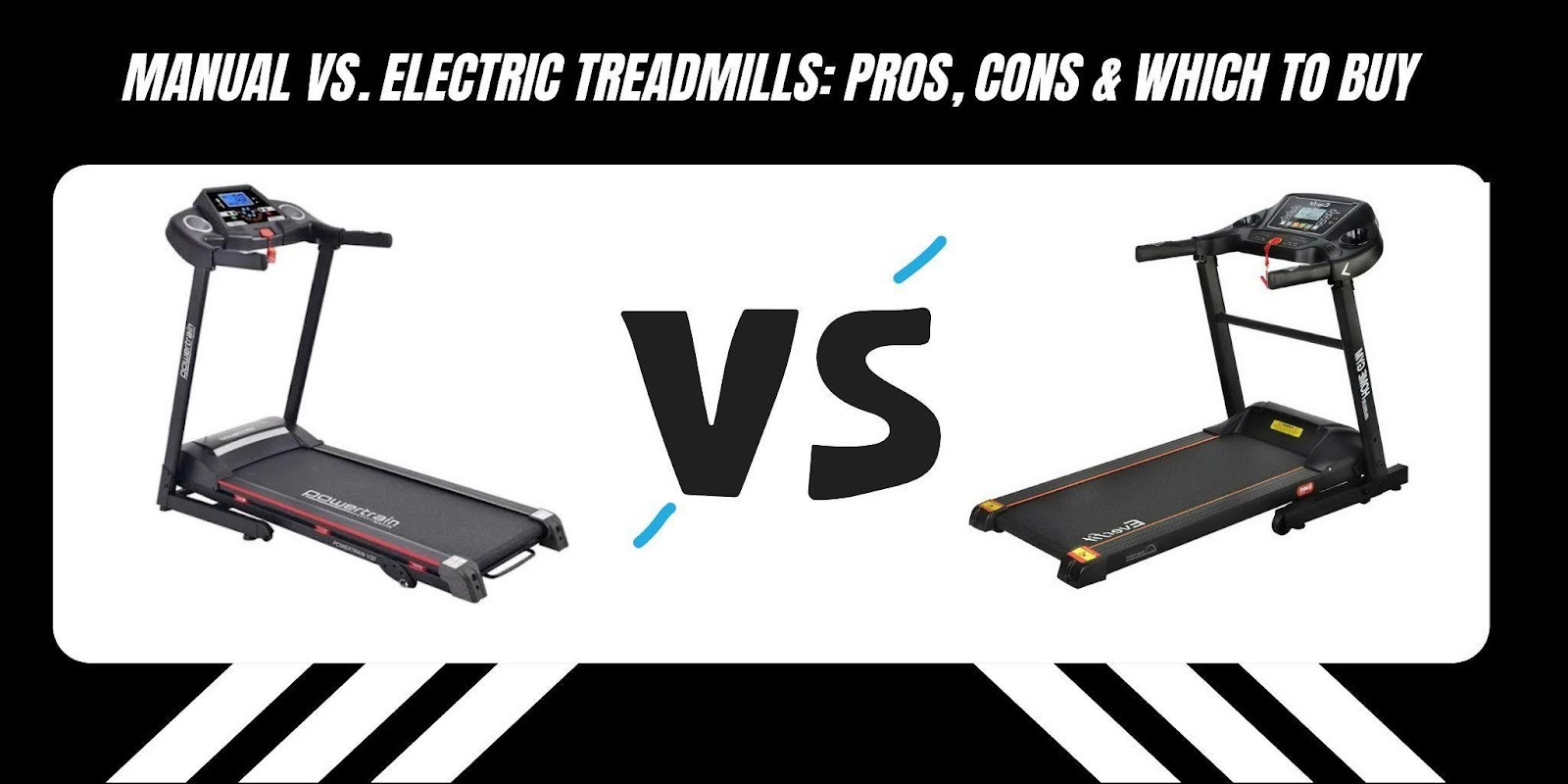
Fitness lovers who are willing to take their cardio sessions inside of the house or simply people who are just getting into the fitness industry; treadmills are also one of the hottest pieces of home fitness gear. However, in the case of a choice between manual and electric models, there is no always an easy way out. The current comprehensive treadmill purchasing guide will take you through all that you need to know about the two options and make an informed decision that suits your fitness requirements, budget and lifestyle.
Understanding the Basics
It will be a good idea to explain what differentiates between the two types of treadmills before delving to the advantages and disadvantages of manual and electric treadmills. A manual treadmill can be used, and it worksrtfyhuj only on your legs, as it only moves when you are walking or running on it. An electric treadmill however uses a motor that rotates the belt at a speed of your choice through a console which means that you must follow the machine and not the other way round.
Manual Treadmills: The Unplugged Alternative
Pros of Manual Treadmills
- Cost-Effective: Manual treadmills are much cheaper and usually cost between 100 and 500 dollars. This makes them a good starting point to the novice who is trying out the waters of the home fitness without making a big financial investment.
- Free Electricity: Manual treadmills will not penny your electricity bill as they do not need power. You can also install them anywhere in your house without the worry of having outlets.
- Small and Transportable: Most of the manual versions are lighter and smaller when compared to the electric versions and as such they can be used in small apartments or any space where storage is an issue. Most of them can be folded up so that they can be easily stored.
- Natural Pace Control: You dictate the speed all by yourself and it could stimulate a better body awareness and could be burning up more calories since you are doing all the work.
- Low Maintenance: Manual treadmills need minimal maintenance, have no motor to take care of, and fewer moving parts, which are prone to failure.
Cons of Manual Treadmills
- More Physical Work: You are not provided with motor assistance, and as a result, your legs are required to work harder to ensure that the belt is moving which is exhaustive and might not be ideal in longer workouts or also in cases of joint problems.
- Minimal Features: Manual treadmills usually do not have the features of the electric ones; no pre-programmed exercises, no heart rate sensors, no electronic readouts that track precise data.
- Irregular Belt Movement: As you fatigue the belt may become jerky or uneven and some of the users feel uncomfortable or awkward with the smooth and consistent movement of motorised belts.
- Difficult to operate Running: Running is best done on the most manual treadmills. Running on them may be a challenge and straining to your joints as a result of the exerting more effort to keep speed.
Electric Treadmills: The Electric Performer
Pros of Electric Treadmills
- Stable, Flowing Movement: The computer-controlled belt offers a stable smooth movement that best simulates running or walking on the ground which is closer to their natural movement and reduces the impact of the joints to give them a more comfortable experience.
- Diverse Workout Solutions: Electric treadmills can be used to support light strolls as well as strenuous sprint routines. They are typically capable of adjusting the incline to be more like a training on the hill to enhance intensity of the workout.
- Sophisticated: The newest treadmills in the electric sphere are loaded with features--programs, calories burnt, heart rate, Bluetooth, entertainment accessories, etc.--that can allow you to be motivated and track progress.
- Healthier, More Fit, and Funner: Electric treadmills are flexible and can fit a variety of fitness levels and objectives and can be accurately fine-tuned to the required speed.
- Perfectly for Serious Runners: As a runner, electric treadmills are the undoubted victorious choice, with the speed, the stability, and features that serious runners require to train efficiently.
Cons of Electric Treadmills
- Greater Price: Good quality electric treadmills will begin at about 500–1000 and can easily reach 2,000 or more on high quality models with a powerful motor and advanced technology.
- Electricity is required: These machines will also require some power source and will be costing you more in electricity bills, although recently modern models have become more economical.
- Greater Area: Electric treadmills tend to be heavier and larger in size and need special space. They are not as convenient as manual ones even though many fold.
- Maintenance Requirements: Motors, belts and electronic components may need regular maintenance or repair, which can be costly in the long run to own.
- Noise: There may be noise as a result of the motor and the belt that may disturb someone in your house or apartment, especially when the workouts are speedy.
Comparison of Manual and Electric Treadmill: Important Aspects
Budget Considerations
A manual treadmill can be the only feasible possibility when you have a tight budget (less than 500 dollars). But in case you are willing to spend a few more, between 800 and 1500 dollars, you will come across better quality electric treadmills which will be much better with respect to performance and longevity.
Workout Goals
A manual treadmill may be sufficient in case of casual walkers who only need to count steps and perform simple cardio. But any person, who is serious about running, interval training, or progressive fitness aims will gain a lot of this versatility and features of an electric model.
Space and Storage
Living in a compact space? Portability and convenience of storage is in favour of manual treadmills. However, with a private place to work out, then the space taken up by an electric treadmill is not so much of a problem.
Physical Limitations
Electric treadmills should be given high priority by those who have joint problems or recovering after injuries have healed, or they have mobility related issues as they have smoother movements and less physical strain of using the belts.
The Most Popular Product is How to Find the Best Treadmill to Use at Home
The most appropriate treadmill to use at home would be that which would fit your situation. The following is a fast decision making model:
Select a manual treadmill when you:
- Have a tight budget (under $300)
- Will only walk at moderate paces.
- Want utmost portability and storage versatility.
- Favors a no-frills, low-key style of fitness.
Select an electric treadmill when you:
- Desire to exercise or have different cardio activities.
- Like to exercise and have planned schedules.
- Is able to spend $800 or more on quality and durability.
- Available room to a specific fitness machine.
- Require regular smooth performance towards joint health.
Making Your Purchase
When you're ready to buy, research specific models within your chosen category, reading reviews from actual users. Consider the warranty (especially motor warranties on electric models), weight capacity, and available customer support. Test models in-store if possible to experience the feel and quality firsthand.
Your treadmill should be an investment in your health that you'll use consistently for years. Whether you opt for the simplicity of manual or the sophistication of electric, choosing the right machine means finding one that matches your fitness level, goals, and lifestyle. Ready to take the next step? Explore reputable fitness equipment Go Easy Online offering treadmills for sale that fit your needs and budget.