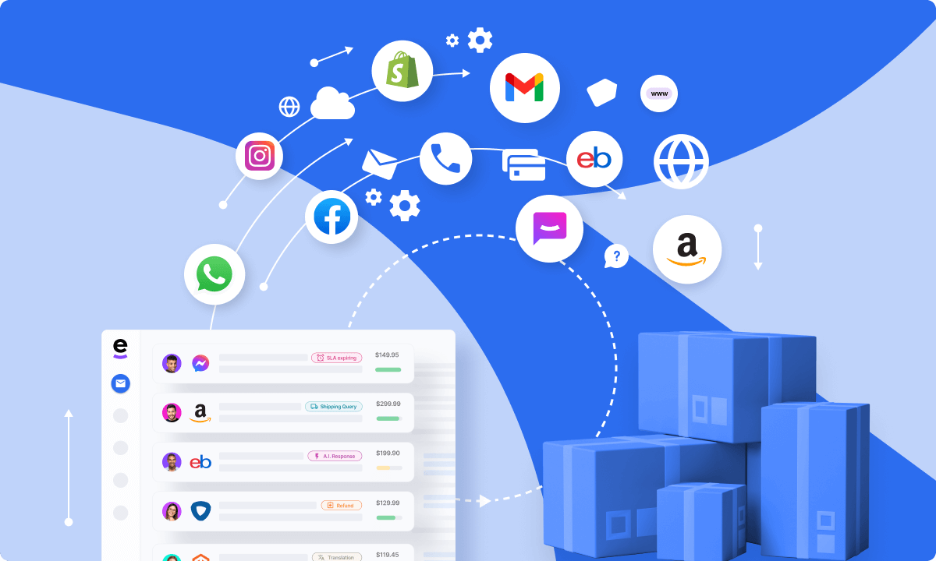
E-commerce has never been compared to how it used to be. There are thousands of brands that are competing to have the same number of clicks, the same attention, and the same buyers. However, here is the twist people are not merely looking, as usual, to find products. They are posing AI tools with direct questions such as what is the best skincare brand to use with sensitive skin? or so What is the cheapest wireless headphones currently? And guess what? Purchases are being influenced by AI responses before a user can visit a site.
Then, when your e-commerce brand does not appear in the list of answers generated by AI, are you engaged in the discussion anymore?
The Replacement of the Search Results with AI Answers
The old-fashioned SEO was centered on rankings, keywords, and product pages. AI-based platforms summarize, compare, and suggest products in real time, however. The users receive a single affirmative answer instead of ten blue links. That puts the whole thing in a new light, does it?
AI responses tend to draw information in several sources, such as product descriptions, reviews, frequently asked questions, blogs, and mentions of the brand. It implies that visibility is no longer as much about the ability of your brand to rank well on Google as it is about your consistency and clarity in communicating with your audience all over the web.
This is huge for e-commerce brands. The number of clicks required is reduced, yet AI suggestions are more significant than ever.
Importance of AI Responses to Purchase Decisions
Consider the way individuals are shopping online. They want quick clarity. They want reassurance. They desire to be directed or directed by something. AI answers do exactly that.
Users follow an AI tool recommendation of a product almost like an expert salesperson. When your brand is referred to in a positive manner, you stand to get immediate credibility. In case you are not mentioned at all, you are replaced by a competitor.
This is where answer engine optimization becomes critical. It assists e-commerce brands in organizing the content in the manner that AI systems can comprehend, trust, and cite easily. In the absence of this strategy, even excellent products may remain unknown.
E-commerce Visibility is no longer a Google only affair
The fact that many brands are still only involved with Google rankings solely indicates that AI platforms draw out more extensive ecosystems. There are product reviews, article comparison articles and community discussion, and expert content.
Are you describing your brand effectively in these areas? Do you easily have a summary of your product benefits? Will your content be written to respond to actual questions of customers?
Biasing towards AI would make brands think more generatively. It is not only selling but explaining, clarifying, and educating. And frankly speaking, is that what do customers desire as well?
Increased Product Discovery with No additional spending on ads
The cost of paid ads is increasingly increasing. CPCs increase; the rivalry heightens and returns decline. The visibility that AI answers present is of a different type, organic, trust-based, and scalable.
By investing in answer engine optimization, e-commerce brands can appear in AI recommendations without paying for every click. This eventually creates long-term discovery platforms that are not dependent on ad budgets.
It is like being suggested automatically when a person inquiry about what the best laptop bag is to use daily. That is effective exposure, and even the exposure continues even after the ads.
Greater Brand Authorities and Confidence
AI does not simply scan the keywords. It appraises authority indicators. The brands that regularly post useful information, their products description, and credible information stand for a better chance of being mentioned.
In the case of e-commerce brands, it will involve more than a simple product listing. Inclusion of buying guides, comparison material, frequently asked questions and clear policies does make a difference.
Users will have the trust of AI having your brand. And credibility is the last impetus that turns window shopping to purchase.
One-to-One Shopping Experiences at Scale
The answers provided by AI are usually context-dependent, intent-dependent, and preference-dependent. Brands that are optimized towards AI have a higher probability of showing up in a customized recommendation.
It implies that you can target your products to the appropriate audience at the appropriate time without manually targeting them. Is it not the aspiration of all e-commerce marketers?
To be involved in such customized experiences, though without direct interaction with the user, AI-friendly content enables your brand to be part of it.
The following is the truth: a good number of e-commerce brands have not changed yet. They are still trying to optimize traditional search and advertisements. That creates an opportunity.
Final Thoughts
Artificial intelligence solutions are rapidly emerging as the major decision-making tool used by online shoppers. In the case of e-commerce brands, it would be a mistake to overlook this evolution as it may result in being invisible when it matters the most, the purchasing decision.
The AI answer optimization is not about discarding SEO but rather developing it. By embracing strategies, brands can stay visible, trusted, and competitive in a future where AI guides the customer journey.
It is not whether AI is going to shape e-commerce anymore but whether your brand will make the difference.