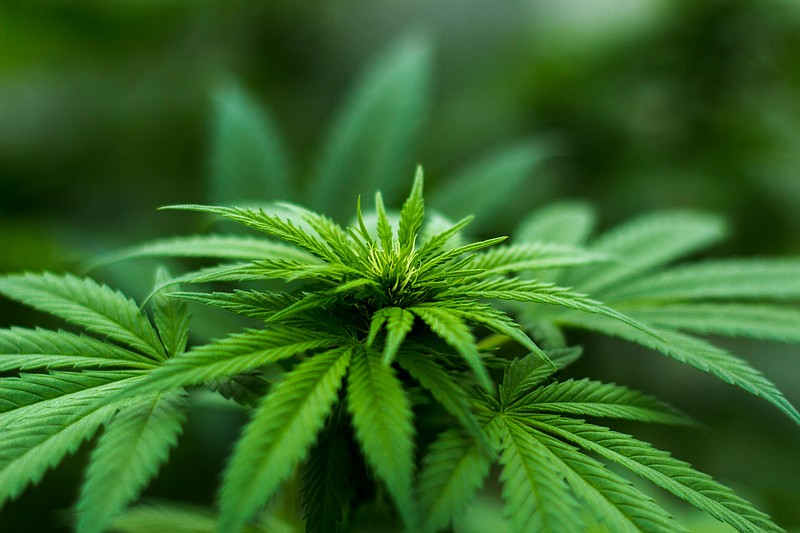
Currently, marijuana is classified as a Schedule I substance, alongside drugs like heroin, cocaine and LSD
President Trump signed an executive order Thursday directing federal authorities to begin reclassifying marijuana from a Schedule I to a Schedule III controlled substance under the federal Controlled Substances Act, a move administration officials say could open the door to expanded medical research and regulatory changes.
Under current law, cannabis sits alongside drugs like heroin, cocaine and LSD in the most restrictive category, defined as having “no currently accepted medical use,” but the shift to Schedule III would place it with substances considered to have moderate to low potential for dependence and recognized medical uses, such as ketamine and certain steroids.
The order instructs the attorney general to expedite the rulemaking process necessary for the reclassification and cites long-standing public and medical interest in allowing more scientific study of marijuana’s effects.
Administration officials, including Health and Human Services Secretary Robert F. Kennedy Jr., said rescheduling could help accelerate research and reduce stigma around cannabis, particularly for patients with chronic pain and other serious health conditions.
While the action marks a significant shift in federal drug policy, it does not legalize recreational marijuana nationwide or change existing criminal penalties; marijuana would remain illegal under federal law outside of approved medical or research contexts.
The executive order also has potential implications for the cannabis industry, which could see reduced tax burdens and expanded research opportunities if the drug is no longer treated as a Schedule I substance.
The reclassification reflects broader evolutions in drug policy and federal cannabis discussions that have unfolded over decades, with past rulemaking and executive actions exploring similar changes under previous administrations.
For more detail on the new policy and what it could mean for medical research and regulation, see the full report from CBS News.
Pros and cons of medical marijuana
Pennsylvania’s medical marijuana program allows registered patients to legally purchase cannabis products for approved medical conditions. While the program offers clear benefits, there are also limitations worth understanding before applying.
Having a medical marijuana card provides legal access to regulated cannabis products through licensed dispensaries across the state.
Patients benefit from tested, labeled products with known potency and formulations, as well as guidance from dispensary staff.
Cardholders are also protected from state-level criminal penalties for possession within program limits and may find medical cannabis helpful in managing chronic pain, anxiety, PTSD, neurological conditions, and other qualifying diagnoses.
Unlike recreational markets in other states, Pennsylvania’s program emphasizes medical oversight and patient education.
On the contrary, the program comes with costs and restrictions. Patients must pay annual fees for physician certification and state registration, and insurance does not cover cannabis products.
Pennsylvania also does not encourage or promote smoking flower; only vaporization, tinctures, capsules, topicals, and similar forms are allowed.
Additionally, employers may still enforce drug-free workplace policies, even for registered patients.
Medical marijuana remains illegal under federal law, which can affect firearm ownership, certain employment situations, and travel across state lines.
In Pennsylvania, holding a medical marijuana card does not automatically revoke or prohibit the ability to own a firearm or hold a License to Carry Firearms. However, the interaction between marijuana and gun laws exists in a legal gray area because marijuana remains illegal under federal law, even when legal for medical use under state law.

Key issues to understand
Under federal law, marijuana is still classified as a controlled substance. Federal statutes prohibit an “unlawful user of or addicted to any controlled substance” from possessing firearms. This creates tension for medical marijuana patients, even in states like Pennsylvania where medical use is legal.
When purchasing a firearm from a federally licensed dealer, buyers must complete ATF Form 4473, which specifically warns that marijuana use remains illegal under federal law “regardless of whether it has been legalized or decriminalized for medical or recreational purposes” under state law.
Answering “yes” to marijuana use can result in a denied purchase; answering “no” while using marijuana could expose a buyer to potential federal penalties.
Pennsylvania sheriffs issue LTCFs, and state law does not explicitly bar medical marijuana patients from obtaining or renewing a license. However, sheriffs are allowed discretion, and marijuana use could be considered when evaluating whether an applicant is an “unlawful user” under broader legal standards. Practices can vary by county.
The Pennsylvania Medical Marijuana Program does not share patient information with law enforcement or firearm licensing authorities. Having a medical marijuana card alone does not trigger notification or automatic disqualification.
How to apply for a medical marijuana card in Pennsylvania
The process involves several steps and typically takes a few weeks from start to finish:
• Zen Leaf Sellersville
64 N Main St, Sellersville, PA 18960
https://zenleafdispensaries.com/locations/sellersville/
• Baked By The River Dispensary
8 Church St, Lambertville, NJ 08530
https://bakedbytheriver.com/
• Union Chill Cannabis Lambertville Dispensary
204 N Union St, Lambertville, NJ 08530
https://unionchillco.com/