In the competitive manufacturing landscape of Pennsylvania, many local manufacturers face a persistent challenge: selecting the wrong metals for CNC machining projects leads to costly errors such as budget overruns, project delays, and part failures. For instance, choosing an inappropriate metal can cause machining difficulties, tolerance deviations, or corrosion issues in humid environments like those in North Penn regions. The root cause often lies in relying on traditional, experience-based material selection rather than scientific standards, compounded by gaps in local supply chain knowledge.
This guide addresses these pitfalls by providing a comprehensive, evidence-based framework rooted in international standards like ISO, detailing the types of metals suitable for CNC machining, their properties, and strategic selection criteria. By exploring common metals' machining performance, readers will gain practical insights to enhance production efficiency and avoid expensive mistakes. Transitioning to the main content, we begin with an overview of the most widely used metals in industrial applications.
CNC machining relies on a variety of metals chosen for their availability, cost-effectiveness, and mechanical properties. Understanding these options is crucial for optimizing manufacturing processes and avoiding selection errors. This section outlines the primary metals, referencing authoritative sources like the Wikipedia page on Surface Finish to explain baseline standards for quality and finish.
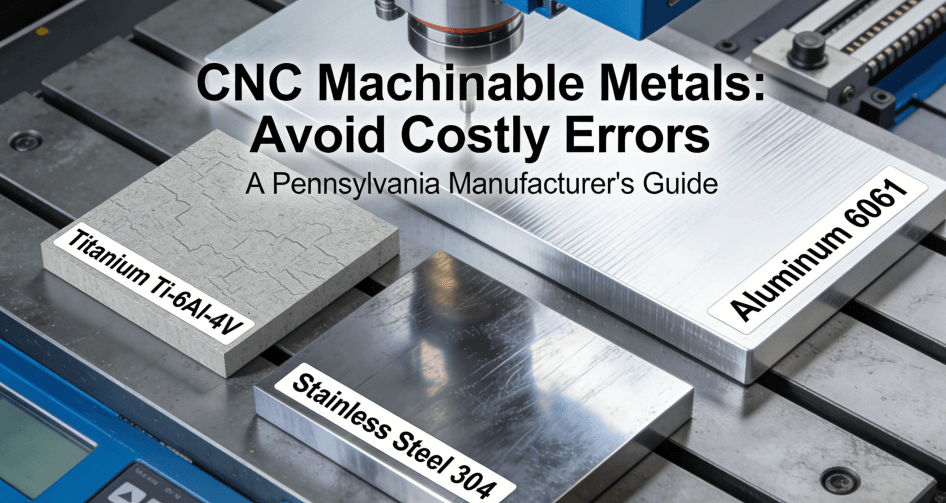
Aluminum is a top choice due to its excellent machinability, light weight, and corrosion resistance. Commonly used alloys like 6061 and 7075 offer a balance of strength and workability, making them ideal for aerospace and automotive components. Their low density reduces part weight without sacrificing durability, which is critical for energy-efficient designs. For example, aluminum's thermal conductivity allows for efficient heat dissipation in electronic enclosures, while its natural oxide layer provides a barrier against environmental degradation. In Pennsylvania, industries such as consumer electronics leverage these properties to produce lightweight, durable housings. Additionally, aluminum's recyclability supports sustainability goals, reducing waste in compliance with local environmental regulations.
Steel encompasses a range of options, including carbon steel for high strength and tool steel for wear resistance. Carbon steel is cost-effective for heavy-duty parts, while stainless steel (discussed later) adds corrosion resistance. Proper selection hinges on factors like hardness and thermal conductivity to prevent issues like tool wear during machining. For instance, high-carbon steels like 1045 are preferred for gears and shafts due to their toughness, but they require precise heat treatment to avoid brittleness. In contrast, tool steels like D2 excel in cutting applications because of their resistance to abrasion. Pennsylvania manufacturers must consider these traits to avoid failures in demanding environments, such as industrial machinery in the Lehigh Valley, where material fatigue can lead to costly downtime.
Titanium stands out for its high strength-to-weight ratio and biocompatibility, suited for medical implants and aerospace. Though more expensive, its performance in extreme conditions justifies the cost. Other metals like brass and copper are also used for specific applications, such as electrical components, due to their conductivity and ease of machining. For example, titanium alloys like Ti-6Al-4V are essential in aerospace for components that withstand high temperatures and stresses, while brass is favored for plumbing fittings in Pennsylvania's construction sector due to its corrosion resistance. However, machining exotic metals like Inconel requires specialized tools and cooling systems to manage their high hardness, emphasizing the need for expert process planning to avoid errors.
Aluminum alloys play a pivotal role in advancing precision manufacturing in Pennsylvania, particularly in sectors like aerospace and consumer electronics. Their properties directly address local needs for efficiency and sustainability, as seen in projects from Montgomery County.
1. Lightweight Design for Aerospace and Automotive: In Pennsylvania's aerospace industry, aluminum alloys enable weight reduction without compromising strength. For example, a Montgomery County project used CNC-machined aluminum parts to decrease drone component weight by 20%, enhancing flight efficiency. This aligns with global trends toward lightweighting for fuel savings and lower emissions. The alloys' high strength-to-weight ratio allows for thinner walls and complex geometries, which are critical in aerodynamic designs. Moreover, finite element analysis (FEA) simulations often validate these designs to ensure they meet stress requirements, reducing the risk of in-service failures. By adopting aluminum, local manufacturers can comply with federal aviation regulations while achieving cost savings through reduced material usage.
2. Corrosion Resistance in Humid Climates: Pennsylvania's variable climate demands materials that resist corrosion. Aluminum's natural oxide layer provides protection, reducing maintenance costs for outdoor equipment. By selecting the right alloy, manufacturers can avoid premature failure, as demonstrated in local agricultural machinery applications. For instance, in the humid conditions of North Penn, aluminum alloys like 5052 are used in irrigation systems to prevent rust and extend service life. This is supported by accelerated testing methods, such as salt spray tests, which verify corrosion resistance before deployment. Additionally, anodizing treatments can further enhance durability, offering a cost-effective solution for parts exposed to harsh weather, thereby minimizing downtime and repair expenses.
3. Cost-Efficiency and Machinability: Aluminum's high machinability allows for faster cutting speeds and lower tool wear, shortening production cycles. This translates to cost savings for Pennsylvania manufacturers, who can compete more effectively by minimizing waste and energy use. Understanding what metals can be CNC machined, including aluminum variants, is key to leveraging these benefits; refer to detailed guides for deeper insights. For example, aluminum's softness reduces the need for expensive tooling, and its compatibility with high-speed machining enables rapid prototyping. In a case study from Pittsburgh, a manufacturer reduced cycle times by 25% by switching to aluminum for batch production, highlighting how material selection directly impacts profitability and lead times.
Stainless steel is renowned for its durability and resistance to corrosion, making it a staple in industries like food processing and healthcare across Pennsylvania. Its selection hinges on adherence to quality standards, such as ISO 9001, which ensure consistency and reliability.
In North Penn's food processing sector, stainless steel parts withstand acidic and moist conditions without degrading. Grades like 304 and 316 offer varying levels of resistance, with 316 being ideal for saline environments. This prevents contamination and extends equipment life, avoiding costly replacements. The passivation process enhances this resistance by forming a protective chromium oxide layer, which is critical for meeting hygiene standards. For instance, in dairy processing plants, stainless steel valves and tanks maintain purity over years of use, reducing the frequency of replacements and supporting sustainable operations. Regular audits based on ISO protocols help manufacturers verify these properties, ensuring compliance with local health regulations.
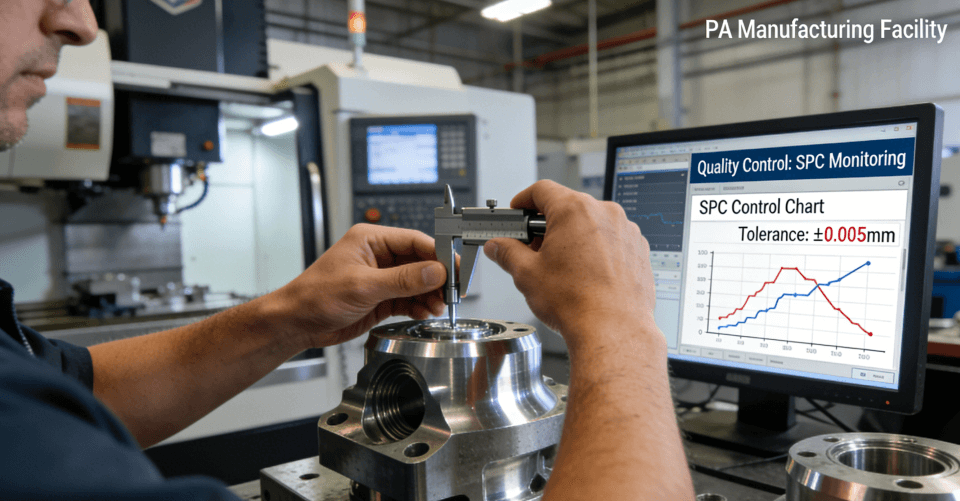
Figure 2: Real-time quality monitoring in a Pennsylvania CNC machining facility, showcasing SPC charts and tolerance checks to ensure compliance with standards like ISO 9001 and prevent defects in high-strength applications.
Stainless steel provides excellent tensile strength, suitable for structural components. In medical devices, its ease of sterilization meets strict hygiene protocols. References to ISO 9001:2015 underscore the importance of quality management systems in maintaining these properties during CNC machining. For example, surgical instruments made from stainless steel undergo autoclaving without degradation, ensuring patient safety. In Pennsylvania, medical device manufacturers use grades like 17-4PH for their high strength and corrosion resistance, which are validated through non-destructive testing methods like dye penetrant inspection. This rigorous approach minimizes risks in critical applications, aligning with FDA requirements and reducing liability.
Pennsylvania manufacturers use stainless steel for valves and pumps in water treatment plants, where failure could lead to environmental issues. By prioritizing certified materials, companies reduce risks and enhance sustainability, supporting the state's industrial innovation goals. For example, in Philadelphia's water systems, stainless steel components resist chloride-induced corrosion, extending infrastructure lifespan. The lifecycle cost analysis often shows that although stainless steel has a higher upfront cost, its longevity and low maintenance lead to savings over time. Collaborating with suppliers who provide material certifications ensures traceability and quality, which is essential for projects funded by public grants.
Titanium excels in applications requiring high strength, light weight, and biocompatibility, such as aerospace and medical devices. Its use in Pennsylvania reflects a growing demand for advanced materials that meet rigorous standards.
l High Strength-to-Weight Ratio for Aerospace: Titanium alloys like Ti-6Al-4V are essential for aircraft components, where weight savings directly impact fuel efficiency. In local aerospace projects, CNC-machined titanium parts have enabled designs that withstand high stresses while reducing overall mass, aligning with federal aviation regulations. For instance, turbine blades made from titanium maintain integrity at elevated temperatures, which is critical for jet engines. The additive manufacturing techniques, such as 3D printing, are often combined with CNC machining to produce complex titanium parts with minimal waste. However, challenges like tool deflection require advanced machining strategies, such as trochoidal toolpaths, to maintain precision in thin-walled sections.
l Biocompatibility in Medical Implants: For Pennsylvania's medical device industry, titanium's biocompatibility minimizes rejection risks in implants. Manufacturers with certifications like AS9100D demonstrate adherence to safety standards, ensuring parts meet clinical requirements without causing adverse reactions. For example, dental implants and joint replacements made from titanium integrate well with bone tissue due to the material's osseointegration properties. The surface finishing processes, such as electropolishing, are crucial to eliminate micro-imperfections that could harbor bacteria.
l Challenges and Solutions in Machining: Despite its benefits, titanium is difficult to machine due to low thermal conductivity, requiring specialized tools and cooling techniques. By partnering with experienced industrial prototyping partners, manufacturers can overcome these hurdles through optimized processes. For instance, using carbide tools with high-pressure coolant systems can prevent work hardening and extend tool life.
Cost-effective metal selection involves comparing materials based on project specifics and implementing design for manufacturability (DFM) principles. This section provides strategies to avoid overspending, supported by data from authorities like the ASM Handbook.
Creating a cost-benefit matrix for metals — comparing factors like raw material price, machinability, and longevity — helps manufacturers make informed choices. For instance, aluminum may offer lower upfront costs, while stainless steel reduces long-term maintenance. DFM recommendations, such as minimizing complex geometries, further cut expenses. Tools like value engineering workshops can identify opportunities to substitute materials without compromising performance. In Pennsylvania, a manufacturer used this approach to switch from titanium to aluminum for non-critical components, saving 15% on material costs while meeting functional requirements. Additionally, supply chain diversification ensures access to competitive pricing, especially for metals subject to market fluctuations.
Pennsylvania's industrial hubs provide access to specialized metal machining services, enabling just-in-time procurement and reducing logistics costs. Collaborating with local partners who offer custom solutions ensures materials align with project timelines and budgets. For example, in the Erie region, manufacturers work with nearby mills to source steel with shorter lead times, avoiding delays from international shipments. Digital platforms for quoting and ordering streamline this process, allowing real-time cost comparisons. By building long-term relationships with suppliers, companies can negotiate better terms and gain insights into emerging material trends, such as the growing use of recycled metals for sustainability.
A case from Lehigh Valley shows how switching to aluminum for engine brackets saved 30% in machining time and material waste. By applying these insights, manufacturers can replicate success while adhering to environmental regulations. The project involved DFM analysis to simplify brackets designs, reducing the number of setups required. This not only cut costs but also improved part consistency, as measured by statistical process control (SPC) data. The success underscores the importance of cross-functional teamwork between design and production teams to identify cost-saving opportunities early in the product development cycle.
Technical education is critical for mitigating errors in CNC material processing, as skilled workers can better interpret material properties and machining parameters. Pennsylvania's initiatives, such as vocational training programs, underscore this importance.
l Training Programs for Material Science: Local institutions in North Penn offer courses on metal properties and CNC techniques, empowering employees to make data-driven selections. This reduces errors like choosing overly hard metals that cause tool breakage, enhancing overall productivity.
l Continuous Improvement and Certification: Ongoing training in standards like ISO 9001 fosters a culture of quality, where workers proactively identify issues. This aligns with North Penn industrial innovation goals, driving competitiveness through educated decision-making.
l Impact on Error Reduction and Efficiency: Statistics indicate that trained teams report 25% fewer machining errors, leading to faster project completion. By investing in skills, Pennsylvania manufacturers build resilient operations capable of handling complex materials like titanium and Inconel.
This guide has systematically outlined the selection of metals for CNC machining, emphasizing how scientific approaches can help Pennsylvania manufacturers avoid costly errors. By understanding common metals' properties, leveraging standards, and investing in skills, readers can enhance efficiency and sustainability. As next steps, consider consulting certified experts to tailor strategies to specific projects, and explore further resources on advanced material processing to stay ahead in the evolving manufacturing landscape.
Q: What is the most cost-effective metal for CNC machining?
A: Aluminum is often the most cost-effective due to its machinability and abundance. It offers a good balance of strength and weight, reducing processing time and waste. For precise costs, consult a local service provider based on project specs, as factors like volume and finish requirements can influence pricing.
Q: How does stainless steel compare to titanium in CNC machining?
A: Stainless steel is more affordable and corrosion-resistant for general use, while titanium provides higher strength-to-weight ratio but is costlier. Selection depends on application requirements like budget and performance needs, with stainless steel favoring industrial equipment and titanium excelling in aerospace or medical implants.
Q: Can CNC machining handle exotic metals like Inconel?
A: Yes, CNC machining can process exotic metals, but it requires specialized tools and expertise due to hardness. Proper cooling and slower speeds are essential to avoid tool wear and ensure precision. Partnering with experienced suppliers is recommended to manage these challenges effectively.
Q: What certifications should I look for in a CNC machining service?
A: Seek certifications like ISO 9001 for quality management and AS9100D for aerospace standards. These ensure adherence to international benchmarks, reducing risks in critical projects. Additionally, check for material-specific certifications to verify traceability and compliance.
Q: How do I avoid material waste in CNC machining?
A: Optimize design for manufacturability (DFM), choose appropriate metals, and work with experienced partners. Implementing lean practices and prototyping can minimize scrap and improve efficiency. For example, using simulation tools to predict material behavior can further reduce waste during the design phase.
This article was contributed by a precision manufacturing expert from LS Manufacturing, a company dedicated to helping engineers overcome challenges in sectors like aerospace and medical devices through advanced technologies. With certifications including ISO 9001 and AS9100D, they ensure high-quality solutions. For a free, no-obligation project review or to download a comprehensive material guide, visit their website today.